Quick Clinical Takeaway: Is Salicylic Acid or Benzoyl Peroxide Better for Acne?
When comparing salicylic acid vs benzoyl peroxide to eliminate facial breakouts, dermatologists select based on the specific type of acne lesion: Salicylic Acid (BHA) is an oil-soluble keratolytic exfoliant that penetrates deep into sebum-filled pores to dissolve the cellular “glue” binding dead corneocytes, making it the undisputed gold standard for blackheads, whiteheads, textured congestion, and enlarged pores without drying out surrounding skin. In contrast, Benzoyl Peroxide (BPO) is a powerful bactericidal oxidizing agent that floods the anaerobic follicular canal with reactive oxygen species, killing 99% of Cutibacterium acnes bacteria within 48 hours without causing bacterial resistance, making it vastly superior for angry red papules, inflamed pustules, and deep cystic breakouts. For comprehensive acne clearance, clinicians recommend an alternating approach: using 2% Salicylic Acid in the morning to keep pore linings unclogged, and a gentle 2.5% micronized Benzoyl Peroxide in the evening to eliminate acne-causing bacteria.
When deciding between salicylic acid vs benzoyl peroxide, acne sufferers encounter the two most proven, widely prescribed, and accessible topical actives in modern cosmetic dermatology. Yet, in my clinical practice, I routinely see patients who have spent months battling persistent breakouts simply because they were applying the right active to the wrong type of pimple—or using harsh, high concentrations that stripped their protective moisture barrier.
Acne vulgaris is not a monolithic skin condition. A stubborn, oxidized blackhead embedded on your nose operates through an entirely different biological pathway than a throbbing, red, cystic papule erupting along your jawline. Choosing between salicylic acid and benzoyl peroxide is not about finding which ingredient is “stronger”—it is about matching the exact pharmacological mechanism of the active to the specific stage of follicular pathogenesis.
In this comprehensive medical comparison, our dermatological team dissects the molecular chemistry, bactericidal kinetics, comedolytic properties, and cutaneous tolerability profiles of salicylic acid versus benzoyl peroxide. We explain why 2.5% BPO outperforms 10% formulas, how to implement short-contact therapy to protect your towels, and how to combine both actives without provoking peeling or barrier collapse.

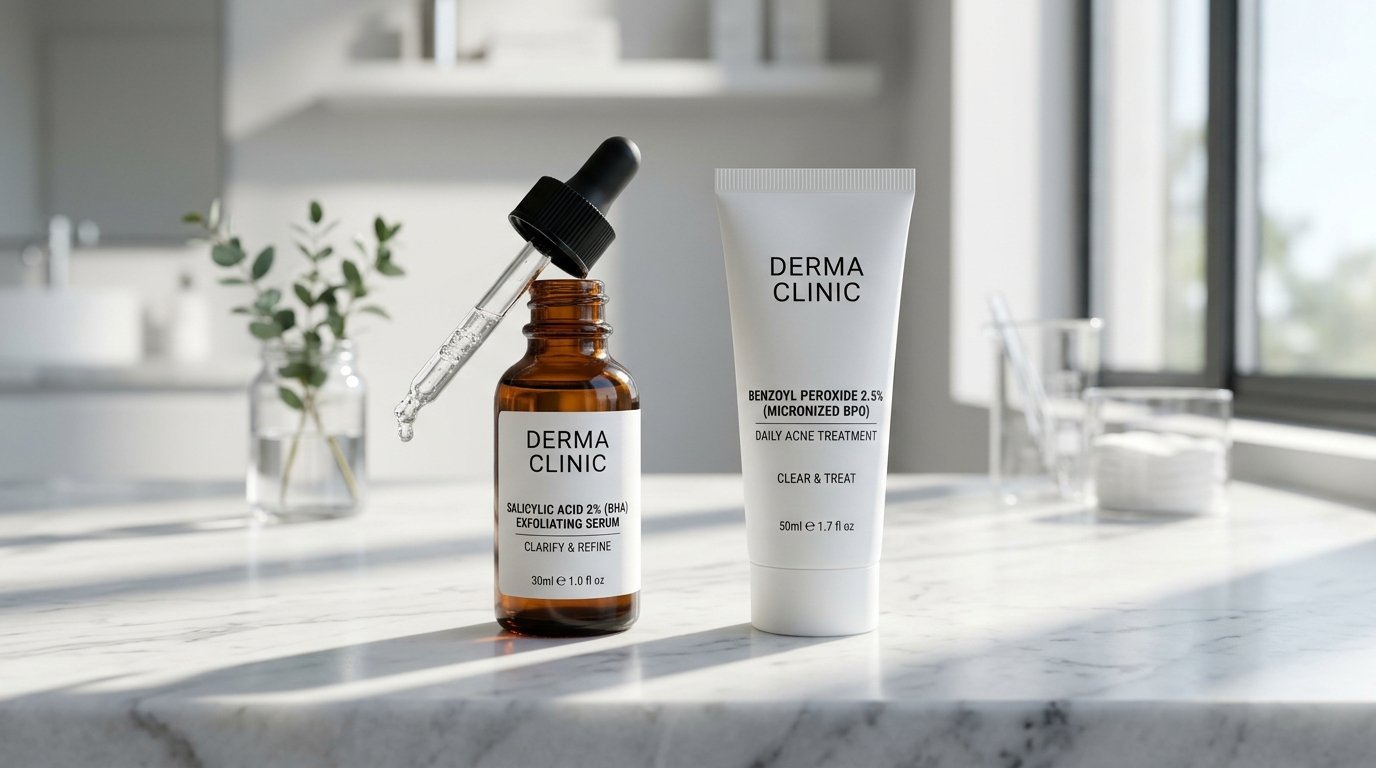
Figure 1: The gold-standard acne battle: Salicylic Acid (lipophilic pore unclogger) vs Benzoyl Peroxide (bactericidal oxygen generator).
Molecular Mechanisms: Comedolytic Keratolysis vs. Bactericidal Oxidation
To understand why these two compounds behave so differently inside human skin pores, we must examine their fundamental chemical properties:
Salicylic Acid (Ortho-hydroxybenzoic acid – C7H6O3): Salicylic acid is a monohydroxybenzoic acid categorized as a beta hydroxy acid (BHA). Unlike water-soluble alpha hydroxy acids (such as glycolic or lactic acid), salicylic acid contains a lipophilic (oil-soluble) benzene ring. This lipid solubility enables salicylic acid to dissolve seamlessly through sebum and travel straight down into the infundibulum of the hair follicle. Inside the pore, it acts as a direct desmolytic agent: it breaks down the desmosomes anchoring sticky, hyperkeratotic corneocytes together, systematically dissolving the microcomedone plug before it can evolve into an inflamed pimple. Furthermore, because of its structural similarity to acetylsalicylic acid (aspirin), salicylic acid exerts mild direct anti-inflammatory activity by suppressing cyclooxygenase (COX) enzymes.
Benzoyl Peroxide ((C6H5CO)2O2): Benzoyl peroxide is an organic peroxide consisting of two benzoyl groups bridged by a peroxide bond. When BPO touches living skin, it penetrates into the pilosebaceous unit and undergoes rapid metabolic decomposition into benzoic acid and reactive oxygen species (free radicals). The primary bacterium driving inflammatory acne, Cutibacterium acnes (formerly Propionibacterium acnes), is a microaerophilic, anaerobic organism that cannot survive in oxygen-rich environments. The burst of free oxygen radicals generated by BPO oxidizes bacterial cellular proteins, obliterating C. acnes colonies by up to 99% within 48 hours. Crucially, unlike topical prescription antibiotics (such as clindamycin or erythromycin), bacteria can never develop resistance to benzoyl peroxide because its mechanism of action is non-specific oxidative destruction.
If you are exploring how oil-soluble BHAs compare against water-soluble resurfacing AHAs for surface textural refinement, read our comprehensive laboratory guide on Glycolic Acid vs Salicylic Acid.

Figure 2: Follicular targeting: Salicylic Acid clears physical comedone obstructions, while Benzoyl Peroxide neutralizes bacterial proliferation inside the anaerobic follicle.
The Lesion Matchup: Non-Inflammatory vs. Inflammatory Acne
In dermatological clinical triage, selecting between salicylic acid and benzoyl peroxide hinges entirely on whether your acne is non-inflammatory or inflammatory:
1. Non-Inflammatory Acne (Blackheads & Whiteheads)
Non-inflammatory acne occurs when dead keratinocytes and oxidized sebum form a physical plug (comedone) inside the follicle ostium. If the pore remains open to ambient air, squalene oxidizes and turns black—creating an open comedone (blackhead). If the pore is sealed by a thin layer of cells, it remains a flesh-colored bump—a closed comedone (whitehead).
The Winner: Salicylic Acid. Benzoyl peroxide has minimal effect on non-inflammatory comedones because there is no bacterial infection or neutrophil infiltration yet. Salicylic acid’s lipophilic structure allows it to dissolve the sticky sebum holding the dead cells together, purging the pore lining and preventing blackheads from reforming.
2. Inflammatory Acne (Papules, Pustules, & Nodules)
When an obstructed comedone provides an ideal anaerobic environment, trapped C. acnes bacteria multiply exponentially. The bacteria ferment sebum triglycerides into free fatty acids, triggering Toll-like receptor 2 (TLR2) activation and summoning an army of neutrophils. The result is an angry, red, tender bump—a papule or pus-filled pustule.
The Winner: Benzoyl Peroxide. Salicylic acid can help calm surface swelling, but it cannot kill dense bacterial colonies fast enough. Benzoyl peroxide’s immediate oxygen release obliterates the bacteria at the core of the infection, collapsing the inflammatory lesion within 24 to 72 hours.
For patients dealing with persistent cystic flares alongside hormonal acne, exploring prescription topical retinoids provides the ultimate long-term preventative shield; read our clinical review on Adapalene vs Tretinoin.
The Concentration Myth: Why 2.5% BPO Beats 10% Formulas
For decades, drugstore acne sections have been dominated by “Maximum Strength 10% Benzoyl Peroxide” washes and spot treatments. In clinical dermatology, we consider this one of the most destructive marketing traps in consumer skincare:
The Landmark Mills Clinical Study: In a rigorous double-blind clinical trial published in the International Journal of Dermatology by Mills et al. (PMID: 2948929), researchers compared 2.5%, 5%, and 10% benzoyl peroxide formulations head-to-head in patients with moderate acne vulgaris. The results were definitive:
- Bacterial Clearance: The 2.5% concentration eliminated Cutibacterium acnes colonies with the exact same biological speed and reduction percentage as the 10% concentration.
- Inflammatory Lesion Count: Both the 2.5% and 10% cohorts achieved statistically indistinguishable reductions in inflammatory papules and pustules over 12 weeks.
- Adverse Side Effects: Patients using the 10% formula suffered a three-fold increase in transepidermal water loss (TEWL), severe cutaneous erythema, intense burning, and desquamative peeling. The 2.5% group experienced minimal irritation and exceptionally high compliance.
The Clinical Recommendation: Never use 10% benzoyl peroxide on facial skin. Always choose a 2.5% micronized Benzoyl Peroxide gel or lotion. You receive 100% of the bacterial eradication with a fraction of the barrier damage.
Short-Contact Therapy (SCT): How to Prevent Towel Bleaching and Irritation
The single greatest patient frustration with benzoyl peroxide is its oxidative bleaching property: it notoriously bleaches dark towels, expensive pillowcases, and shirt collars upon contact. Furthermore, leaving BPO on sensitive skin all night frequently causes waking redness and dryness.
To eliminate these side effects while maintaining 100% clinical efficacy, dermatologists prescribe Short-Contact Therapy (SCT):
- Apply to Clean Skin: Wash your face with a gentle hydrating cleanser and pat dry.
- Apply 2.5% BPO as a 5-Minute Mask: Smooth a thin layer of 2.5% benzoyl peroxide cream over your breakout-prone zones.
- Rinse Off Thoroughly After 3 to 5 Minutes: In vitro microbiology proves that BPO penetrates bacterial cell walls and releases its bactericidal oxygen radicals within 2 to 3 minutes of skin contact. Leaving it on for 8 hours overnight does not kill more bacteria—it merely increases stratum corneum irritation.
- Pat Dry with a Dedicated White Towel: Rinse thoroughly with lukewarm water. Your skin absorbs the antimicrobial benefit, while your pillowcases, clothes, and skin barrier remain 100% protected.

Figure 3: Controlled application: Utilizing short-contact therapy maximizes bacterial destruction while safeguarding delicate facial skin lipids.
Head-to-Head Comparison: Salicylic Acid vs. Benzoyl Peroxide
Review the comprehensive pharmacological specifications in our head-to-head clinical reference table below:
| Clinical Parameter | Salicylic Acid (BHA) | Benzoyl Peroxide (BPO) |
|---|---|---|
| Biochemical Class | Lipophilic beta hydroxy acid (Ortho-hydroxybenzoic acid) | Organic diacyl peroxide oxidizing agent |
| Primary Target in Acne | Comedones, hyperkeratotic sebum plugs, enlarged pores | Cutibacterium acnes bacterial colonization & pustules |
| Primary Mechanism of Action | Keratolytic desmosome dissolution + Mild COX inhibition | Generation of reactive oxygen species (ROS) destroying bacterial cell walls |
| Lipid (Oil) Solubility | High; penetrates directly through sebaceous lipid pools | Moderate; permeates follicular canal to reach anaerobic bacteria |
| Bacterial Resistance Risk | None (No direct bactericidal mechanism) | Zero; non-specific oxidative mechanism prevents bacterial adaptation |
| Impact on Fabric / Towels | 100% Safe; does not bleach fabrics or hair | Severe bleaching risk; oxidizes colored cotton, linen, and hair |
| Sensory Irritation Index | Low to Moderate; well-tolerated at 0.5% to 2% | Moderate to High; frequent dryness, peeling, contact dermatitis at >5% |
| Sweet-Spot Concentration | 0.5% to 2% (Leave-on serum or daily cleanser) | 2.5% (Micronized leave-on gel) or 4% to 5% (Wash-off cleanser) |
| Best Lesion Indications | Blackheads, whiteheads, bumpy texture, sebaceous filaments | Red pimples, inflamed papules, tender pustules, cystic flares |
The Biofilm Barrier: How Acne Bacteria Defends Itself Inside the Pore
One of the most frustrating aspects of persistent acne vulgaris is why surface cleansers often fail to eliminate deep bumps. To understand this therapeutic bottleneck, we must look at bacterial architecture:
The Extracellular Polymeric Substance (EPS) Shield: Inside the human infundibulum, Cutibacterium acnes does not float as isolated, solitary bacteria. Instead, bacterial colonies organize into complex, highly structured biological fortresses known as biofilms. The bacteria secrete a dense, protective matrix of extracellular polysaccharides, proteins, and sticky lipid polymers. This biofilm adheres tenaciously to the follicular epithelium, acting as a physical armor that shields the underlying bacterial colonies from your immune system’s white blood cells and repels water-soluble topical treatments.
How Salicylic Acid Dissolves the Moat: Because salicylic acid is lipophilic and keratolytic, it acts as a molecular solvent against the lipid-rich adhesive bonds of the biofilm matrix. SA physically breaks apart the extracellular polymeric glue, de-clumping the bacterial aggregation and exposing individual bacteria to ambient therapeutic agents.
How Benzoyl Peroxide Penetrates the Core: While salicylic acid dismantles the physical structure, Benzoyl Peroxide penetrates directly through the compromised biofilm. Once inside, BPO decomposes to release low-molecular-weight reactive oxygen species that permeate straight through bacterial cell walls. The free radicals cross-link bacterial proteins and rupture cellular membranes, eradicating even dense, antibiotic-resistant biofilm colonies.
Encapsulation Technology: Microsponges and Sustained-Release Vehicles
A major breakthrough in modern 2026 acne pharmacology is the shift away from raw, unbuffered chemical vehicles toward controlled micro-encapsulation:
- Microsponge-Encapsulated Benzoyl Peroxide: Traditional BPO dumps its entire payload of active peroxide onto the skin within seconds of application, creating an intense spike in cutaneous free radicals that overwhelms the stratum corneum and triggers acute erythema, burning, and flaking. Modern dermatological formulations utilize porous, cross-linked microscopic polymer spheres (Microsponges). These tiny reservoirs hold BPO within their pores and release the active gradually over an 8- to 12-hour window. Clinical trials prove micro-encapsulated BPO reduces cutaneous irritation scores by over 60% while sustaining all-day antimicrobial pressure against C. acnes.
- Liposomal & Poly-Pore Salicylic Acid: Similarly, encapsulating salicylic acid in phospholipid liposomes or silica poly-pores allows the active to bypass the sensitive superficial stratum corneum without provoking burning, releasing its desmolytic action specifically inside the lipid-rich follicular canal.
The Body Acne Masterclass: Managing Backne, Chestne, and Folliculitis
Treating acne on the torso (back, chest, and shoulders) requires a fundamentally different pharmacological strategy than treating delicate facial skin:
Anatomical Distinctions: The skin on your back is significantly thicker than facial skin—the stratum corneum is up to three times denser, and hair follicles are spaced further apart with deeper sebaceous glands. Furthermore, back and chest acne is frequently aggravated by occlusive workout clothing, friction, and sweat (acne mechanica), and is commonly co-colonized by Malassezia yeast (Pityrosporum folliculitis).
The Clinical Body Protocol: While 10% Benzoyl Peroxide is far too harsh for the face, a 5% to 10% BPO wash is the undisputed gold standard for body acne in the shower. Apply the wash generously to wet skin across the chest and back, leave it on for 2 to 3 full minutes to allow deep follicular penetration, and rinse thoroughly. For non-inflammatory bumps and rough follicular texture, follow post-shower with a leave-on 2% Salicylic Acid body spray to penetrate the thickened stratum corneum.
Fitzpatrick Skin Types: Navigating Skin of Color (Types IV to VI)
In dermatological clinical care, managing acne in skin of color (Fitzpatrick IV–VI) requires immense precision to avoid triggering persistent Post-Inflammatory Hyperpigmentation (PIH):
The Risk of High-Strength BPO in Melanin-Rich Skin: While benzoyl peroxide is exceptionally effective at killing acne bacteria, high concentrations (5% to 10%) can cause acute contact irritant dermatitis. In melanin-rich skin, this chemical irritation triggers melanocytes to produce copious amounts of dark melanin pigment, leaving a dark, stubborn hyperpigmented mark that lasts for 6 to 12 months long after the initial pimple has resolved. Clinicians strictly advise using 2.5% micronized BPO or short-contact therapy in Fitzpatrick IV–VI complexions.
The Salicylic Acid Advantage in Skin of Color: Salicylic acid possesses inherent anti-inflammatory properties that calm irritated tissue without triggering reactive melanogenesis. Furthermore, by accelerating the desquamation of melanin-packed corneocytes, salicylic acid actively helps fade existing post-acne dark marks while preventing new blemishes.
For patients with sensitive skin seeking gentle alternative chemical exfoliants, explore our analysis of Lactic Acid vs Glycolic Acid.
The Dermatologist’s Combination Protocol: How to Use Both Safely
Can you combine salicylic acid and benzoyl peroxide? Yes, but never layer them directly on top of each other at the exact same moment. Stacking both leave-on formulas causes severe lipid barrier stripping, excessive flaking, and reactive rebound oil production. Instead, adhere to this clinician-approved routine:
The Alternating AM/PM Routine (Most Effective Strategy)
- Morning Routine (Pore Decongestion): Cleanse with a gentle hydrating cleanser, apply a 2% Salicylic Acid liquid exfoliant or serum, follow with a lightweight ceramide moisturizer, and finish with a broad-spectrum SPF 50 mineral sunscreen. Salicylic acid keeps your pores clear of daytime sebum accumulation and smooths texture.
- Evening Routine (Bacterial Elimination): Wash with a gentle cleanser, pat dry, and apply a thin layer of 2.5% Micronized Benzoyl Peroxide directly to active, inflamed blemishes (or utilize 5-minute Short-Contact Therapy). Follow with a rich barrier repair cream to prevent overnight moisture loss.
The Wash-and-Leave-On Protocol (Best for Oily, Resilient Skin)
If you prefer a streamlined single-session routine, use a 2% Salicylic Acid foaming cleanser in the shower (leave on for 60 seconds before rinsing), followed by a targeted 2.5% Benzoyl Peroxide leave-on gel applied strictly as a spot treatment over active red papules.
For pairing acne care with skin barrier replenishment, learn how to layer soothing humectants in our clinical guide on Snail Mucin vs Hyaluronic Acid.
Medical Verdict: Which Acne Fighter Wins?
In the final clinical analysis, the choice between salicylic acid and benzoyl peroxide depends on what you see in the mirror:
- Choose Salicylic Acid If: Your primary frustrations are blackheads on the nose, bumpy closed comedones on the forehead, enlarged pores, oily shine, or stubborn sebaceous filaments.
- Choose Benzoyl Peroxide If: You are suffering from red, swollen, throbbing pimples, pus-filled pustules, or sudden cystic breakouts caused by bacterial infection.
- The Clinician’s Ultimate Recommendation: For 85% of acne patients, combining both through an AM/PM split provides the most comprehensive, permanent clearance: Salicylic Acid prevents pores from clogging in the first place, while 2.5% Benzoyl Peroxide eliminates active bacterial infections before they can scar.