When comparing probiotics vs digestive enzymes to resolve persistent abdominal bloating, postprandial distension, and intestinal permeability, the clinical distinction rests on whether your digestive distress stems from an enzymatic failure to chemically cleave macronutrients in the upper gastrointestinal tract or a dysbiotic disruption of the living microflora colonizing the lower intestinal mucosa.
🩺 Quick Clinical Verdict: Probiotics vs Digestive Enzymes
Choose Digestive Enzymes if your bloating, stomach heaviness, acid reflux, or excessive fullness occurs immediately to 45 minutes after eating. Enzymes are biologically active proteins (proteases, lipases, amylases, lactase) that act catalytically in the stomach and duodenum to break complex proteins, fats, and carbohydrates into absorbable micromolecules before they can ferment.
Choose Probiotics if your symptoms manifest as chronic lower abdominal cramping, irregular bowel motility (constipation or diarrhea), antibiotic-induced gut dysbiosis, histamine intolerance, or systemic low-grade inflammation. Probiotics are live beneficial bacteria and yeasts that colonize the ileum and colon, reinforce the epithelial gut barrier (tight junctions), and produce essential short-chain fatty acids (SCFAs) like butyrate.
The Gastrointestinal Spectrum: Upper GI Cleavage vs Colonic Fermentation
In outpatient gastroenterology consultations, patients frequently arrive exhausted by chronic abdominal bloating, clutching bags of random over-the-counter supplements. When questioned, a striking majority conflate digestive enzymes and probiotics as interchangeable “gut health remedies.” This fundamental misunderstanding frequently leads patients to consume high-dose probiotics for upper GI indigestion—frequently exacerbating their distress—or relying on digestive enzymes to cure chronic colonic dysbiosis.
To grasp why these two therapies cannot substitute for one another, we must trace human digestive anatomy. Digestion is a biphasic physiological process divided into an enzymatic hydrolytic phase in the upper gastrointestinal tract and a microbial fermentation phase in the distal ileum and colon.
When food enters the mouth and stomach, mechanical mastication is followed by chemical breakdown driven by hydrochloric acid (HCl) and endogenous digestive enzymes secreted by salivary glands, gastric parietal cells, the exocrine pancreas, and the brush-border enterocytes of the small intestine. If this enzymatic machinery is deficient—whether due to chronic psychological stress, hypochlorhydria, exocrine pancreatic insufficiency (EPI), aging, or mucosal brush-border blunting—undigested food particles pass prematurely into the lower small intestine and colon.
In the distal bowel, trillions of commensal bacteria encounter these large, undigested proteins and carbohydrates. Instead of smooth enzymatic absorption, microbial fermentation takes over, generating rapid methane ($CH_4$), hydrogen ($H_2$), and hydrogen sulfide ($H_2S$) gas within 30 to 90 minutes. Herein lies the core clinical reality of probiotics vs digestive enzymes: enzymes prevent fermentation by breaking down food before bacteria can reach it; probiotics ensure that the bacterial colonies present in your colon are symbiotic, immunomodulatory, and barrier-protective.
Molecular Pharmacology: How Enzymes and Probiotics Operate
Examining the cellular actions of these agents highlights their distinct therapeutic roles in clinical gastrointestinal medicine.
1. Digestive Enzymes: Specialized Biocatalytic Proteins
Digestive enzymes are non-living biological catalysts manufactured naturally by the human digestive system. Structurally, they are complex globular proteins with active binding pockets configured to hydrolyze specific chemical bonds in the presence of water (hydrolysis):
- Proteases (Peptidases): Hydrolyze peptide bonds within dietary proteins, converting long-chain polypeptides into free amino acids and di/tripeptides. Plant-derived fungal proteases (e.g., Aspergillus oryzae) and bromelain operate across a wide gastric pH spectrum (pH 2.0 to 8.0), whereas animal-derived pancreatin requires an alkaline duodenal environment.
- Amylases & Glucoamylase: Cleave alpha-1,4-glycosidic bonds in complex starches and glycogen, converting them into maltose and glucose.
- Lipases: Catalyze the hydrolysis of dietary triglycerides into monoglycerides and free fatty acids in cooperation with hepatic bile salts.
- Brush-Border Enzymes: Specialized enzymes anchored to the microvilli of intestinal enterocytes, including lactase (cleaving lactose into glucose and galactose), sucrase, and maltase. Deficiencies in these microvillar enzymes trigger immediate osmotic water retention and explosive gas production.
- Alpha-Galactosidase: A specialized enzyme capable of hydrolyzing the galactooligosaccharides (GOS) found in beans, legumes, and cruciferous vegetables—neutralizing the notorious “FODMAP bloat.”
2. Probiotics: Living Microbiome Modulators
Probiotics, by international scientific consensus (FAO/WHO), are defined as “live microorganisms that, when administered in adequate amounts, confer a health benefit on the host.” Unlike static enzymes, probiotics are dynamic living cellular ecosystems. When ingested in delayed-release, acid-resistant delivery systems, they survive the harsh gastric acid barrier to colonize or transit through the lower intestines:
- Epithelial Barrier Fortification: Strains such as Lactobacillus rhamnosus GG and Bifidobacterium infantis up-regulate the expression of claudin, occludin, and zonula occludens-1 (ZO-1) proteins within the intestinal tight junctions, clinically sealing “leaky gut” (intestinal hyperpermeability).
- Short-Chain Fatty Acid (SCFA) Synthesis: Beneficial bacteria ferment dietary prebiotics to yield butyrate, acetate, and propionate. Butyrate acts as the primary energetic substrate for colonocytes, suppressing nuclear factor kappa B (NF-κB) and reducing mucosal inflammation.
- Competitive Exclusion of Pathogens: Probiotic strains synthesize antimicrobial bacteriocins, lactic acid, and hydrogen peroxide, acidifying the colonic lumen and physically out-competing opportunistic pathogens such as Candida albicans, Clostridioides difficile, and enterotoxigenic E. coli.
- Gut-Brain-Immune Cross-Talk: Interacting with dendritic cells and intestinal mucosa-associated lymphoid tissue (GALT), probiotics stimulate secretory Immunoglobulin A (sIgA) secretion, moderating systemic histamine reactivity and central vagal nerve signaling.
Head-to-Head Comparison: Probiotics vs Digestive Enzymes
The following detailed clinical matrix compares probiotics vs digestive enzymes across administration timing, targeted symptoms, active units, and clinical indications:
| Clinical Feature | Digestive Enzymes | Probiotics (Multi-Strain / Spore) |
|---|---|---|
| Biological Nature | Non-living catalytic proteins; biocatalysts. | Living microbial organisms (bacteria & yeasts). |
| Primary Anatomical Target | Stomach, duodenum, and proximal jejunum (Upper GI). | Distal ileum, cecum, and colon (Lower GI). |
| Timing of Ingestion | With first bites of a meal (strict: within 10 mins). | Morning empty stomach OR 30 mins before breakfast. |
| Measurement Potency Units | FCC Units (HUT, FIP, DU, ALU, LacU, GalU) — NOT mg. | Colony Forming Units (CFU), typically 10–50 Billion. |
| Onset of Therapeutic Relief | Immediate (within 30–60 minutes of the meal). | Delayed (requires 2 to 4 weeks of daily colonization). |
| SIBO Suitability (Bacterial Overgrowth) | Safe & Highly Recommended (prevents fermentable substrate). | Caution: Prebiotic fibers & lactobacillus can worsen SIBO. |
| Post-Antibiotic Recovery | Supportive for nutrient absorption during convalescence. | Critical / Non-negotiable for repopulating killed flora. |
| Monthly Investment (US/UK) | $18 – $34 per month. | $28 – $55 per month (delayed-release). |
The SIBO Dilemma: Why Probiotics Can Worsen Gas and Bloating
One of the most frequent clinical scenarios I encounter in clinic is a patient who reports: “Doctor, I took a high-potency 100-Billion CFU probiotic to heal my bloating, and within three days my stomach swelled like a balloon and I became violently bloated.”
This paradoxical reaction is the classic diagnostic signature of Small Intestinal Bacterial Overgrowth (SIBO). In a healthy digestive tract, the small intestine is relatively sterile compared to the dense colonic bioreactor, harboring fewer than $10^3$ organisms per milliliter of fluid. When ileocecal valve dysfunction, sluggish migrating motor complex (MMC) motility, or chronic low stomach acid permits colonic bacteria to backwash into the jejunum and ileum, SIBO ensues.
When an individual with active SIBO ingests a multi-strain probiotic—especially formulas containing Lactobacillus acidophilus, prebiotic inulin, or FOS (fructooligosaccharides)—they are essentially throwing gasoline onto a biological fire. The newly arrived bacteria and prebiotic fibers are instantly fermented in the small intestine, producing immense volumes of hydrogen and methane gas within 30 minutes of swallowing the capsule.
For patients with SIBO or unexplained immediate post-meal distension, broad-spectrum digestive enzymes are the dramatically safer intervention. Enzymes cleave starches, proteins, and fats rapidly in the stomach and upper duodenum, depriving bacteria in the small intestine of the undigested substrate they need to proliferate. If probiotics are used in SIBO, clinicians must strictly prescribe non-fermenting, soil-based Spore Organisms (Bacillus coagulans, Bacillus subtilis) or Saccharomyces boulardii (a beneficial non-colonizing yeast) rather than standard dairy-based lactic acid blends.
Can You Take Probiotics and Digestive Enzymes Together?
A widespread misconception exists that supplemental digestive enzymes will “digest” and destroy probiotic bacteria if swallowed at the same time. While strong pancreatic proteases can indeed inactivate certain delicate vegetative bacterial cell walls if mixed together in a test tube, human gastric physiology and pharmaceutical capsule engineering completely circumvent this issue.
Taking both agents concurrently is one of the most effective integrative gastroenterology protocols for managing complex digestive disorders, Irritable Bowel Syndrome (IBS), food sensitivities, and post-infectious intestinal permeability. The secret lies in strict circadian and mealtime timing.
Dr. Waqar’s “Pre-Meal Cleavage & Mucosal Repair” Protocol:
- Morning (On an Empty Stomach — 20–30 Minutes Before Breakfast):
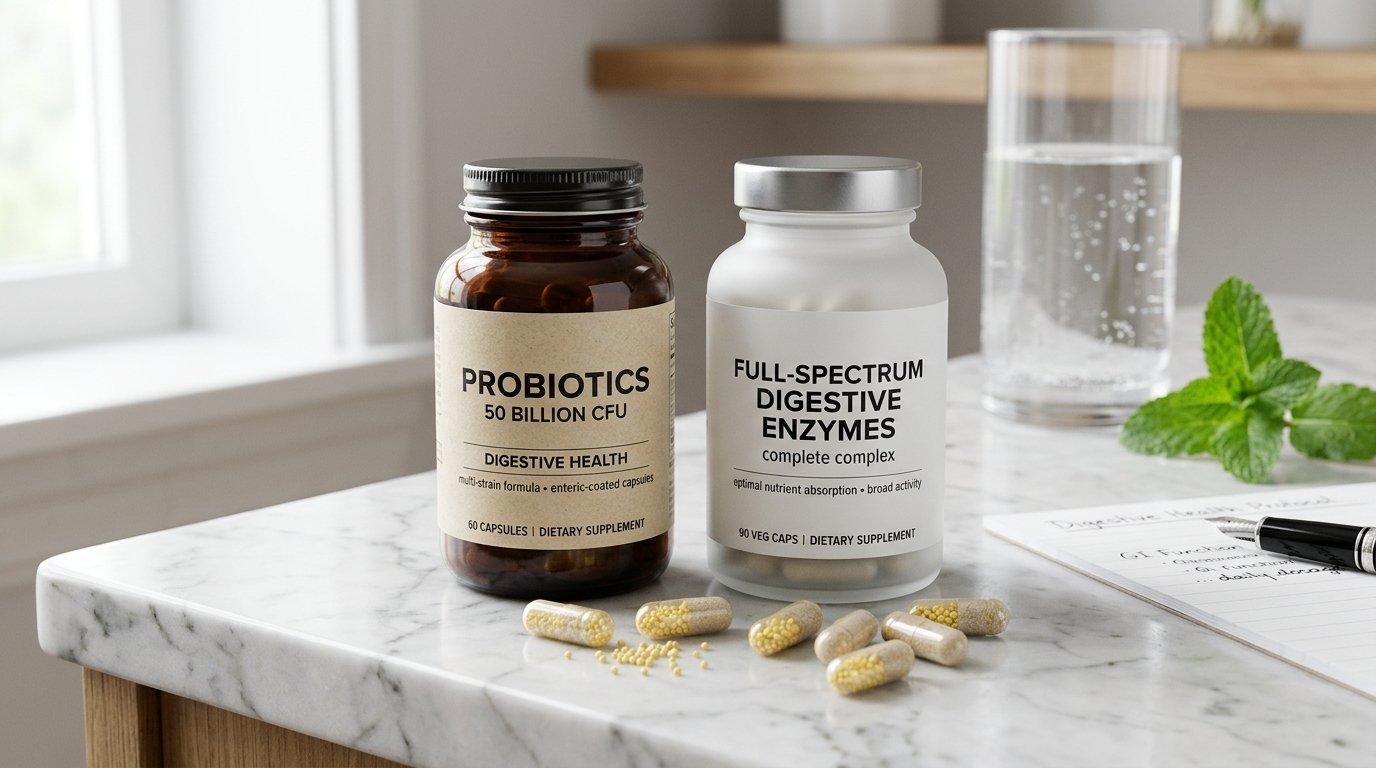
- 1 Capsule of Multi-Strain Probiotic (25–50 Billion CFU with delayed-release DRcaps technology).
- Taken with a full 8 oz glass of lukewarm filtered water.
- Rationale: On an empty stomach, gastric acid secretion is basal (pH 3.0–4.0) and stomach emptying time is rapid (15–20 minutes), allowing live bacteria to bypass the gastric barrier rapidly without exposure to high post-prandial acid or bile concentrations.
- With Every Substantial Meal (Breakfast, Lunch & Dinner):
- 1 to 2 Capsules of Full-Spectrum Digestive Enzymes.
- Taken with the first two bites of the meal.
- Rationale: Placing enzymes into the stomach alongside incoming food ensures immediate mixing with the food bolus, allowing proteases, amylases, and lipases to initiate macronutrient cleavage during the 45-minute gastric phase before food passes into the duodenum.
Targeted Clinical Indications: Which Resolves Your Symptoms?
To determine your optimal treatment path in the debate of probiotics vs digestive enzymes, match your primary clinical symptoms to the diagnostic guidelines below:
When Digestive Enzymes Are Your Primary Tool:
- Postprandial “Food Coma” & Heaviness: Feeling uncomfortably full, exhausted, or sluggish for hours after eating modest portions of protein or fats.
- Lactose & Dairy Intolerance: Gas, diarrhea, and rumbling within 30 minutes of consuming milk, cheese, or whey protein (requires targeted lactase supplementation).
- FODMAP & Legume Bloat: Severe abdominal distension after eating lentils, chickpeas, broccoli, onions, or garlic (requires alpha-galactosidase).
- Gallbladder Removal (Cholecystectomy): Inability to digest dietary lipids, leading to floating, greasy, or pale stools (requires ox bile extract and high-potency fungal lipase).
- Age-Related Hypochlorhydria: Natural decline in gastric acid and enzyme synthesis occurring after age 45 (requires enzymes paired with Betaine HCl).
When Probiotics Are Your Primary Tool:
- Recent Antibiotic Therapy: Broad-spectrum antibiotics (amoxicillin, ciprofloxacin, doxycycline) eliminate over 90% of commensal gut microflora. Probiotics are essential to prevent C. difficile colonization and restore mucosal diversity.
- IBS with Alternating Motility (IBS-M, IBS-D, IBS-C): Chronic stool irregularity accompanied by visceral hypersensitivity (requires Bifidobacterium longum BB536 and L. plantarum 299v).
- Intestinal Hyperpermeability (“Leaky Gut”): Systemic inflammation, joint aches, brain fog, and new food intolerances driven by circulating endotoxins (requires tight-junction reinforcing strains).
- Traveler’s Diarrhea Prevention: Prophylactic ingestion of Saccharomyces boulardii 5 days prior to international travel prevents pathogenic bacterial colonization.
Tier-1 Buyer’s Guide: Understanding Potency Units & Quality Standards
The gut supplement market is heavily saturated with misleading labeling. Avoid wasting money on sub-potent products by following these clinical purchasing guidelines across the US, UK, Canada, and Australia:
How to Read a Digestive Enzyme Label (The “Milligram” Scam):
Never purchase a digestive enzyme that lists potency exclusively in milligrams (mg)! Milligrams denote raw powder weight, which tells you absolutely nothing about whether the enzyme is biologically active. High-quality clinical enzymes must be quantified in standardized Food Chemical Codex (FCC) Activity Units:
- Protease: Measured in HUT (Hemoglobin Units on the Tyrosine basis) or USP. Look for at least 50,000 to 100,000 HUT per serving.
- Amylase: Measured in DU (Dextrinizing Units). Look for 15,000 to 25,000 DU.
- Lipase: Measured in FIP or USP units. Essential for fat digestion—look for at least 3,000 to 6,000 FIP.
- Lactase: Measured in ALU (Acid Lactase Units). A functional dose requires 3,000 to 9,000 ALU.
- Cellulase: Measured in CU (Cellulase Units) to hydrolyze plant cell walls that human enzymes cannot break down.
How to Read a Probiotic Label (Strain Identification & Viability):
- Complete Strain Designation: Quality probiotics list the genus, species, AND strain designation (e.g., Lactobacillus acidophilus NCFM or Bifidobacterium lactis Bi-07). A label that lists only the species without the alphanumeric strain code indicates generic, unverified bulk bacterial cultures.
- Delayed-Release Delivery: Standard gelatin capsules dissolve within 5 minutes in gastric acid, destroying up to 90% of vegetative probiotic cells. Insist on DRcaps, acid-resistant vegetarian capsules, or micro-encapsulation technology.
- Guaranteed CFU at Expiration: Ensure the packaging states “Guaranteed at Expiration Date,” not merely “At Time of Manufacture.” A product manufactured with 50 Billion CFU may degrade to under 2 Billion at 12 months if stored at room temperature without desiccant-lined bottles.
Enzyme Activity Units Explained: Decoding USP vs FCC vs HUT vs FIP on Supplement Labels
One of the most dangerous consumer traps in the digestive supplement marketplace is purchasing products that list enzyme quantities solely by weight in milligrams (e.g., “Amylase 150 mg”) rather than standardized activity units. Unlike inert chemical compounds, digestive enzymes are biological protein catalysts; an enzyme tablet containing 500 mg of inactive, denatured protein is completely therapeutically useless. When evaluating probiotics vs digestive enzymes, ensuring proper enzymatic potency requires decoding the Food Chemicals Codex (FCC) or United States Pharmacopeia (USP) units.
Here are the non-negotiable activity standards you must demand on commercial enzyme labels:
1. Protease (Protein Breakdown): Look for HUT (Hemoglobin Unit Tyrosine base) or USP Protease Units. A clinically meaningful formulation should deliver at least 40,000 to 80,000 HUT per capsule to effectively cleave hard-to-digest quaternary proteins such as bovine casein and wheat gluten into bioavailable dipeptides and amino acids.
2. Lipase (Lipid & Fat Hydrolysis): Look for FIP (Federation Internationale Pharmaceutique) or USP Lipase Units. Lipase breaks down long-chain triglycerides into fatty acids and monoglycerides. A minimum of 3,000 to 10,000 FIP units is essential to prevent steatorrhea, greasy floating stools, and postprandial nausea after lipid-rich meals.
3. Amylase & Glucoamylase (Carbohydrate Breakdown): Measured in DU (Dextrinizing Units) and AGU (Amyloglucosidase Units). Effective doses require 15,000 to 25,000 DU to rapidly split starch into disaccharides before stomach emptying.
4. Lactase (Lactose Breakdown): Measured in ALU (Acid Lactase Units). To digest an 8-ounce glass of dairy milk without lactose fermentation and bloating, a minimum threshold of 3,000 to 9,000 ALU is required at the onset of eating.
The Gut-Immune-Vagus Axis: Short Chain Fatty Acid (SCFA) Signaling & Enteric Neurotransmission
While enzymes complete their catalytic hydrolytic role entirely inside the gut lumen, probiotics establish systemic biochemical communication across the gut-brain-immune axis. Once colonizing enterocytes in the terminal ileum and colon, beneficial bacterial strains metabolize non-digestible prebiotic fibers into biologically active short-chain fatty acids (SCFAs)—predominantly acetate, propionate, and butyrate.
Butyrate functions as the primary mitochondrial fuel source for colonocytes, accounting for over 70% of their cellular energy requirements. By upregulating tight junction protein transcription (specifically Zonula Occludens-1 (ZO-1) and Claudin-1), butyrate structurally seals the paracellular spaces between epithelial enterocytes. This halts the systemic translocation of toxic lipopolysaccharides (LPS)—endotoxins originating from gram-negative bacterial cell walls that otherwise penetrate the systemic circulation, causing chronic fatigue, insulin resistance, and neuroinflammation.
Furthermore, SCFAs bind to free fatty acid receptors 2 and 3 (FFAR2 and FFAR3) expressed on enteroendocrine L-cells. This triggers the secretion of glucagon-like peptide-1 (GLP-1) and peptide YY (PYY), which optimize postprandial satiety, slow gastric transit time, and enhance peripheral insulin sensitivity. Simultaneously, probiotic fermentation products stimulate mucosal sensory afferent nerve endings of the vagus nerve ($CN X$), transmitting calming, anti-inflammatory neuro-modulatory signals directly to the dorsal vagal complex in the brainstem.
Step-by-Step Clinical Protocol: Transitioning from Acute Cleavage to Sustained Microbiome Colonization
In our clinical GI practice, we do not force patients to make an arbitrary either/or decision. For patients suffering from both acute postprandial distress and chronic microbial dysbiosis, we implement a phased therapeutic protocol:
Phase 1: Acute Upper GI Relief (Weeks 1 to 4): Initiate a broad-spectrum digestive enzyme complex containing high-potency protease, lipase, amylase, and alpha-galactosidase immediately with the first bite of the two largest daily meals. This stops the vicious cycle of undigested food entering the lower bowel, starving dysbiotic bacteria and eliminating immediate post-meal abdominal distension.
Phase 2: Microbiome Seeding & Mucosal Repair (Weeks 5 to 12): Introduce an enteric-coated, 50-billion CFU multispecies probiotic featuring human-derived Lactobacillus rhamnosus GG and Bifidobacterium lactis Bl-04 along with 500 mg of Saccharomyces boulardii 30 minutes before breakfast. As endogenous microbiome diversity increases and intestinal mucosal tight junctions regenerate, the reliance on exogenous digestive enzymes naturally decreases.
Frequently Asked Questions: Probiotics vs Digestive Enzymes
Final Medical Verdict: Crafting Your Gut Restoration Strategy
When resolving the therapeutic debate of probiotics vs digestive enzymes, recognize that you are not choosing between superior and inferior remedies, but aligning the precise molecular tool with your exact gastrointestinal breakdown.
If your daily struggle is post-meal heaviness, immediate stomach distension within an hour of eating, food intolerances, acid reflux, or gallbladder issues, Full-Spectrum Digestive Enzymes (taken with your first bites) are your primary therapeutic necessity. They eliminate the undigested food substrate that feeds opportunistic bacterial fermentation.
If your symptoms center on chronic lower bowel irregularity (IBS-C or IBS-D), post-antibiotic recovery, intestinal permeability (“leaky gut”), histamine reactivity, or systemic immune dysfunction, Multi-Strain Delayed-Release Probiotics (taken on an empty stomach in the morning) represent your foundational medical therapy. Combining both through our structured dual-phase schedule delivers comprehensive, upper-to-lower gastrointestinal restoration.
Medical Disclaimer: This article is for educational purposes only and does not substitute for personal medical consultation, diagnosis, or treatment. Always consult a gastroenterologist or licensed functional healthcare provider before initiating new high-potency gastrointestinal supplements, particularly if you have active ulcers, IBD (Crohn’s or Ulcerative Colitis), or recent gastrointestinal surgery.