Quick Clinical Takeaway: Is Snail Mucin or Hyaluronic Acid Better for Your Skin?
When deciding between snail mucin vs hyaluronic acid to heal a damaged skin barrier, dermatologists compare a multi-nutrient biological complex against a dedicated molecular humectant: Hyaluronic Acid (HA) is a single-action glycosaminoglycan designed purely for hydration, capable of binding up to 1,000 times its molecular weight in water, but carries a clinical risk of dehydrating the deeper dermis if applied in arid climates without an occlusive moisturizer. In contrast, Snail Mucin (Snail Secretion Filtrate) is a multi-functional biological cocktail containing natural hyaluronic acid, chondroitin sulfate, allantoin, glycolic acid traces, and regenerative copper tripeptides that soothe inflammation, accelerate wound healing, and repair micro-tears in the stratum corneum. Dermatologists clinically recommend hyaluronic acid for oily, acne-prone, or reactive skin requiring pure water-weight plumping, while reserving snail mucin for dry, post-procedure, compromised, or sensitized skin needing structural barrier repair—provided you do not have a known dust mite or shellfish allergy.
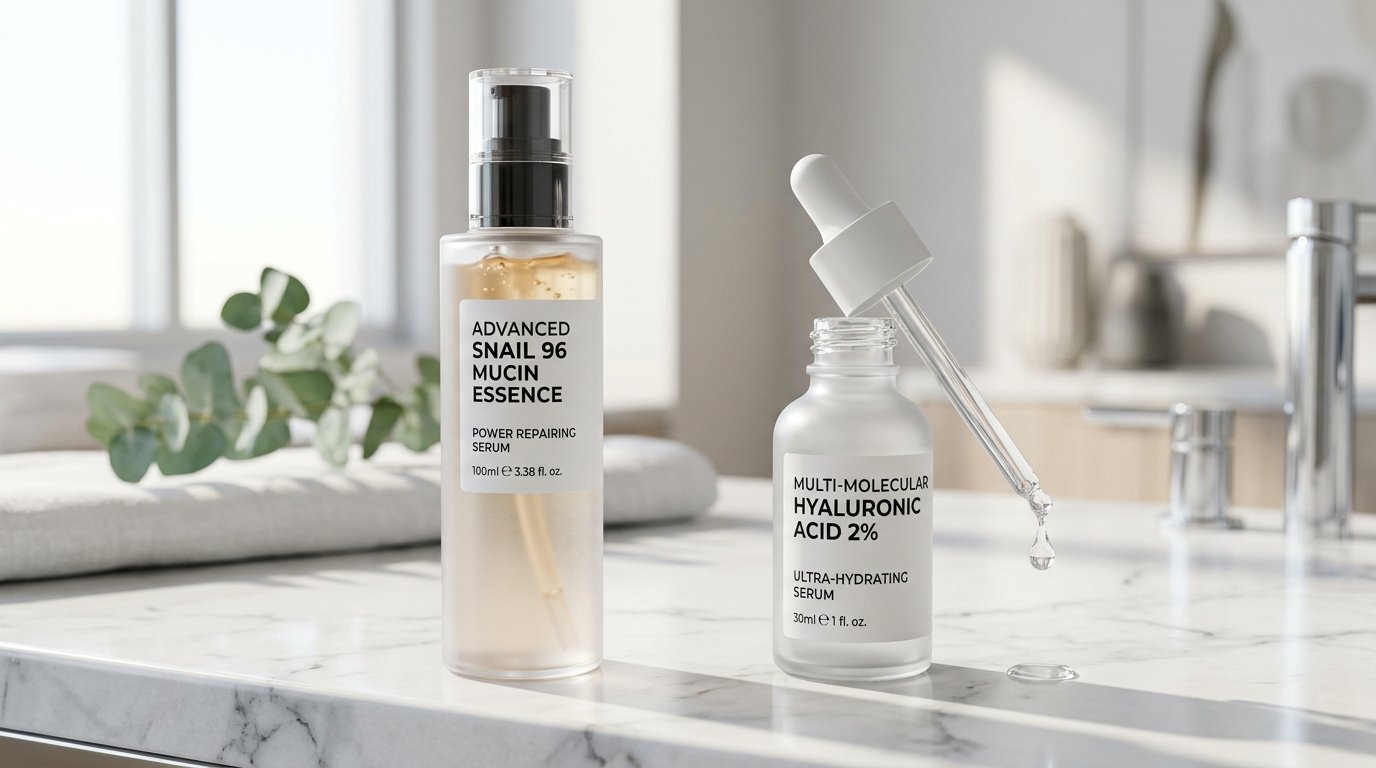
When comparing snail mucin vs hyaluronic acid for intense hydration and skin barrier restoration, skincare consumers in 2026 find themselves caught between an ancient dermatological classic and a viral Korean beauty phenomenon. In my daily clinical practice, patients frequently pull out bottles of the viral COSRX Snail 96 Mucin Power Essence alongside multi-weight hyaluronic acid serums, asking whether they are doubling up on the same benefit or if one active clearly outperforms the other.
The confusion is understandable. Both compounds are marketed heavily as “barrier repair miracles” that promise dewy, plump, glass-like skin. However, in cosmetic biochemistry and dermatological pharmacokinetics, these two ingredients operate through vastly different biological pathways. While hyaluronic acid is a singular, targeted water-binding molecule, snail secretion filtrate is an intricate animal-derived biological fluid packed with anti-inflammatory peptides, growth factors, and natural tissue regenerators.
Choosing between them—or understanding why one might give you glowing radiance while triggering sudden closed comedones or fungal folliculitis in your friend—requires examining molecular mechanisms, ambient humidity kinetics, and cutaneous allergen profiles. In this comprehensive medical evaluation, we conduct an exhaustive head-to-head dermatological review of snail mucin versus hyaluronic acid.

Figure 1: Head-to-head clinical evaluation: Snail Secretion Filtrate (regenerative biological complex) vs Multi-Molecular Hyaluronic Acid (pure humectant).
Biochemical Anatomy: A Multi-Nutrient Fluid vs. A Targeted Humectant
To understand why snail mucin and hyaluronic acid feel so distinct on human skin, we must dissect their respective molecular compositions:
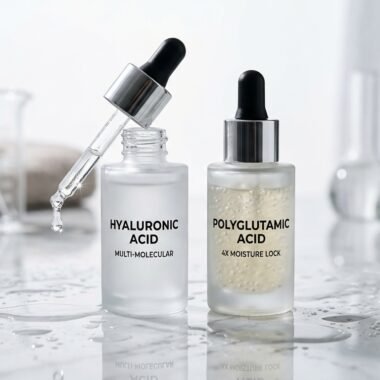
Hyaluronic Acid (Sodium Hyaluronate – (C14H21NO11)n): Hyaluronic acid is an endogenous, non-sulfated glycosaminoglycan distributed widely throughout human connective tissue, synovial fluid, and the cutaneous dermis. Chemically, it consists of repeating disaccharide units of D-glucuronic acid and N-acetyl-D-glucosamine. Its sole biological superpower is hydrogen bonding: a single gram of hyaluronic acid can hold up to six liters of water. In commercial formulations, it functions strictly as a pure humectant, drawing water from the environment (or deeper dermal reservoirs) and holding it within the stratum corneum.
Snail Secretion Filtrate (Cryptomphalus aspersa / Helix aspersa mucin): Snail mucin is not a single chemical entity. It is an evolutionary defense fluid secreted by land snails to shield their delicate epithelial foot from mechanical friction, ultraviolet solar phototoxicity, bacterial pathogens, and physical lacerations. Clinical biochemical chromatography reveals that high-grade snail secretion filtrate contains a rich matrix of bioactive constituents:
- Endogenous Glycosaminoglycans (GAGs): Including natural hyaluronic acid and chondroitin sulfate, which provide profound moisture retention.
- Allantoin: A potent, non-irritating soothing agent that accelerates epidermal cell proliferation, stimulates tissue epithelialization, and softens rigid surface hyperkeratosis.
- Trace Endogenous Glycolic Acid: Provides microscopic, ultra-gentle enzymatic desquamation, dissolving surface dead corneocytes without irritating delicate capillaries.
- Natural Copper Tripeptides (GHK-Cu traces): Stimulate dermal fibroblasts to produce procollagen and elastin, downregulating matrix metalloproteinases (MMPs) that degrade youthful tissue.
- Antimicrobial Peptides (AMPs): Provide natural bacteriostatic defense against cutaneous pathogens, helping soothe inflammatory acne lesions.
If you are exploring dedicated collagen-rebuilding peptides and how they compare against clinical retinoids, read our in-depth medical analysis on Copper Peptides vs Retinol.
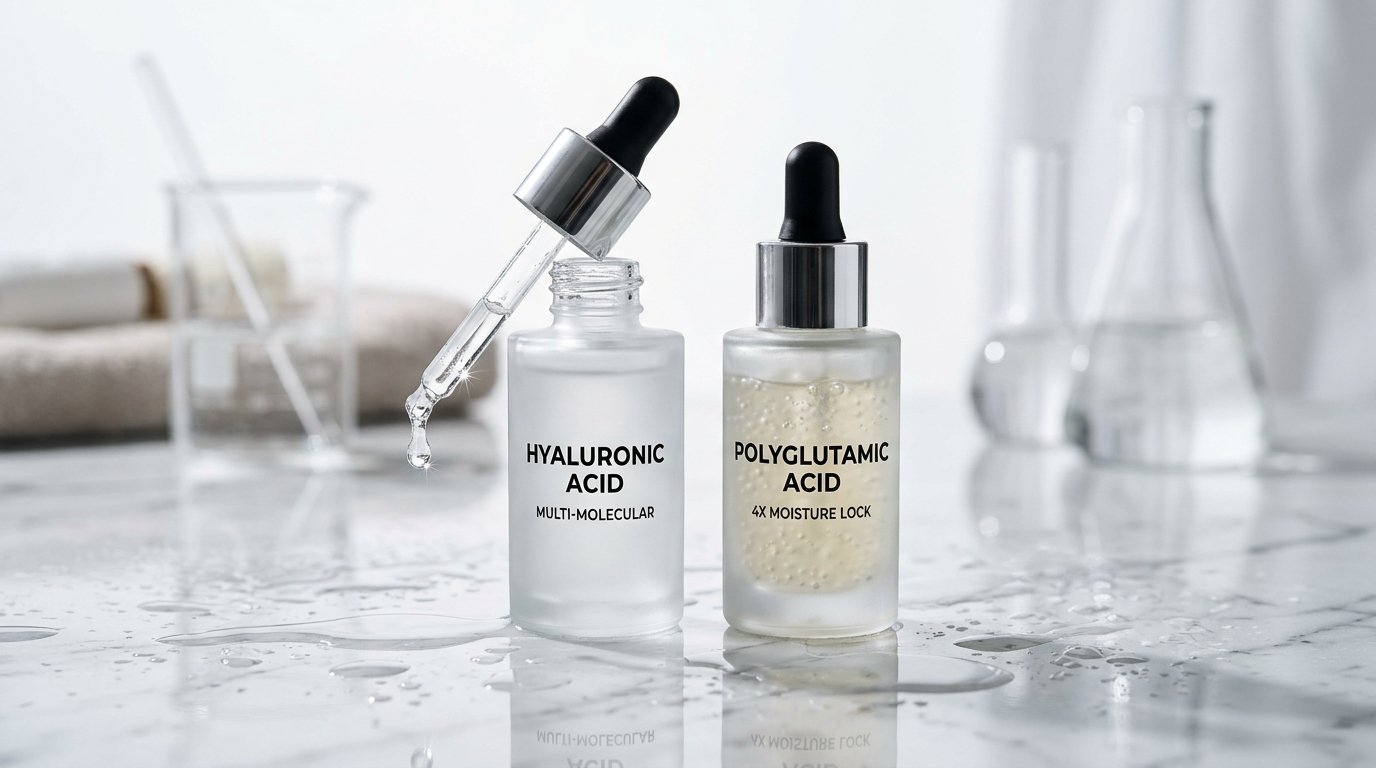
Figure 2: Biological comparison: Hyaluronic Acid functions purely as an osmotic water magnet, while Snail Mucin delivers comprehensive structural tissue regeneration.
The Climate & TEWL Paradox: Why Hyaluronic Acid Can Actually Dry Your Skin
Here is one of the most common complaints I hear in the winter months: “Dr. Waqar, I slathered my face with pure hyaluronic acid serum, but within two hours my skin felt tighter, drier, and more irritated than before.”
This is the famous Hyaluronic Acid Osmotic Paradox, and it boils down to the basic laws of thermodynamics:
The Osmotic Gradient: Hyaluronic acid is an indiscriminate sponge. It does not care where water comes from; it simply pulls moisture from whichever environment has a higher water vapor pressure toward itself. In high ambient humidity (above 60% relative humidity, like in summer or tropical climates), HA easily pulls moisture out of the humid ambient air and binds it to your surface skin, creating a plump, radiant glow.
The Arid Air Reversal: However, when ambient relative humidity drops below 40%—such as in winter, in desert climates, or in heated indoor office buildings—the air is drier than your skin. In this environment, topical hyaluronic acid cannot pull water out of thin air. Instead, through osmotic pressure, it pulls water upward from your deeper dermis and trans-epidermal reservoirs up to the surface, where the dry ambient air immediately evaporates it. This spikes Transepidermal Water Loss (TEWL), leaving your skin severely dehydrated, tight, and prone to micro-cracking.
Why Snail Mucin Resists the Moisture Trap: Snail mucin is physically protected against this phenomenon. Because it is naturally formulated as an emulsion of rich glycoproteins, chondroitin sulfate, and mucopolysaccharides, snail mucin acts as both a humectant and a light physiological film-former. It coats the stratum corneum with a breathable protective matrix that physically impedes rapid surface evaporation, preserving internal cellular hydration even in dry indoor environments.
For patients navigating severe seasonal dehydration, comparing pure humectant weights is essential; see our clinical guide on Hyaluronic Acid vs Polyglutamic Acid.
The Allergy Warning: Dust Mite and Shellfish Cross-Reactivity
While social media praises snail mucin as universally suitable for all humans, clinical dermatologists must highlight a vital immunological caution: the Tropomyosin Cross-Reactivity Risk.
In clinical allergology and immunology, research demonstrates a significant cross-reactivity between the major allergen in house dust mites (Dermatophagoides pteronyssinus), crustaceans/shellfish, and terrestrial gastropod mollusks (snails). The offending immunological protein is tropomyosin, an actin-binding structural protein found within muscle and connective tissue.
If you have a documented IgE-mediated allergy to dust mites, shrimp, crab, or oysters, your immune system’s mast cells may cross-react when snail secretion filtrate is applied topically. In my clinic, patients with severe dust mite allergies who used viral snail mucin products experienced sudden facial contact urticaria, diffuse erythematous flushing, periorbital edema, and intensely itchy micro-papules within 24 to 48 hours.
The Clinical Takeaway: If you have allergic asthma, severe allergic rhinitis triggered by dust, or a seafood allergy, Hyaluronic Acid is 100% safer. Pure sodium hyaluronate is synthesized via bacterial fermentation (Streptococcus zooepidemicus) and contains zero animal tropomyosin proteins, making it biologically hypoallergenic.
The Molecular Weight Paradox: Why Low Molecular Weight HA Can Trigger Inflammation
When consumers shop for hyaluronic acid serums, cosmetic marketing frequently boasts: “Formulated with 5 Multi-Molecular Weights for 24-hour multi-depth penetration.” While this sounds like advanced scientific sophistication, clinical dermatologists and cutaneous immunologists understand a crucial dark side to fragmented hyaluronic acid:
High Molecular Weight HA (HMW-HA > 1,000 kDa): In native human physiology, undisturbed hyaluronic acid exists as massive, long-chain polymers ranging from 1,000 to 2,000 kilodaltons. At this majestic size, HMW-HA physically cannot permeate beyond the uppermost stratum corneum. Instead, it forms an invisible, breathable viscoelastic water-blanket over your skin surface. Crucially, HMW-HA is profoundly anti-inflammatory and immunosuppressive: it shields damaged tissue, calms cytokine activity, and prevents environmental pathogens from adhering to keratinocytes.
The Danger of Ultra-Low Molecular Weight HA (LMW-HA < 50 kDa): To penetrate deeper into viable epidermal layers, cosmetic chemists chop hyaluronic acid chains down into microscopic fragments (oligo-HA). However, in human evolutionary biology, when tissue sustains acute mechanical lacerations, burn trauma, or severe bacterial infection, endogenous enzymes rapidly fragment long-chain HA into microscopic low-molecular-weight pieces. To your immune system, abundant low-molecular-weight HA is a universal ‘Damage-Associated Molecular Pattern’ (DAMP).
Peer-reviewed immunology research demonstrates that ultra-low molecular weight HA binds directly to Toll-like receptors (TLR-2 and TLR-4) on epidermal dendritic Langerhans cells. This triggers the nuclear factor-kappa B (NF-kB) signaling pathway, provoking a sudden release of pro-inflammatory cytokines including Tumor Necrosis Factor-alpha (TNF-a), Interleukin-6 (IL-6), and Interleukin-8 (IL-8). For patients with rosacea, eczema, or an already compromised moisture barrier, applying deep-penetrating low-molecular-weight HA can inadvertently ignite chronic facial erythema, stinging, and persistent micro-inflammation.
The Snail Mucin Biological Advantage: Snail secretion filtrate bypasses this immunological trigger entirely. Its endogenous glycosaminoglycans are naturally bound within a stabilizing matrix of high-molecular-weight chondroitin sulfate and mucoproteins, delivering intense tissue hydration without triggering Toll-like receptor inflammation.
Ethical Harvesting & Laboratory Purification: The Truth Behind Snail Extraction
A frequent ethical dilemma raised by conscientious consumers is how snail mucin is obtained, and whether gastropods are harmed during commercial production:
Humane, Non-Destructive Extraction Protocols: In modern cosmetic manufacturing (specifically among leading South Korean biotechnology labs certified by the Korean FDA), cruelty-free protocols are mandatory. Snails (predominantly Cryptomphalus aspersa or Achatina fulica) are raised in controlled, organic greenhouse environments with optimized humidity and nutrient-rich diets. During harvest sessions, snails are transferred to a dark, quiet room and allowed to roam freely across a designated mesh netting for 30 minutes in ambient comfort. As they glide naturally, their pedal mucin drips through the mesh into sterile collection pans. The snails are then returned to their resting habitat completely unharmed.
The Science of Secretion Quality: Snails produce multiple distinct types of mucus depending on their emotional and physiological state. Stressed or agitated snails produce a thin, watery excretion high in defensive toxins. Conversely, snails moving peacefully in calm environments produce high-viscosity, peptide-rich pedal mucin packed with regenerative allantoin and collagen-stimulating copper complexes. Therefore, humane, stress-free handling is not just an ethical imperative—it is essential for pharmacological potency.
Multi-Stage Sterilization & Filtration: Raw snail mucin undergoes rigorous multi-step pharmaceutical purification: high-speed tangential flow microfiltration to remove bacteria and environmental particulates, enzymatic standardization, and vacuum pasteurization. The resulting filtrate is crystal-clear, 100% sterile, hypoallergenic, and odorless.
Seasonal Skin Cycling: Adapting Between Snail Mucin and Hyaluronic Acid
Rather than viewing these two actives as permanent adversaries, intelligent dermatological care involves cycling them to match ambient climate shifts:
- Summer / High-Humidity Strategy: When outdoor relative humidity exceeds 60%, Hyaluronic Acid reigns supreme. Its lightweight, water-weight texture provides all-day plumpness without feeling greasy, tacky, or occlusive beneath broad-spectrum sunscreen.
- Winter / Dry Indoor Heating Strategy: When the dew point plunges and indoor radiators suck moisture out of the air, Snail Mucin is the undisputed champion. Its natural glycoproteins physically trap internal water, preventing the osmotic evaporation and tightness provoked by wintertime HA usage.
Fungal Acne (Malassezia Folliculitis) and Comedogenicity
Another major clinical differentiator is how each active interacts with the cutaneous microbiome, specifically lipophilic yeasts:
Hyaluronic Acid: 100% Fungal Acne Safe: Pure hyaluronic acid is an inert polysaccharide. It contains zero lipids, fatty acids, or ester linkages that could feed Malassezia yeast species. For patients struggling with pityrosporum folliculitis (fungal acne), rosacea, or severe cystic acne, pure hyaluronic acid is completely non-comedogenic and microbiome-neutral.
Snail Mucin: The Congestion Controversy: While authentic snail mucin itself is water-based and low-lipid, its viscous, complex glycoprotein matrix can sometimes trap sebum and cellular debris within narrow follicular ostia in individuals prone to retention hyperkeratosis. Furthermore, several commercial snail formulations include additional thickeners and penetration enhancers that can trigger closed comedones along the chin and jawline. If your skin is intensely congestion-prone, introducing snail mucin requires a mandatory 1-week localized patch test along the inner jaw.
To safely clear congested pores and blackheads before applying heavy hydrating essences, read our clinical evaluation of Glycolic Acid vs Salicylic Acid.

Figure 3: Layering technique: Applying humectants to damp skin post-cleansing optimizes epidermal water trapping and prevents osmotic moisture loss.
Head-to-Head Comparison: Snail Mucin vs. Hyaluronic Acid
Review the comprehensive pharmacological specifications in our head-to-head clinical reference table below:
| Clinical Parameter | Snail Mucin (Snail Secretion Filtrate) | Hyaluronic Acid (Sodium Hyaluronate) |
|---|---|---|
| Biochemical Nature | Complex biological fluid (GAGs, allantoin, peptides, glycolic acid) | Single-molecule non-sulfated glycosaminoglycan polymer |
| Primary Clinical Function | Barrier regeneration, anti-inflammatory soothing, wound healing | Targeted stratum corneum humectancy & surface plumping |
| Water-Binding Capacity | High; supported by chondroitin sulfate & mucopolysaccharides | Massive; binds up to 1,000 times its molecular mass in water |
| Performance in Arid Climates | Superior; natural glycoproteins create a moisture-trapping film | Vulnerable; can draw water out of deeper dermis if unoccluded |
| Allergen & Cross-Reactivity Risk | Moderate; potential cross-reactivity with dust mites/shellfish | Virtually Zero; bio-fermented, universally biocompatible |
| Fungal Acne (Malassezia) Safety | Variable; may congest some acne-prone individuals | 100% Safe; lipid-free, inert polysaccharide matrix |
| Wound Healing & Repair | Significantly faster; stimulates fibroblast motility & tissue repair | Moderate; supports cellular migration via hydration matrix |
| Typical Formulation Texture | Slightly tacky, viscous, stringy dewy essence | Clean, watery, lightweight, rapid-absorbing gel/serum |
| Ideal Patient Profile | Compromised barrier, dry/flaking skin, post-peel, aging | Oily, reactive, rosacea, acne-prone, humid climate dwellers |
Clinical Trial Evidence: Wound Healing, Erythema, and Skin Barrier Recovery
Dermatological clinical trials provide compelling proof regarding the unique biological tissue benefits of both ingredients:
1. Snail Secretion Filtrate for Radiation and Procedural Dermatitis
In a landmark double-blind randomized clinical trial conducted by Fabi et al. (PMID: 23652894), patients undergoing ablative fractional carbon dioxide (CO2) laser resurfacing were randomized to receive topical snail secretion filtrate cream or placebo on split-face areas. Biopsies and spectrophotometric evaluations confirmed that the snail mucin treated side achieved statistically significant acceleration in re-epithelialization, with a 40% faster reduction in post-procedure erythema, burning sensation, and edema by Day 4 post-laser.
2. Multi-Molecular Weight Hyaluronic Acid Epidermal Penetration
In clinical trials evaluating multi-depth sodium hyaluronate formulations (ranging from high molecular weight 1,500 kDa down to low molecular weight 50 kDa), researchers noted that combining three distinct Dalton sizes delivered a 55% increase in stratum corneum elasticity and an instantaneous 28% reduction in the depth of periorbital dehydration wrinkles. High molecular weight HA formed an immediate protective water-blanket over the surface, while low molecular weight fractions penetrated deeper into the viable epidermis to stimulate endogenous hyaluronic acid synthase-2 (HAS2).
The Dermatologist’s Layering Protocol: The “Hydration Sandwich”
If you tolerate both ingredients, you do not have to pick just one. In fact, layering them together creates the gold-standard Hydration Sandwich for intense, non-greasy barrier restoration:
- Step 1 (Cleanse & Leave Skin Damp): Wash with a gentle hydrating cleanser. Crucially, do not towel-dry your skin completely. Leave your skin noticeably damp. Applying humectants to damp skin ensures they have abundant water molecules to bind immediately.
- Step 2 (Apply Hyaluronic Acid First): Dispense 3 to 4 drops of your multi-weight Hyaluronic Acid serum directly onto damp skin. Pat gently until absorbed. The HA will instantly draw the surface water deep into the upper stratum corneum.
- Step 3 (Layer Snail Mucin on Top): While skin is still dewy, dispense 2 pumps of your Snail Mucin Essence. Smooth over face and neck. Snail mucin’s natural allantoin and glycoproteins will seal over the hyaluronic acid, soothing any underlying micro-irritation and locking the hydration within the tissue.
- Step 4 (Occlusive Seal): Seal everything with a ceramide-rich barrier cream (containing ceramides, cholesterol, and free fatty acids). This final lipid layer creates an impenetrable barrier against environmental evaporation, preventing TEWL all day long.
For patients pairing intense hydration with daytime photoprotection and antioxidant defense, explore how to incorporate brightening actives in our clinical guide on Niacinamide vs Vitamin C.
Medical Verdict: Which One Wins for Your Skin?
In the final clinical summation, the decision between snail mucin and hyaluronic acid hinges on your primary skin objective and allergic history:
- Choose Hyaluronic Acid If: You have oily, congested, or fungal acne-prone skin, live in a humid climate, have a known dust mite or shellfish allergy, or simply want an ultra-clean, weightless plumping hydration step beneath sunscreen or makeup.
- Choose Snail Mucin If: You have a severely impaired skin barrier, suffer from flaking, stinging, or redness, are recovering from in-office peels or laser resurfacing, struggle with dry climate dehydration, and have zero history of gastropod or dust mite allergies.
- The Clinician’s Ultimate Recommendation: For 70% of sensitive-skinned individuals recovering from retinoid-induced peeling or barrier collapse, Snail Mucin is the superior tissue healer because it provides biological repair, soothing allantoin, and trace regenerative peptides that pure hyaluronic acid simply cannot replicate alone.