Direct Clinical Takeaway: Is Adapalene or Tretinoin Better for Your Skin?
When comparing adapalene vs tretinoin, your choice depends on whether your primary dermatological target is inflammatory acne or structural collagen remodeling. Adapalene (Differin) is a third-generation synthetic retinoid engineered specifically for the pilosebaceous follicle; it selectively binds to RAR-beta and RAR-gamma receptors, provides superior photostability, causes significantly less barrier irritation, and is available over-the-counter in the USA. Tretinoin (Retin-A) is a first-generation prescription retinoic acid that binds non-selectively to all three nuclear receptor subtypes (RAR-alpha, beta, and gamma), delivering measurably faster, deeper dermal collagen synthesis and fine wrinkle reduction at the expense of a harsher retinization purge.
When deciding between adapalene vs tretinoin for persistent adult breakouts, stubborn post-inflammatory hyperpigmentation, or early photoaging, you are comparing two distinct generations of dermatological medicine. Both compounds belong to the legendary topical retinoid family, universally revered by dermatologists as the single most evidence-based pharmacological class in skin health. Yet, choosing the wrong molecule can leave you with chronic barrier peeling, painful dermatitis, or underwhelming anti-aging results.
For decades, prescription tretinoin reigned as the unchallenged gold standard for dermatologists treating severe acne and photo-damaged skin. However, the development of adapalene represented a major pharmacological breakthrough: a chemically synthesized naphthoic acid derivative engineered to specifically target follicular keratinization while dramatically reducing cutaneous irritation. Furthermore, with adapalene gaining over-the-counter status in the United States while tretinoin remains strictly prescription-only, millions of skincare consumers face a critical question: is over-the-counter adapalene enough, or do you truly need prescription tretinoin?
In this clinical evaluation, our medical editorial team conducts an exhaustive head-to-head comparison between adapalene (Differin) and tretinoin (Retin-A). We analyze nuclear receptor selectivity, molecular photostability, histological collagen remodeling biopsy data, purging timelines, formulation vehicle chemistry, and real-world routine pairing to help you make an authoritative, evidence-based decision.
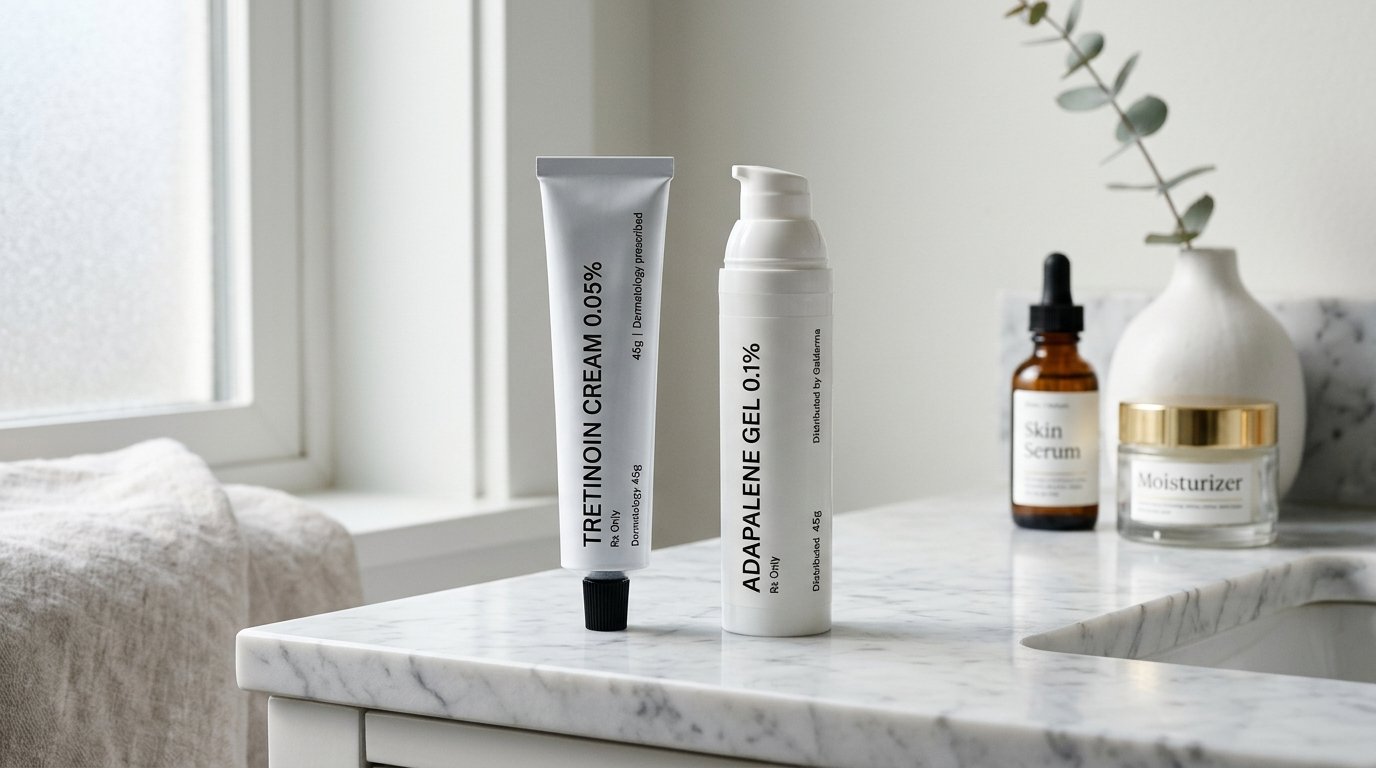
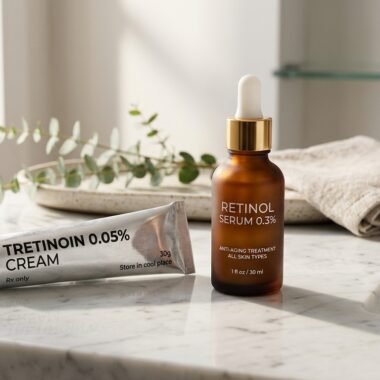
Figure 1: Over-the-counter Adapalene 0.1% gel alongside prescription Tretinoin 0.05% cream on a clinical marble vanity.
The Molecular Science: First-Generation vs. Third-Generation Retinoids
To understand the clinical divergence between adapalene and tretinoin, you must examine how molecular engineering evolved over three decades of dermatological research. Retinoids are not identical clones; they are classified into distinct biochemical generations based on their molecular structure, receptor affinity, and metabolic stability.
Tretinoin (All-Trans Retinoic Acid) represents the first generation of topical retinoids. Originally isolated in the late 1960s, tretinoin is a direct, natural metabolite of vitamin A. Because it is an unrefined endogenous ligand, tretinoin exhibits broad, non-selective binding affinity. It docks indiscriminately into all three nuclear Retinoic Acid Receptor (RAR) isoforms: RAR-alpha, RAR-beta, and RAR-gamma. While this universal binding triggers rapid dermal gene expression and intense collagen deposition, receptor activation in non-target epidermal compartments is precisely what causes classic “retinoid dermatitis”—severe erythema, transepidermal water loss (TEWL), and surface stratum corneum peeling.
Adapalene (CD271) represents the third generation of topical retinoids. Synthesized as a lipophilic naphthoic acid derivative, adapalene was specifically engineered through computer-aided molecular modeling to overcome tretinoin’s primary pharmaceutical flaws: chemical instability and excessive non-target irritation. Rather than binding non-selectively, adapalene exhibits high receptor selectivity, binding tightly to RAR-beta and RAR-gamma, while completely bypassing RAR-alpha.
Because RAR-gamma is the predominant receptor isoform in human epidermal keratinocytes and follicular epithelial cells (accounting for nearly 90% of dermal RAR expression), adapalene delivers potent comedolytic and anti-inflammatory activity directly inside the pore without triggering the widespread inflammatory cascade associated with non-selective RAR-alpha stimulation.
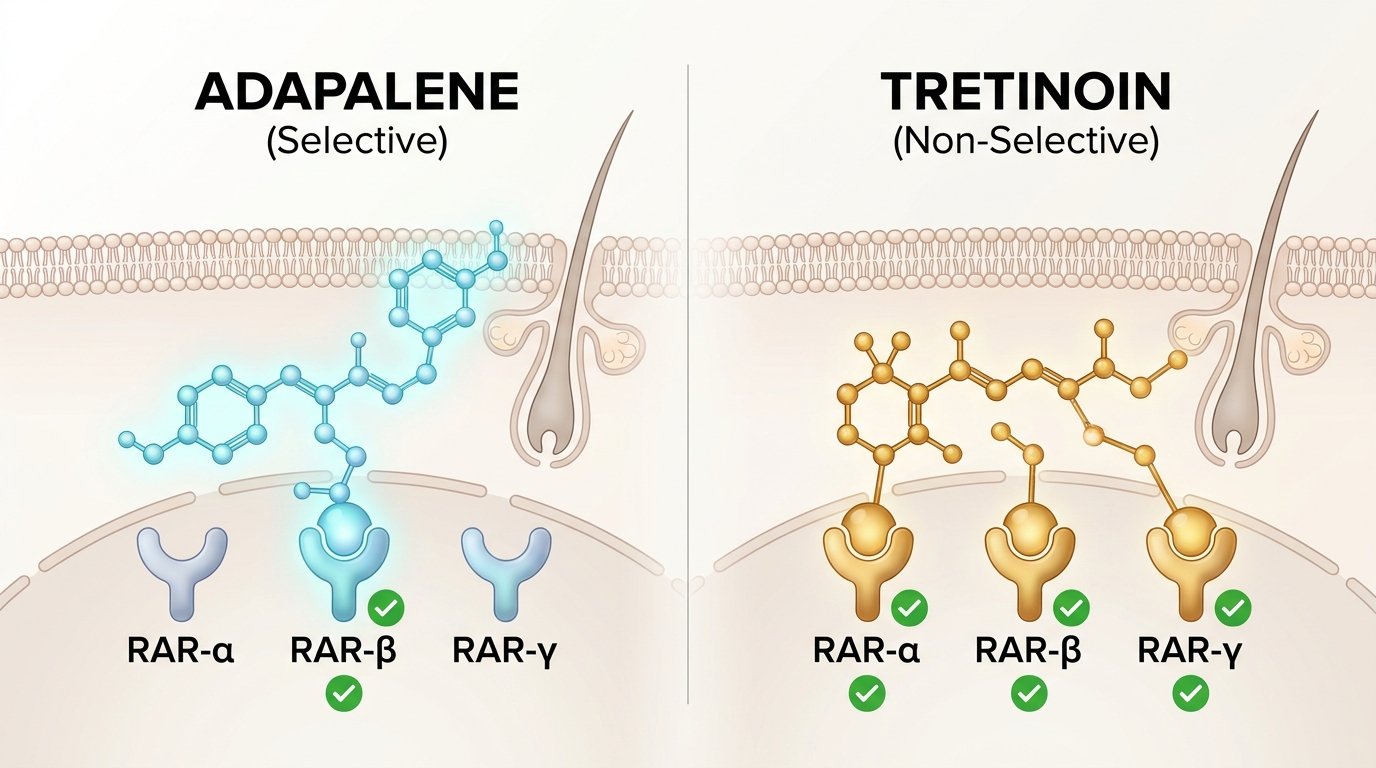
Figure 2: Retinoid nuclear receptor selectivity: Adapalene selectively targets RAR-beta/gamma in the follicle, while Tretinoin non-selectively binds all three receptor subtypes.
Chemical Stability & Daylight Photostability
A major, practical advantage of adapalene over tretinoin lies in its extraordinary chemical and photochemical stability. Understanding molecular degradation is critical for real-world patient adherence and efficacy:
- Tretinoin Is Highly Photolabile: The conjugated polyene chain of tretinoin is notoriously fragile. When exposed to ambient ultraviolet (UV) radiation or direct sunlight, tretinoin undergoes rapid photodegradation, losing up to 50% to 80% of its biological potency within two hours. For this reason, dermatologists strictly instruct patients to apply tretinoin exclusively at night before bed.
- Adapalene Is Highly Photostable: Thanks to its rigid, aromatic naphthoic acid backbone, adapalene does not break down under sunlight or fluorescent office lighting. In clinical stability testing, adapalene demonstrated zero degradation after prolonged UV exposure. While night application remains the standard dermatological recommendation to support nocturnal skin repair, accidental morning exposure does not deactivate the molecule.
- The Benzoyl Peroxide Incompatibility Factor: For acne patients, combining retinoids with benzoyl peroxide (BPO) is a cornerstone strategy. However, traditional first-generation tretinoin is rapidly oxidized and rendered biologically inert when applied simultaneously with benzoyl peroxide. In stark contrast, adapalene is completely stable in the presence of benzoyl peroxide—a property that led to the development of the famous FDA-approved combination therapy, Epiduo (0.1% or 0.3% adapalene + 2.5% benzoyl peroxide).
If you are also evaluating cosmetic over-the-counter alternatives before committing to synthetic retinoids, our detailed comparative guide on tretinoin vs retinol provides a foundational look at how natural precursors compare to prescription retinoic acid.
Head-to-Head Comparison: Adapalene vs. Tretinoin
To help you compare the clinical specifications, pharmacological profiles, and daily usage requirements of both treatments side-by-side, review the detailed table below:
| Clinical Feature | Adapalene (Differin) | Tretinoin (Retin-A, Altreno) |
|---|---|---|
| Retinoid Generation | Third-Generation (Synthetic Naphthoic Acid) | First-Generation (Endogenous Retinoic Acid) |
| Nuclear Receptor Selectivity | Selective (Binds RAR-beta and RAR-gamma only) | Non-selective (Binds RAR-alpha, beta, and gamma) |
| Regulatory Availability | Over-the-counter 0.1% (USA); Rx 0.3% (Differin XP) | Prescription Only (USA, UK, Canada, Australia) |
| Standard Dosages | 0.1% (OTC gel/cream) and 0.3% (Rx gel) | 0.025%, 0.05%, 0.1% (cream, gel, micro) |
| Photostability under Sunlight | Extremely stable (Zero degradation in daylight) | Unstable (Degrades 50%+ in ambient UV light) |
| Benzoyl Peroxide Compatibility | 100% Compatible (Can be layered or mixed) | Incompatible (Oxidizes and deactivates tretinoin) |
| Direct Anti-Inflammatory Action | High (Inhibits lipoxygenase and AP-1 pathways) | Moderate (Indirect via cell turnover) |
| Cutaneous Irritation Index | Low to Moderate (Significantly better tolerated) | High (Frequent peeling, erythema, dryness) |
| Primary Clinical Indication | Comedonal & inflammatory acne, sensitive skin | Severe photoaging, deep wrinkles, cystic acne, melasma |
| Anti-Aging Collagen Remodeling | Proven (Especially at 0.3% concentration) | The Gold Standard (Rapid Type I/III collagen synthesis) |
What the Clinical Trials Prove: Acne Efficacy vs. Anti-Aging Collagen Synthesis
When evaluating published clinical trials, the medical evidence reveals clear distinctions between acne resolution speed and long-term dermal anti-aging outcomes.
1. The Acne Battle: Equal Clearance with Superior Tolerability
In a multicenter, randomized, double-blind clinical trial published on PubMed by Dunlap et al. in the Journal of the American Academy of Dermatology, investigators compared 0.1% adapalene gel against 0.025% tretinoin gel across 268 patients suffering from moderate acne vulgaris. The results were conclusive:
- Acne Lesion Reduction: Adapalene demonstrated statistically equivalent reductions in total inflammatory and non-inflammatory acne lesion counts compared to tretinoin by week 12.
- Speed of Onset: In non-inflammatory comedones (blackheads and microcomedones), adapalene cleared lesions measurably faster within the first 4 weeks, largely due to its superior lipophilicity penetrating follicular sebum plugs effortlessly.
- Local Cutaneous Tolerance: Patients applying adapalene reported significantly less severe erythema, scaling, dryness, and burning compared to tretinoin users throughout the entire 12-week study period.
2. The Anti-Aging Dilemma: Can Adapalene Match Tretinoin for Wrinkles?
While adapalene’s acne credentials are undisputed, many skincare consumers want to know whether adapalene stimulates the same anti-aging collagen synthesis as prescription tretinoin.
A landmark clinical trial published by Bagatin et al. in the Journal of Cosmetic Dermatology conducted an objective histological biopsy comparison evaluating 0.3% adapalene gel versus 0.05% tretinoin cream for treating photoaged human skin over a 24-week period. Histological analysis of skin biopsies revealed that 0.3% adapalene produced statistically significant increases in dermal collagen synthesis, epidermal thickness, and dermal ground substance that were virtually indistinguishable from 0.05% tretinoin.
However, an important dermatological caveat exists: the standard over-the-counter version of Differin available in USA pharmacies is 0.1% adapalene, not 0.3%. While 0.1% adapalene certainly stimulates collagen and cellular turnover over a 6 to 12 month timeframe, 0.05% tretinoin remains noticeably faster and more potent for deep static rhytids, severe solar elastosis, and structural facial laxity.
Formulation Chemistry: Gels, Creams, and Microspheres
The vehicle that suspends your retinoid molecule dictates trans-follicular absorption rates, evaporation speed, and lipid barrier interaction:
- Adapalene 0.1% Aqueous Gel: Formulated as an alcohol-free, water-based carbomer gel. It dries weightlessly on the skin without leaving an oily film or sticky residue. Because it lacks heavy comedogenic emollients or drying denatured alcohol, it is exceptionally well-tolerated by oily, combination, and acne-prone skin types.
- Tretinoin Cream (0.025%, 0.05%, 0.1%): Formulated with lipid-rich emollients, including stearic acid, isopropyl myristate, and mineral oil. While beneficial for mature or dry complexions, isopropyl myristate can exacerbate follicular clogging in acne patients prone to comedones.
- Tretinoin Gel: Often suspended in an alcohol base that penetrates oily sebum rapidly. However, the rapid evaporation of alcohol can trigger intense localized stinging, barrier dehydration, and immediate flaking.
- Tretinoin Microsphere Gel (Retin-A Micro): An advanced formulation encapsulating tretinoin inside porous polymer microspheres (sponge-like microscopic beads). Instead of releasing the entire dose at once, the microspheres slowly release tretinoin throughout the night, reducing surface irritation by up to 60%.
- Micronized Lotion Vehicles (Altreno): A modern prescription tretinoin 0.05% lotion suspended in hyaluronic acid, soluble collagen, and glycerin, providing remarkable clinical tolerability for patients with dry, sensitive skin.
Hyperpigmentation & Melasma: Fitzpatrick Skin Type Considerations
For patients with Fitzpatrick Skin Types IV through VI (richly pigmented skin of Hispanic, South Asian, Middle Eastern, and African descent), choosing between adapalene and tretinoin carries unique dermatological stakes:
In melanocyte-rich skin, any aggressive inflammatory trigger can stimulate hyperactive melanocytes, producing post-inflammatory hyperpigmentation (PIH)—dark brown or grayish patches that can persist for months after an initial flare-up. Because first-generation tretinoin frequently triggers intense retinization dermatitis and barrier erythema during the initial eight weeks, it carries a substantially higher risk of inducing secondary PIH in darker skin tones if not introduced with extreme caution.
In contrast, adapalene’s direct inhibition of lipoxygenase-mediated inflammation and receptor selectivity makes it the significantly safer, preferred first-line retinoid for managing acne and post-acne dark marks in skin of color. It gently normalizes melanosome transfer from melanocytes into keratinocytes without triggering the severe erythema that provokes rebound pigmentation.

Figure 3: Applying a single pea-sized portion of retinoid across facial quadrants to prevent localized receptor over-saturation and barrier peeling.
The Purge & Acclimation Comparison: Week-by-Week Survival
The dreaded “retinoid purge” is a universal biological rite of passage when accelerating follicular turnover. However, the intensity and duration of this purge differ dramatically between adapalene and tretinoin:
The Adapalene Purge Timeline (Weeks 2 to 6)
Because adapalene selectively targets RAR-beta/gamma and exerts direct anti-inflammatory activity by blocking cellular lipoxygenase pathways, its purge is generally mild to moderate:
- Weeks 1 to 2: Mild dryness around the mouth and nose. Minimal stinging.
- Weeks 3 to 4: Small superficial whiteheads may erupt as microcomedones clear out. Inflammatory cystic flare-ups are uncommon.
- Weeks 5 to 6: Purging decelerates rapidly. Active breakouts resolve, leaving skin noticeably smoother.
The Tretinoin Purge Timeline (Weeks 2 to 10)
Because tretinoin non-selectively triggers RAR-alpha and causes widespread epidermal desquamation, the retinization phase can be intense:
- Weeks 1 to 3: Marked erythema, tightness, intense flaking, and sensitivity to basic moisturizers.
- Weeks 4 to 7: Peak purge window. Deep dormant microcomedones erupt into inflammatory papules and pustules simultaneously.
- Weeks 8 to 12: Stabilization. The skin barrier recalibrates, cellular shedding normalizes, and the luminous “tretinoin glow” begins to emerge.
Step-by-Step Application Protocols: How to Apply Each Retinoid Correctly
Regardless of whether you choose adapalene or tretinoin, proper application technique prevents severe barrier failure:
1. The “Rule of Threes” Acclimation Ladder
Never apply any active retinoid nightly from day one. Follow this clinical schedule:
- Weeks 1 & 2: Apply once every three nights.
- Weeks 3 & 4: Apply every other night (if zero peeling is observed).
- Week 5 onward: Advance to nightly application only if your skin demonstrates complete comfort.
2. The Exact Pea-Sized Dosage
Dispense exactly one green pea-sized droplet for your entire face. Applying more product does not accelerate results; it simply floods excess retinoic acid into sensitive skin folds, causing acute chemical-like burns.
3. The Dermatological Buffer Technique
If you have sensitive or rosacea-prone skin, adopt the buffer technique: apply a gentle, ceramide-rich moisturizer first, allow it to absorb for 5 minutes, and apply your adapalene or tretinoin directly on top. Studies confirm that buffering reduces transepidermal water loss without compromising the therapeutic efficacy of the active retinoid.
Building a Synergistic Routine: What to Pair and What to Avoid
Retinoids require thoughtful layering with complementary dermatological actives to maximize clinical outcomes:
Morning Antioxidants & Photoprotection
Both adapalene and tretinoin accelerate epidermal turnover, rendering fresh keratinocytes temporarily more susceptible to ambient UV damage. Broad-spectrum SPF 50+ mineral or organic sunscreen is mandatory every morning. In the morning routine, pair your sunscreen with a stabilized L-ascorbic acid antioxidant serum to neutralize reactive oxygen species; explore our dermatological review of the 5 best SkinCeuticals C E Ferulic dupes for clinical recommendations.
Stacking with Non-Invasive Beauty Tech
Modern clinical aesthetic regimens frequently combine topical retinoids with biophysical modalities. Utilizing medical-grade red light therapy (633nm and near-infrared 830nm) on non-retinoid evenings stimulates mitochondrial ATP synthesis, expedites tissue repair, and dramatically shortens the retinization adjustment phase. To explore FDA-cleared devices, see our head-to-head analysis of Omnilux vs CurrentBody LED face masks and our comparative guide on Solawave vs NuFace.
What to Strictly Avoid on Retinoid Evenings
- Direct Chemical Exfoliants (AHAs/BHAs): Avoid glycolic acid, lactic acid, or high-strength salicylic acid peels on the same evening you apply adapalene or tretinoin to prevent severe barrier compromise.
- Physical Facial Scrubs: Granular scrubs cause microscopic abrasions in retinized skin and must be avoided completely.
- Pure Ascorbic Acid (Simultaneous Layering): Applying acidic low-pH Vitamin C immediately under a retinoid causes intense stinging and cutaneous irritation; reserve Vitamin C strictly for your morning routine.
Cost, Accessibility & Telehealth in 2026
When comparing accessibility and financial investment, adapalene and tretinoin occupy vastly different retail ecosystems in the United States, United Kingdom, and Canada:
- Adapalene (Differin 0.1%): Fully over-the-counter in the USA since 2016. Available at Target, Walmart, Ulta, Sephora, and Amazon for approximately $14 to $22 per 45g tube. A single tube lasts 3 to 4 months with daily pea-sized dispensing, making adapalene the most cost-effective clinical retinoid in the world. (Note: 0.3% Differin XP remains prescription-only).
- Prescription Tretinoin: In the United States, tretinoin requires an active prescription from a board-certified dermatologist or licensed telehealth platform (e.g., Curology, Apostrophe, Agency, Ro). Cash-pay pricing for generic 45g tubes ranges from $25 to $45 via GoodRx discount coupons, while specialized vehicles like Altreno or Retin-A Micro can cost $90 to $200+ out-of-pocket if not covered by private medical insurance. In the UK and Canada, tretinoin is strictly Rx-only and cannot be purchased over the counter.
The Dermatologist Verdict: Which Should You Choose?
Selecting between adapalene vs tretinoin comes down to your primary clinical priority, your baseline lipid barrier resilience, and your access to prescription healthcare:
Choose Adapalene (Differin) If:
- Your primary dermatological struggle is comedonal acne, congested pores, blackheads, or inflammatory papules.
- You have sensitive, rosacea-prone, or easily irritated skin that flushes under aggressive pharmaceuticals.
- You want the convenience of purchasing a clinical-grade retinoid over the counter at any local pharmacy for under $20 without clinic appointments or prescription refills.
- You use benzoyl peroxide in your acne regimen and need a retinoid that will not chemically deactivate upon contact.
- You are in your 20s or 30s seeking preventative anti-aging with minimal peeling risk.
- You have Fitzpatrick skin types IV to VI and want to minimize the risk of post-inflammatory hyperpigmentation.
Choose Prescription Tretinoin If:
- Your primary clinical goal is reversing moderate to severe photoaging, deep structural static wrinkles, facial laxity, or stubborn melasma.
- You have already acclimated to over-the-counter 0.1% adapalene or 1.0% retinol without irritation and hit a clinical plateau.
- You want maximum, histological Type I and Type III dermal collagen remodeling and are prepared to navigate an 8 to 12 week retinization phase.
- You have access to a dermatologist or licensed telehealth medical provider for prescription management.
Frequently Asked Questions (AEO & Voice Search Snippets)
Can over-the-counter Adapalene actually reduce wrinkles like Tretinoin?
Yes, clinical biopsy trials confirm that adapalene stimulates cellular turnover and promotes new collagen synthesis. In randomized trials comparing 0.3% adapalene to 0.05% tretinoin over 24 weeks, both demonstrated statistically equivalent improvements in dermal collagen density and epidermal thickness. While 0.1% OTC Differin works somewhat slower than 0.05% tretinoin for deep static wrinkles, it provides legitimate, scientifically validated anti-aging benefits with significantly less irritation.
Is Adapalene gentler on the skin barrier than Tretinoin?
Yes, adapalene is substantially gentler than tretinoin. Because adapalene is molecularly selective for RAR-beta and RAR-gamma receptors, it avoids triggering the widespread cutaneous inflammation caused by tretinoin’s non-selective activation of RAR-alpha. Comparative studies show adapalene users experience significantly lower rates of erythema, peeling, stinging, and barrier compromise.
Can I apply Adapalene or Tretinoin during the daytime?
Tretinoin must only be applied at night because it is photolabile and degrades rapidly when exposed to sunlight. Adapalene is photostable and does not break down under daylight; however, dermatologists still recommend applying adapalene in the evening because cellular regeneration peaks overnight and daytime application increases the risk of sun sensitivity.
Can I use Adapalene and Tretinoin together on alternating nights?
No, dermatologists advise against alternating adapalene and tretinoin. Stacking multiple potent retinoid molecules over-saturates nuclear receptors, drastically increasing the risk of chemical dermatitis and severe barrier failure without compounding anti-aging or acne benefits. Choose one retinoid and use it consistently for at least 12 weeks.
Why is Adapalene compatible with Benzoyl Peroxide but Tretinoin is not?
Adapalene possesses a stable naphthoic acid chemical backbone that resists oxidation, allowing it to remain 100% active when combined with benzoyl peroxide. In contrast, the delicate polyene structure of traditional first-generation tretinoin is rapidly oxidized and rendered biologically inactive when mixed with benzoyl peroxide.
How long does the Differin (Adapalene) purge typically last?
The adapalene purge typically starts during week two and subsides by week six. Because adapalene exhibits direct anti-inflammatory properties, its purge is generally shorter and milder than the tretinoin purge, which frequently persists through week ten or twelve.
Can I transition from Adapalene to Tretinoin later?
Yes, starting with adapalene for 3 to 6 months is one of the most effective ways to build cellular retinoid tolerance. Once your skin acclimates to daily 0.1% adapalene without dryness, transitioning to low-dose 0.025% prescription tretinoin is significantly smoother, resulting in far less severe peeling and purging.
Are Adapalene and Tretinoin safe during pregnancy?
No, all topical retinoids—including prescription tretinoin and over-the-counter adapalene—are strictly contraindicated during pregnancy and breastfeeding due to potential teratogenicity risks. If you are pregnant or planning to conceive, discontinue retinoid use and consult your obstetrician or dermatologist for pregnancy-safe alternatives like azelaic acid.
Medical Editorial Disclaimer: This article is authored by Dr. Waqar for educational, scientific, and informational purposes only and does not constitute formal medical diagnosis or individualized dermatological treatment advice. Both adapalene and tretinoin are potent biological agents regulated by health authorities (including the FDA in the USA and MHRA in the UK); they are strictly contraindicated during pregnancy or nursing. Always consult a licensed board-certified dermatologist or medical professional before initiating any retinoid therapy.