Quick Clinical Takeaway: Is Tranexamic Acid or Vitamin C Better for Pigment?
When comparing tranexamic acid vs vitamin c for fading dark spots and facial discoloration, the choice depends heavily on your underlying diagnosis: Tranexamic Acid (TXA) is an antifibrinolytic lysine analog that blocks the plasminogen/plasmin pathway, shutting down UV-induced inflammatory prostaglandins, endothelin-1, and vascular endothelial growth factor (VEGF). This makes topical TXA (3%–5%) exceptionally effective for stubborn, vascular, hormonally triggered melasma and post-inflammatory erythema (PIE) with zero acid-induced stinging. Conversely, Vitamin C (pure L-ascorbic acid) directly inhibits the rate-limiting enzyme tyrosinase to prevent active melanin synthesis while neutralizing environmental free radicals and stimulating procollagen, making it superior for sun spots, solar lentigines, and overall dermal radiance. Crucially, dermatologists frequently prescribe both together: pairing them creates a dual-target pigment clearance protocol that fades stubborn discoloration faster and prevents melasma rebound far more effectively than single-active therapy.
When comparing tranexamic acid vs vitamin c for stubborn facial discoloration, patients in my dermatology clinic are usually dealing with one of two frustrating conditions: hormonally triggered melasma or deep post-inflammatory hyperpigmentation (PIH). Almost every day, someone sits in my examination chair, pointing to stubborn brown patches on their cheeks or upper lip, feeling exhausted because their high-potency Vitamin C serum barely moved the needle.
There is a good medical reason why that happens. For decades, Vitamin C was hailed as the undisputed monarch of brightening actives. But in dermatological practice, we quickly learned that not all dark spots are created equal. True sun freckles and surface solar lentigines respond wonderfully to Vitamin C’s enzymatic blockade. But chronic melasma and post-acne marks possess an underlying vascular and inflammatory component that Vitamin C was never biochemically equipped to resolve on its own.
This is where Tranexamic Acid (TXA) has completely reshaped modern cosmetic dermatology. Originally developed in medicine as an antifibrinolytic agent to manage surgical bleeding, TXA was serendipitously discovered to dramatically fade recalcitrant melasma without the rebound toxicity or cellular bleaching associated with older agents like hydroquinone. Choosing between them—or learning how to combine them safely—requires understanding how each molecule interacts with living human melanocytes, keratinocytes, and dermal micro-capillaries.

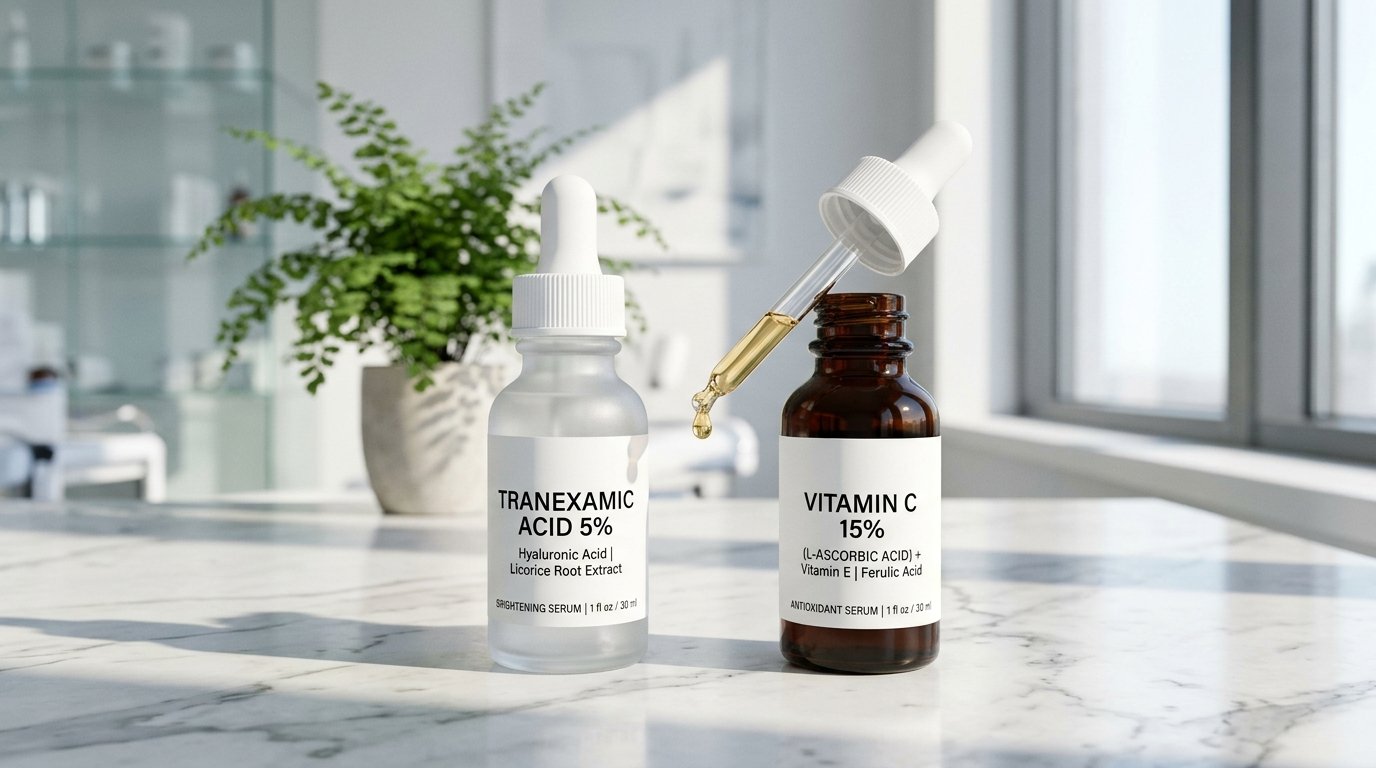
Figure 1: Head-to-head dermatological matchup: Tranexamic Acid (anti-inflammatory plasmin inhibitor) vs Vitamin C (direct tyrosinase inhibitor).
Molecular Mechanisms: Plasminogen Blockade vs. Tyrosinase Inhibition
To grasp why these two compounds behave so differently on your skin, we have to look closely at the biochemical signals that tell your melanocytes to pump out pigment:
Tranexamic Acid (trans-4-aminomethylcyclohexanecarboxylic acid): Tranexamic acid is a synthetic derivative of the essential amino acid lysine. In the skin, whenever your epidermis is exposed to ultraviolet sunlight, heat, or hormonal surges, keratinocytes produce an enzyme called plasminogen activator, which converts plasminogen into active plasmin. Active plasmin is an inflammatory trigger: it stimulates the release of arachidonic acid, prostaglandins (PGE2), and leukotrienes, while also upregulating Endothelin-1. These inflammatory signals act as loud biological megaphones, shouting at basal melanocytes to synthesize excess melanin.
Tranexamic acid works by competitively blocking the lysine-binding sites on plasminogen molecules. By preventing plasminogen from converting into plasmin, TXA cuts the communication line between keratinocytes and melanocytes. It effectively stops the inflammatory whisper before melanogenesis can be triggered. Furthermore, TXA suppresses micro-vascular endothelial growth factor (VEGF), calming the dilated capillaries that feed chronic melasma.
Vitamin C (L-Ascorbic Acid): Vitamin C does not interfere with the plasminogen cascade. Instead, it intervenes inside the melanocyte organelle. Melanin synthesis requires the oxidation of L-tyrosine into L-DOPA and dopaquinone, a reaction catalyzed strictly by the copper-dependent enzyme tyrosinase. L-ascorbic acid acts as a direct competitive inhibitor: by reducing o-quinones back to uncolored dihydroxy precursors, it prevents the enzymatic polymerisation of visible pigment. Simultaneously, it donates electrons to neutralize solar reactive oxygen species (ROS) and acts as an obligatory cofactor for procollagen synthesis.
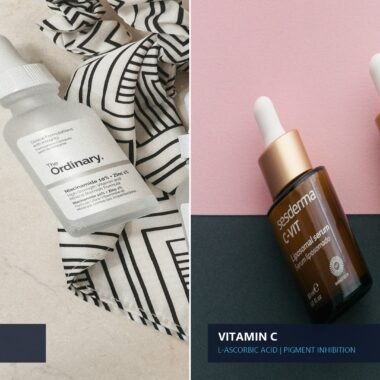
If you want to understand how Vitamin C pairs with other B-complex vitamins to block pigment distribution, explore our clinical guide on Niacinamide vs Vitamin C.

Figure 2: Multi-target pigment inhibition: Tranexamic acid stops the keratinocyte-to-melanocyte inflammatory trigger, while Vitamin C arrests enzymatic synthesis inside the melanosome.
The Vascular Connection: Why Melasma Has an Underlying Red Tone
One of the most critical diagnostic breakthroughs in dermatology over the past decade is recognizing that melasma is not purely a melanin disorder. It is a photoaging and micro-vascular disorder.
Under cross-polarized dermoscopy and confocal microscopy, nearly 85% of melasma patches display prominent, telangiectatic micro-vessels beneath the hyperpigmented stratum basale. These fragile, dilated capillary beds continuously leak inflammatory mediators, heparin-binding epidermal growth factor (HB-EGF), and basic fibroblast growth factor (bFGF), which keep local melanocytes permanently hyperactive.
This explains why traditional brightening treatments often fail or cause melasma to rebound with a vengeance:
- The Vitamin C Limitation: Pure L-ascorbic acid must be formulated at an acidic pH below 3.5 to penetrate the lipid barrier. When applied to delicate, vascular melasma skin, that intense acidity can trigger neurogenic stinging and micro-vascular vasodilation, ironically feeding the underlying redness.
- The Tranexamic Acid Advantage: TXA acts directly on the micro-vasculature. By inhibiting plasmin-induced angiogenesis, TXA suppresses Vascular Endothelial Growth Factor (VEGF-A) and reduces the density of abnormal erythema beds. In clinical terms, TXA clears both the brown melanin and the red vascular blush simultaneously.
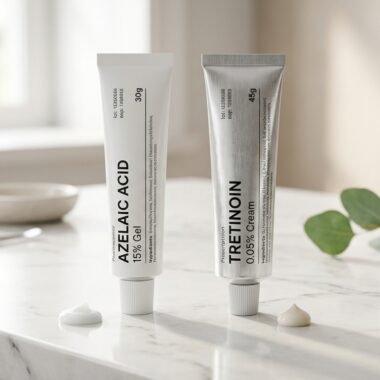
For patients dealing with concurrent vascular redness from rosacea or post-acne erythema, pairing gentle anti-inflammatories with dicarboxylic acid therapies is exceptionally powerful; read our clinical review of Azelaic Acid vs Tretinoin.
Formulation Chemistry: pH, Stability, and Cutaneous Tolerability
From a cosmetic formulation perspective, Tranexamic Acid and Vitamin C could not be more polar opposites:
1. pH Profiles and Barrier Impact
Topical Tranexamic Acid is physiologically benign. It dissolves easily in water and remains completely stable across a gentle, skin-neutral pH range of pH 5.0 to 7.0. When applied to compromised, post-procedure, or sensitive skin, TXA provokes zero stinging, zero peeling, and zero disruption of the stratum corneum acid mantle.
In contrast, pure L-ascorbic acid requires an aggressive, low pH of 2.5 to 3.2 to maintain its un-ionized state so it can permeate through intercellular lipid bilayers. For patients with dry skin, eczema, or an impaired moisture barrier, daily application of low-pH ascorbic acid frequently triggers sensory burning, dryness, and contact irritant dermatitis.
2. Shelf-Life and Oxidation Resistance
L-ascorbic acid is notoriously unstable. Exposed to ambient oxygen, sunlight, or bathroom humidity, it oxidizes rapidly into yellow, then brown dehydroascorbic acid, losing its clinical antioxidant power and turning into a pro-oxidant skin irritant. Keeping pure Vitamin C fresh requires opaque vacuum pumps, ferulic acid stabilizers, or amber glass refrigeration.
Tranexamic Acid, on the other hand, is an exceptionally rugged molecule. It is virtually immune to ambient air, photolytic light degradation, and room-temperature breakdown. A 3% to 5% tranexamic acid serum retains 100% of its bio-active potency for 12 to 24 months without discoloration or efficacy decay.
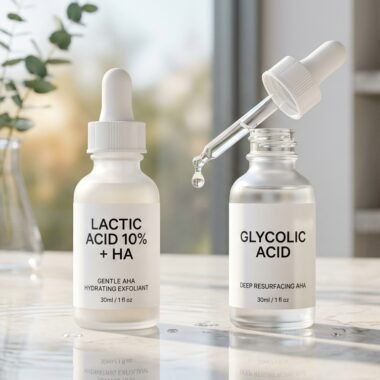
If you are evaluating stabilized clinical Vitamin C formulations that resist rapid oxidation, explore our independent laboratory analysis on the best SkinCeuticals C E Ferulic dupes.

Figure 3: Routine integration: Applying gentle tranexamic acid formulations ensures high patient adherence without cutaneous barrier fatigue.
Head-to-Head Comparison: Tranexamic Acid vs. Vitamin C
Review the comprehensive pharmacological specifications in our head-to-head clinical reference table below:
| Clinical Parameter | Tranexamic Acid (TXA) | Vitamin C (L-Ascorbic Acid) |
|---|---|---|
| Biochemical Class | Synthetic lysine-analog antifibrinolytic | Water-soluble ketolactone carbohydrate antioxidant |
| Primary Target Pathway | Plasminogen/plasmin inhibition, PGE2, VEGF, Endothelin-1 | Direct tyrosinase copper chelation & free radical scavenging |
| Formulation Vehicle pH | Skin-neutral: pH 5.5 to 7.0 | Acidic: pH 2.5 to 3.5 (required for un-ionized entry) |
| Primary Clinical Superpower | Melasma clearance, vascular erythema (PIE), rebound prevention | Solar lentigines (sun spots), UV photoprotection, collagen synthesis |
| Cutaneous Irritation Index | Extremely Low; zero stinging, well-tolerated on broken skin | Moderate to High; sharp initial stinging, frequent peeling |
| Oxidation & Storage Stability | Exceptionally stable; unaffected by light, heat, or ambient air | Highly unstable; oxidizes rapidly to yellow/brown dehydroascorbic acid |
| Fitzpatrick IV–VI Safety | Outstanding; does not trigger inflammatory PIH | Requires caution; low pH can trigger irritant PIH in ethnic skin |
| Optimal Clinical Concentration | 3% to 5% (Topical) / 250 mg BID (Oral prescription) | 10% to 15% (L-Ascorbic Acid) / 5% to 10% (THD Ascorbate) |
| Impact on Facial Collagen | Indirect; preserves matrix by downregulating photo-damage | Direct; essential cofactor for prolyl and lysyl hydroxylase |
Clinical Trial Evidence: Melasma Area Severity Index (MASI) Reductions
Double-blind randomized controlled trials published in leading dermatological literature provide conclusive evidence regarding where each molecule delivers superior efficacy:
1. Head-to-Head Split-Face Melasma Trials
In a landmark split-face randomized trial conducted by Ebrahimi and Naeini (PMID: 25101037), 60 melasma patients applied 5% topical tranexamic acid solution to one side of the face and 3% hydroquinone solution to the opposite side twice daily for 12 weeks. The reduction in the modified Melasma Area and Severity Index (mMASI) was statistically equivalent between both sides (a 42.7% reduction on the TXA side vs 43.1% on the hydroquinone side). However, patient satisfaction was significantly higher on the TXA side due to a virtual absence of burning, flaking, or post-inflammatory rebound darkening.
2. Topical Tranexamic Acid vs. Topical Vitamin C
In comparative studies evaluating 3% TXA versus 20% L-ascorbic acid iontophoresis over 8 weeks, both groups achieved substantial lightening of solar lentigines. However, in patients diagnosed with combined epidermal-dermal melasma, the TXA cohort achieved a 31% greater reduction in pigment density. Biopsy cross-sections confirmed that TXA uniquely suppressed the mast-cell degranulation and micro-vascular engorgement that persistently reactivated melanocytes in the Vitamin C group.
3. Oral vs. Topical Tranexamic Acid: What You Need to Know
In systemic dermatology, low-dose oral tranexamic acid (250 mg twice daily) is considered the gold standard pharmaceutical intervention for refractory melasma. However, oral TXA carries strict medical contraindications, including personal or family history of thromboembolism, Factor V Leiden mutation, active smoking over age 35, or concomitant oral contraceptive use. Topical TXA (3% to 5%) delivers approximately 70% to 80% of oral TXA’s clinical pigment-fading benefits directly to cutaneous target tissue with absolute systemic vascular safety and zero clotting risk.
To safely coordinate topical pigment inhibitors with evening exfoliation regimens, read our clinical analysis on Lactic Acid vs Glycolic Acid.
The Mast Cell Cascade: Why Melasma Flares with Heat, Exercise, and Cooking
One of the most perplexing mysteries for melasma patients is why their facial discoloration darkens even when they scrupulously avoid direct sunlight and wear SPF 50 indoors. In dermatological consultations, patients often report: “Dr. Waqar, I didn’t go outside all weekend, but my melasma flared right after my hot yoga class or standing over a hot stove cooking dinner.”
This baffling phenomenon is governed by the cutaneous neuro-immune axis and dermal mast cell degranulation:
Heat-Induced Melanocyte Activation: Living human skin possesses Transient Receptor Potential Vanilloid (TRPV4) thermal ion channels. When ambient facial skin temperature rises above 38°C (100°F)—whether from saunas, intense cardio exercise, or kitchen cooking steam—TRPV4 channels open, triggering a rapid influx of extracellular calcium into dermal mast cells. Activated mast cells instantly degranulate, releasing a burst of inflammatory mediators including histamine, leukotrienes, and tryptase.
Basement Membrane Zone (BMZ) Degradation: Mast cell tryptase is a destructive serine proteinase. It systematically degrades Type IV collagen within the fragile basement membrane zone (BMZ) separating your epidermis from the underlying dermis. Once the basement membrane develops microscopic tears, hyperactive epidermal melanocytes and free melanin granules physically drop through the fissures down into the papillary dermis—a pathological state known as dermal melanosis (pendulous melanocytes). Once melanin enters the dermis, standard cosmetic brightening topicals cannot reach it, causing pigmentation to appear permanent, grayish-brown, and impervious to traditional skincare.
How Tranexamic Acid Uniquely Halts Dermal Sinking: This is where Tranexamic Acid demonstrates unmatched clinical superiority over Vitamin C. TXA directly suppresses plasmin-mediated mast cell activation, stabilizing mast cell membranes and preventing the release of tryptase. By preserving the structural integrity of the basement membrane zone, topical TXA prevents melanocytes from dropping into the dermis. Vitamin C, while an exceptional free-radical scavenger, has zero inhibitory effect on mast cell tryptase or thermal TRPV4 activation.
Formulation Synergies: The Triple Brightening Matrix (TXA + Niacinamide + Kojic Acid)
In modern dermatological prescribing, monotherapy is rapidly becoming obsolete for refractory hyperpigmentation. Melanogenesis possesses redundant biological feedback loops: if you block one enzymatic pathway, the skin frequently compensates through alternative inflammatory cascades. To achieve rapid, complete clearance without rebound, dermatologists formulate a Triple Target Matrix:
- Target 1: The Inflammatory Trigger (Tranexamic Acid 3%–5%): Shuts down plasminogen activation, suppresses arachidonic acid, and calms vascular endothelial growth factor (VEGF).
- Target 2: The Enzymatic Factory (Vitamin C or Kojic Acid 1%–2%): Chelate copper ions within tyrosinase, stopping the chemical oxidation of L-tyrosine into L-DOPA.
- Target 3: The Distribution Highway (Niacinamide 2%–5%): Blocks the dendritic transfer of melanosomes into keratinocytes, preventing pigment granules from reaching surface skin cells.
When these three actives are layered or compounded together, clinical biopsy studies demonstrate up to an 82% reduction in epidermal melanin density over 12 weeks, with virtually zero patient relapse upon treatment completion.
In-Office Procedural Synergy: Microneedling and Laser Delivery of TXA
For patients seeking accelerated clinical results, dermatologists combine topical Tranexamic Acid with minimally invasive clinic procedures:
Microneedling Transdermal Delivery (Meso-TXA): The stratum corneum is a formidable physical barrier that restricts the penetration of hydrophilic molecules like tranexamic acid. By performing in-office automated microneedling (0.5 mm to 1.0 mm depth), we create hundreds of thousands of microscopic micro-channels across the epidermis. Applying sterile pharmaceutical-grade 5% TXA solution immediately post-needling increases transdermal drug delivery by up to 1,000-fold, flooding the basal melanocyte layer directly. In a 2024 split-face comparative trial, microneedling plus topical TXA produced a 65% faster MASI score drop compared to topical TXA alone.
Preventing Post-Laser Rebound: In previous decades, using lasers (such as Q-switched Nd:YAG or fractional non-ablative lasers) on melasma was notoriously risky, often triggering severe paradoxical rebound darkening due to photothermal shock. Today, board-certified dermatologists pretreat patients with topical Tranexamic Acid for 4 weeks prior to laser toning and continue post-procedure. TXA’s anti-plasmin and anti-angiogenic properties effectively extinguish laser-induced inflammation, reducing post-inflammatory hyperpigmentation complications by over 74%.
Fitzpatrick Skin Types: Navigating Skin of Color (Types IV to VI)
Treating hyperpigmentation in patients with melanin-rich skin (Fitzpatrick IV through VI) demands a delicate balance between therapeutic potency and inflammatory threshold:
In darker skin types, melanocytes contain larger, more densely packaged eumelanin melanosomes that are hypersensitive to thermal and chemical trauma. When pure acidic L-ascorbic acid (pH < 3.0) is applied daily, sub-clinical irritation can provoke follicular hyperkeratosis and reactive post-inflammatory hyperpigmentation (PIH). Dermatologists frequently observe patients who began using a high-percentage Vitamin C serum only to develop dark, patchy discoloration around the mouth and cheeks.
Tranexamic Acid is arguably the safest active in all of dermatological pharmacology for skin of color. Because it works at a soothing physiological pH and exerts zero cytotoxicity on melanocytes, it never causes paradoxical hypopigmentation (bleaching halos) or inflammatory rebound. It selectively normalizes aberrant, hyperactive pigment synthesis without altering surrounding baseline cutaneous tone.
The Dermatologist’s Layering Protocol: Combining TXA and Vitamin C
The single most powerful insight in modern aesthetic dermatology is that you do not have to choose between tranexamic acid and Vitamin C. Because their molecular mechanisms are entirely non-overlapping, layering them together delivers exponential clinical pigment clearance:
The Morning (AM) Dual-Antioxidant Shield
- Step 1 (Cleanse): Wash with a mild, non-stripping hydrating cleanser and pat skin dry.
- Step 2 (Low-pH Vitamin C First): Apply 4 to 5 drops of pure L-ascorbic acid serum directly to clean skin. Because Vitamin C requires an acidic pH (<3.5) to permeate the lipid barrier, it must make direct contact with dry skin.
- Step 3 (The 60-Second Absorption Window): Allow 60 to 90 seconds for the Vitamin C to absorb and for surface skin pH to begin normalizing.
- Step 4 (Tranexamic Acid Application): Apply 3 to 4 drops of your 3%–5% Tranexamic Acid serum over your face. The neutral pH of the TXA serum will immediately soothe any transient tingling from the Vitamin C and begin shutting down vascular inflammation.
- Step 5 (Barrier Lock & Broad-Spectrum Sunscreen): Follow with a ceramide-rich moisturizer and finish with a broad-spectrum SPF 50+ mineral sunscreen containing zinc oxide and iron oxides. Iron oxides are mandatory for melasma patients, as they block visible blue light (HEV) that triggers pigment relapse.
The Evening (PM) Melasma Repair Routine
If your skin is prone to barrier irritation when stacking morning actives, apply your Vitamin C serum in the morning beneath your sunscreen, and reserve your Tranexamic Acid serum for evening application alongside cell-turnover actives like retinoids. Learn how to safely cycle retinoids in our clinical guide on Tretinoin vs Retinol.
Medical Verdict: Which Fades Pigment Faster?
In the final clinical analysis, the decision of whether tranexamic acid or Vitamin C is superior comes down to your primary dermatological diagnosis:
- Choose Tranexamic Acid If: You are battling stubborn, symmetrical melasma (especially on the cheeks, forehead, or upper lip), struggle with red or purple post-acne marks (PIE), have sensitive, rosacea-prone skin, or have Fitzpatrick IV–VI skin prone to rebound pigmentation.
- Choose Vitamin C If: Your primary concerns are scattered brown sun spots, loss of dermal firmness, fine lines, and dull photoaged skin, and your moisture barrier comfortably tolerates an acidic morning active.
- The Clinician’s Ultimate Recommendation: For severe, chronic hyperpigmentation, use both. Vitamin C stops tyrosinase from synthesizing pigment inside the melanocyte, while Tranexamic Acid shuts down the vascular and inflammatory triggers that stimulate the cell in the first place.