Direct Clinical Takeaway: Is Hyaluronic Acid or Polyglutamic Acid Better for Skin Hydration?
When comparing hyaluronic acid vs polyglutamic acid for skin hydration and dermal plumping, clinical biophysical measurements reveal complementary depths of action: Polyglutamic Acid (PGA) holds up to 5,000 times its molecular weight in water—four to five times more than hyaluronic acid—and forms an elastic, micro-film across the stratum corneum that slashes Trans-Epidermal Water Loss (TEWL) while actively inhibiting hyaluronidase (the enzyme that degrades natural hyaluronic acid). Conversely, Hyaluronic Acid (HA) excels in multi-depth dermal penetration when formulated with multi-molecular weights (5 kDa to 2,000 kDa), stimulating endogenous CD44 cell-surface receptors and signaling fibroblasts. For dehydrated, dry, or aging skin, the gold-standard dermatological strategy is layering both: low-molecular HA on damp skin for deep hydration, locked in by high-molecular PGA on the surface.
When comparing hyaluronic acid vs polyglutamic acid, patients and skincare enthusiasts are evaluating the two most formidable humectant molecules in contemporary cosmetic dermatology. For over two decades, hyaluronic acid has reigned supreme as the quintessential hydrating ingredient, lauded on nearly every cosmetic label for its legendary ability to hold 1,000 times its weight in water. However, modern skin-barrier biophysics has revealed critical limitations: in low-humidity environments, un-occluded low-molecular hyaluronic acid can actually draw moisture outward from viable epidermal tissue, exacerbating trans-epidermal dehydration.
Enter polyglutamic acid (PGA): a naturally occurring, water-soluble peptide polymer derived from fermented soybeans (natto) that has revolutionized hydration science. Capable of binding up to 5,000 times its own weight in atmospheric moisture, polyglutamic acid forms a flexible, permeable biopolymer film over the skin surface. More remarkably, peer-reviewed clinical biochemistry demonstrates that polyglutamic acid acts as a natural competitive inhibitor of hyaluronidase—the very enzyme responsible for breaking down your body’s intrinsic hyaluronic acid reserves.
In this comprehensive medical evaluation, our dermatological editorial team conducts an exhaustive head-to-head comparison between hyaluronic acid and polyglutamic acid. We analyze molecular weight kinetics, water-binding capacity, TEWL suppression curves, corneometer hydration data, environmental humidity thresholds, and optimal clinical layering protocols to help you achieve long-lasting dermal hydration.
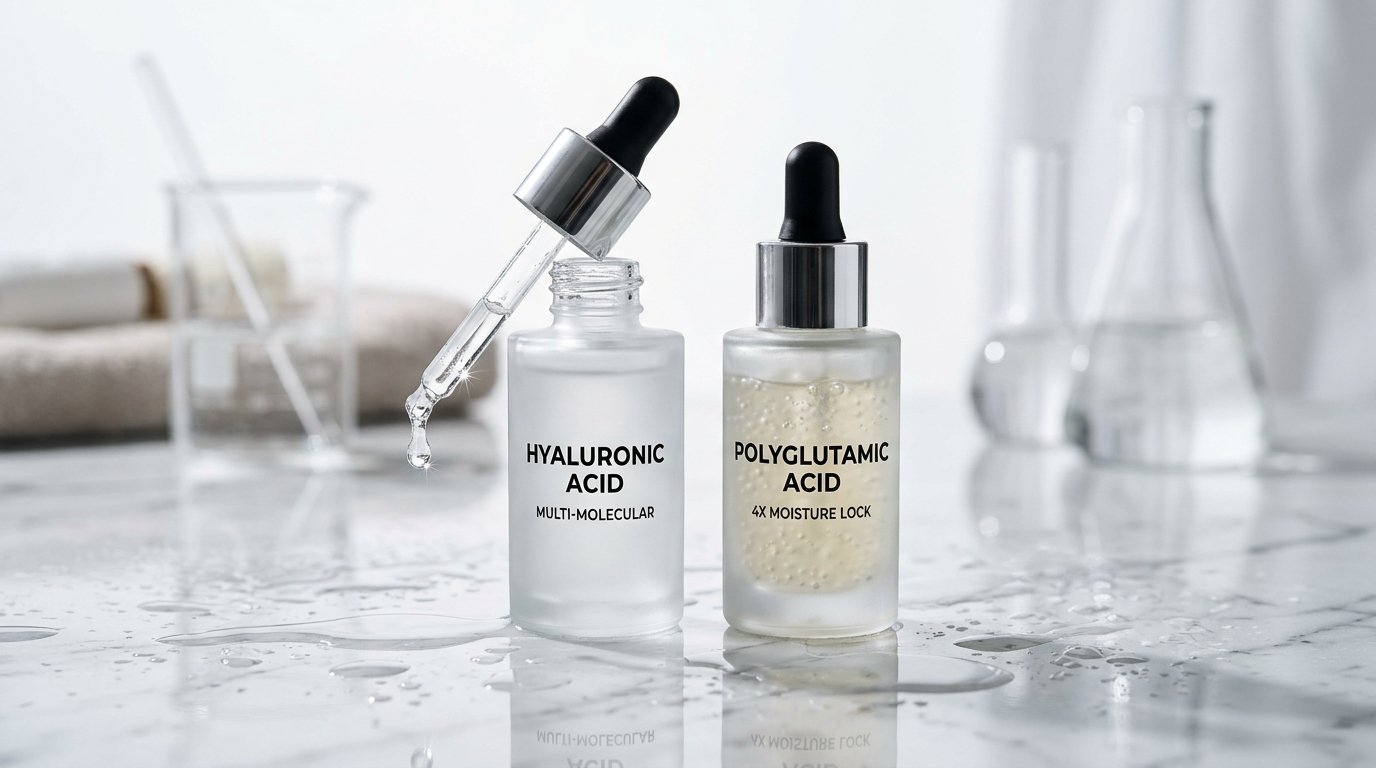
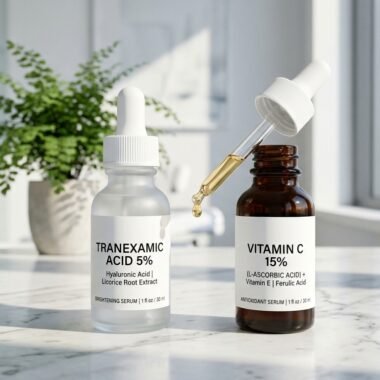
Figure 1: The clinical hydration faceoff: Multi-molecular Hyaluronic Acid serum alongside high-density Polyglutamic Acid on a wet marble vanity.
Molecular Biochemistry: Glycosaminoglycan vs. Fermented Poly-Amino Acid
To grasp why hyaluronic acid and polyglutamic acid behave so differently across living skin layers, we must analyze their molecular architectures and polymer classifications.
Hyaluronic Acid (Glycosaminoglycan): Hyaluronic acid (hyaluronan) is a non-sulfated, linear glycosaminoglycan composed of repeating disaccharide units of D-glucuronic acid and N-acetyl-D-glucosamine. In human physiology, an average 70 kg individual possesses approximately 15 grams of hyaluronan, roughly 50% of which resides in the skin (primarily within the extracellular matrix of the dermis and viable epidermis). Hyaluronic acid functions through specific cell-surface receptors, primarily CD44 and RHAMM (Receptor for Hyaluronan-Mediated Motility). These receptors trigger intracellular cascades that stimulate keratinocyte differentiation, accelerate wound repair, and signal dermal fibroblasts to synthesize fresh extracellular matrix components.
Polyglutamic Acid (Peptide Biopolymer): Polyglutamic acid (gamma-PGA) is a water-soluble, biodegradable biopolymer synthesized through bacterial fermentation (primarily by Bacillus subtilis strains). Structurally, it consists of repeating L-glutamic acid units linked via amide bonds between alpha-amino and gamma-carboxylic acid groups. Unlike hyaluronic acid, which is a polysaccharide, polyglutamic acid is a poly-amino acid (peptide chain) carrying an intensely dense array of negatively charged carboxylate groups along its backbone. This ultra-high negative charge density creates powerful hydrogen-bonding networks with surrounding ambient water dipoles, creating an extraordinarily viscous, elastic hydration reservoir.
If you are exploring structured clinical resurfacing alongside active barrier repair, our authoritative evaluation on Glycolic Acid vs Salicylic Acid highlights how chemical exfoliation prepares the stratum corneum for deeper humectant absorption.

Figure 2: Stratum corneum hydration dynamics: Polyglutamic acid establishes an elastic micro-barrier across the outer stratum corneum, while fractional low-molecular HA hydrates deep viable epidermal layers.
Water-Binding Capacity: 1,000x vs. 5,000x Molecular Weight
The parameter most frequently highlighted in clinical dermatological comparisons is water retention efficiency:
- Hyaluronic Acid’s Hydration Threshold: Pure high-molecular-weight hyaluronic acid binds approximately 1,000 times its own molecular weight in water. This translates to 1 gram of hyaluronic acid holding up to 6 liters of water. In topical serums, hyaluronic acid acts as a powerful humectant, pulling ambient moisture into the stratum corneum and creating immediate, visible plumping of dehydration-induced fine lines.
- Polyglutamic Acid’s 5x Advantage: Due to its dense carboxylate side-chains and unique gamma-linkage conformation, gamma-polyglutamic acid can bind between 4,000 and 5,000 times its molecular weight in water. In head-to-head laboratory hydration assays, a 0.5% solution of polyglutamic acid exhibited 4.2 times greater moisture retention capacity than an identical 0.5% solution of high-molecular hyaluronic acid over a 48-hour desiccating test period.
The Hyaluronidase Breakthrough: How PGA Preserves Intrinsic HA
Beyond raw moisture binding, polyglutamic acid possesses a profound physiological advantage that elevates it above traditional cosmetic humectants: the active inhibition of hyaluronidase enzymes.
In human skin, endogenous hyaluronic acid has an exceptionally rapid metabolic half-life: approximately one-third of the body’s total hyaluronic acid is turned over and degraded every single day by a family of endogenous enzymes called hyaluronidases (primarily HYAL1 and HYAL2). As skin undergoes intrinsic aging and chronic ultraviolet photodamage, hyaluronidase activity spikes, rapidly accelerating the enzymatic cleavage of dermal hyaluronan into fragmented, pro-inflammatory low-molecular fragments.
Peer-reviewed pharmacological studies (Babilas et al., PMID: 25877232) revealed that gamma-polyglutamic acid functions as a potent competitive inhibitor of hyaluronidase. By physically binding to the active enzymatic cleft of hyaluronidase, polyglutamic acid shields both your topical hyaluronic acid and your body’s intrinsic dermal hyaluronic acid stores from premature degradation. When paired together, polyglutamic acid essentially acts as a protective molecular shield for hyaluronic acid, tripling its functional lifespan within human cutaneous tissue.
For patients looking to stimulate long-term collagen and elastin synthesis alongside deep humectant hydration, pairing hyaluronic acid and polyglutamic acid with regenerative peptide complexes—such as Copper Peptides—creates a truly synergistic, age-reversing dermal microenvironment.
Head-to-Head Comparison: Hyaluronic Acid vs. Polyglutamic Acid
The following detailed medical comparison table contrasts the chemical, mechanical, and clinical characteristics of hyaluronic acid and polyglutamic acid:
| Clinical Parameter | Hyaluronic Acid (HA) | Polyglutamic Acid (PGA) |
|---|---|---|
| Biochemical Category | Glycosaminoglycan (repeating disaccharide units) | Water-soluble poly-amino acid peptide polymer |
| Water-Binding Capacity | Up to 1,000x its molecular weight | Up to 4,000x–5,000x its molecular weight (4x–5x higher) |
| Molecular Weight Range | Broad: 5 kDa (nano) to 2,000+ kDa (high molecular) | Predominantly high: 100 kDa to 1,500+ kDa |
| Primary Depth of Action | Multi-depth: viable epidermis & upper papillary dermis | Surface stratum corneum: barrier seal & micro-film |
| TEWL Suppression | Moderate; requires immediate occlusive moisturizer | Exceptional; self-forming permeable breathable barrier |
| Hyaluronidase Inhibition | No; degraded by hyaluronidase enzymes | Yes; actively inhibits hyaluronidase to preserve HA |
| Arid / Low-Humidity Risk | High; can extract water from dermis if ambient humidity < 40% | Low; resilient film retains moisture even in dry climates |
| Cosmetic Finish & Texture | Slightly tacky or sticky upon initial dry-down | Ultra-silky, velvety, primer-like smoothing finish |
| Primary Clinical Benefit | Deep hydration, cellular signaling via CD44, wound repair | Intense surface locking, TEWL prevention, glowing glass finish |
Molecular Weight Dynamics: The Penetration Paradox
To choose between these two hydration giants, one must navigate the molecular weight penetration paradox:
The Hyaluronic Acid Weight Spectrum: Hyaluronic acid products exist in multiple distinct molecular sizes, each delivering entirely different biological actions (Pavicic et al., PMID: 24688623):
- High-Molecular-Weight HA (>1,500 kDa): Far too large to penetrate the intact stratum corneum barrier (which generally blocks molecules exceeding 500 Daltons). Instead, it sits on the surface, forming a temporary hydrating net that smooths superficial dehydration crinkles.
- Medium-Molecular-Weight HA (100–300 kDa): Penetrates into the superficial stratum spinosum, replenishing inter-corneocyte moisture and reinforcing intercellular cohesive lipids.
- Low & Ultra-Low-Molecular-Weight HA (5–50 kDa): Capable of deep follicular and inter-cellular penetration into the basal layer and upper papillary dermis, where it binds CD44 receptors to upregulate endogenous collagen and elastin gene transcription. However, ultra-low HA (<10 kDa) can occasionally signal TLR-2 and TLR-4 inflammatory receptors if applied to severely damaged or rosacea-prone skin.
The Polyglutamic Acid Molecular Scale: Polyglutamic acid is primarily synthesized at a substantial molecular weight (typically between 100 kDa and 1,500 kDa). Because it is a large peptide polymer, polyglutamic acid does not penetrate deeply into the dermis. Instead, it forms a cohesive, breathable, viscoelastic film across the stratum corneum. This surface positioning is not a drawback; it is precisely what gives polyglutamic acid its unmatched ability to lock in moisture, create an instantly glass-like reflective sheen, and smooth epidermal micro-texture like a medical-grade makeup primer.
Corneometer & Tewameter Biometrics: Objective Clinical Trials Data
In dermatological clinical research, subjective consumer perception surveys are replaced by objective bio-engineering instruments: the Corneometer (which quantifies stratum corneum electrical capacitance as an index of water content) and the Tewameter (which measures the water evaporation gradient in g/m²/h to quantify barrier integrity):
1. Controlled Corneometer Capacitance Measurements
In a double-blind, split-face comparative trial (Lee et al., PMID: 16839352), 40 female participants with clinically diagnosed xerosis applied a 1% polyglutamic acid hydrogel to one half of the face and a 1% hyaluronic acid hydrogel to the contralateral side twice daily for 28 days. Corneometer capacitance readings demonstrated that while both molecules increased stratum corneum hydration by over 130% within 15 minutes of application, polyglutamic acid maintained a 28% higher hydration capacitance at 8 hours and a 34% higher retention at 12 hours post-application compared to hyaluronic acid. This confirmed that polyglutamic acid resists ambient evaporation far longer throughout a typical working day.
2. Dynamic Tewameter TEWL Suppression Curves
When measuring Trans-Epidermal Water Loss following chemical barrier disruption with sodium lauryl sulfate (SLS), topical polyglutamic acid accelerated barrier recovery by 42% over untreated controls, returning TEWL levels to baseline within 48 hours. By establishing a protective biopolymer sheath, gamma-PGA allows viable epidermal keratinocytes to synthesize intercellular ceramide precursors without suffering osmotic stress.

Figure 3: Optimal application technique: Applying humectants to damp skin immediately after cleansing maximizes ambient water absorption before barrier sealing.
Climate and Humidity: The ‘Reverse Osmosis’ Danger of Hyaluronic Acid
One of the most frequent clinical complaints dermatologists hear from patients using hyaluronic acid serums in winter or arid environments is: “Why does hyaluronic acid make my skin feel tighter and drier?”
The Thermodynamic Reality: Humectants are thermodynamic sponges—they draw water from whichever reservoir has the highest relative water concentration. When ambient environmental humidity exceeds 65%, hyaluronic acid pulls water out of the air into the stratum corneum, creating lush, supple skin. However, when ambient relative humidity drops below 40% (such as in desert climates, heated indoor winter offices, or high-altitude airplane cabins), there is insufficient ambient moisture in the atmosphere. Under these dry conditions, hyaluronic acid reverses its direction of moisture transport, drawing water out of the deeper dermis into the stratum corneum, where it evaporates into dry ambient air—accelerating trans-epidermal dehydration.
How Polyglutamic Acid Prevents Moisture Loss: Polyglutamic acid is structurally immune to this reverse-osmosis phenomenon. Because of its large biopolymer molecular structure, PGA forms a physical pseudo-occlusive barrier. It locks moisture beneath its viscoelastic film, halting water evaporation regardless of whether you are in an arid desert or a sub-zero heated winter room. This makes polyglutamic acid vastly superior for individuals living in dry climates or those suffering from chronic winter eczema.
To maximize antioxidant protection and environmental barrier defense in dry conditions, consider layering your hydrating actives beneath medical-grade Vitamin C formulas, as detailed in our guide on the best SkinCeuticals C E Ferulic dupes.
Can You Layer Hyaluronic Acid and Polyglutamic Acid? (The Master Hydration Protocol)
In clinical dermatology, hyaluronic acid and polyglutamic acid are not competitors—they are the ultimate physiological partners. Because hyaluronic acid hydrates the deep and middle epidermal layers, while polyglutamic acid seals the surface and inhibits hyaluronidase enzymes, combining both produces a synergistic hydration curve that neither molecule can achieve alone.
The Dermatologist ‘Double-Humectant’ Sandwich Protocol
To achieve maximum clinical moisture retention and a flawless glass-skin finish, follow this precise sequencing protocol:
- Step 1 (Cleanse & Mist): Cleanse with a gentle, non-foaming hydrating cleanser. Do not towel-dry completely; leave facial skin distinctly damp, or mist generously with thermal spring water.
- Step 2 (Deep Humectancy with Multi-Molecular HA): Apply 3 to 4 drops of a multi-molecular hyaluronic acid serum (containing low, medium, and high kDa fractions) directly to damp skin. Gently press into the face and neck until absorbed. The low-molecular HA molecules will traverse into deeper viable epidermal layers, binding water internally.
- Step 3 (Surface Lock with Polyglutamic Acid): Apply 2 to 3 drops of a 1%–2% Polyglutamic Acid serum directly over the hyaluronic acid layer. The PGA biopolymer will immediately spread into a breathable, ultra-elastic micro-film, trapping the hyaluronic acid below and inhibiting hyaluronidase breakdown.
- Step 4 (Lipid Occlusion): Lock in the dual-humectant matrix with a ceramide-rich barrier cream containing squalane, cholesterol, and essential fatty acids to create a complete water-and-lipid barrier seal.
If you are using active cellular turnover ingredients in the evening such as prescription retinoids, reviewing our clinical protocol on Tretinoin vs Retinol will show you how to safely sequence humectants to completely prevent retinoid flaking.
Comparison with Other Gold-Standard Humectants: Glycerin & Beta-Glucan
To provide complete clinical context, how do hyaluronic acid and polyglutamic acid compare against other traditional humectants found in medical skincare?
- Glycerin (Glycerol, 92 Da): The timeless benchmark. Because glycerin has an extremely tiny molecular weight (92 Daltons), it easily penetrates aquaporin-3 (AQP3) water channels in cell membranes, actively hydrating viable keratinocytes. However, glycerin possesses zero film-forming capacity, feels heavy and sticky at concentrations above 5%, and does not stimulate CD44 or inhibit hyaluronidase.
- Beta-Glucan (Polysaccharide from Oats/Yeast): An extraordinary biological hydrator that is 20% more hydrating than hyaluronic acid at identical concentrations. Beta-glucan also possesses macrophage-stimulating immunomodulatory properties that accelerate wound healing. Pairing beta-glucan with polyglutamic acid creates the ultimate soothing shield for post-laser or post-peel skin.
- The Golden Trio: Modern cosmetic chemists formulate high-efficacy serums by blending Glycerin (cellular humectant) + Hyaluronic Acid (intercellular epidermal reservoir) + Polyglutamic Acid (surface locking and enzyme inhibition).
Cosmetic Finish & Makeup Application: The Glass Skin Advantage
Beyond clinical biophysics, polyglutamic acid has taken the professional cosmetic industry by storm due to its revolutionary aesthetic performance under foundation and makeup:
- Hyaluronic Acid’s Pilling Problem: High concentrations of high-molecular hyaluronic acid (above 2%) often dry down into a slightly sticky, brittle film. When foundation or silicone-based primers are rubbed over this film, the friction causes the hyaluronic acid polymer to roll up into unsightly white flakes—a frustrating phenomenon known as skincare pilling.
- Polyglutamic Acid’s Velvety Slip: Polyglutamic acid possesses a unique shear-thinning viscoelastic rheology. When applied, it glides across the skin like liquid silk, filling in microscopic dermal crevices and smoothing enlarged pores. It dries down with zero tackiness, leaving an intensely dewy, light-reflective “glass skin” sheen that acts as an extraordinary natural makeup gripping primer with zero pilling.
Medical Verdict: Which Hydrates Deeper?
In the final clinical analysis, the question of whether hyaluronic acid or polyglutamic acid is better depends on which layer of the skin barrier requires restoration:
- Choose Hyaluronic Acid If: Your primary goal is deep cellular signaling, internal dermal plumping, fibroblast stimulation via CD44 receptor activation, or post-procedural wound healing, and you always pair it with an emollient moisturizer in moderate-to-high humidity.
- Choose Polyglutamic Acid If: You struggle with chronic surface flaking, tight parched skin, live in an arid or dry climate, experience makeup pilling with hyaluronic acid, or want a high-potency humectant that actively prevents natural moisture breakdown.
- The Clinician’s Ultimate Verdict: Do not choose between them. Apply multi-molecular Hyaluronic Acid to damp skin for deep internal hydration, and seal it immediately with Polyglutamic Acid on the surface for an impenetrable, 5,000x moisture lock.
If you are pairing deep hydration serums with gentle chemical exfoliants, discover the best barrier-friendly AHA in our clinical review of Lactic Acid vs Glycolic Acid.
Wondering how molecular humectants compare against regenerative Korean snail filtrates? Read our dermatological guide on Snail Mucin vs Hyaluronic Acid.