Direct Clinical Answer: Is Tretinoin or Retinol Better for Your Skin?
When evaluating tretinoin vs retinol, the fundamental distinction lies in cellular bioavailability and receptor affinity. Tretinoin (all-trans retinoic acid) is a pure prescription medication that binds directly to nuclear retinoic acid receptors (RAR) in dermal fibroblasts with zero biochemical conversion, making it roughly 20 times more biologically potent than cosmetic retinol. Over-the-counter retinol is an inactive precursor requiring a mandatory two-step enzymatic conversion into retinoic acid, providing gentler, slower collagen synthesis with minimal barrier disruption and no prescription required.
When deciding between tretinoin vs retinol for fine lines, stubborn hyperpigmentation, or persistent adult acne, you are choosing between a bio-identical pharmaceutical standard and an over-the-counter cosmetic powerhouse. Both compounds belong to the vitamin A derivative family—universally celebrated by clinical dermatologists as the single most rigorously proven anti-aging molecule in human medicine. Yet, navigating the biological chasm between prescription retinoic acid and over-the-counter serums often leads to unnecessary barrier damage, prolonged purging, or disappointing stagnation.
For more than half a century, topical retinoids have remained the uncontested gold standard of clinical dermatology. Originally synthesized in the late 1960s to treat severe inflammatory acne vulgaris, clinical researchers observed an extraordinary phenomenon: patients exhibited significantly smoother skin texture, diminished sun damage, faded hyperpigmentation, and visible reversal of facial wrinkle depth. Today, the retinoid universe has expanded from harsh pharmacy creams to micro-encapsulated cosmetic serums, sustained-release gels, and bio-engineered synthetic analogues.
Understanding which molecule aligns with your skin’s unique lipid barrier resilience, daily lifestyle, and clinical objectives is the difference between achieving a resilient, luminous complexion and suffering through weeks of painful peeling and barrier failure. In this comprehensive medical evaluation, we analyze the molecular science, cellular conversion pathways, clinical trial biopsy data, purging timelines, and practical layering protocols to help you make an evidence-based decision.
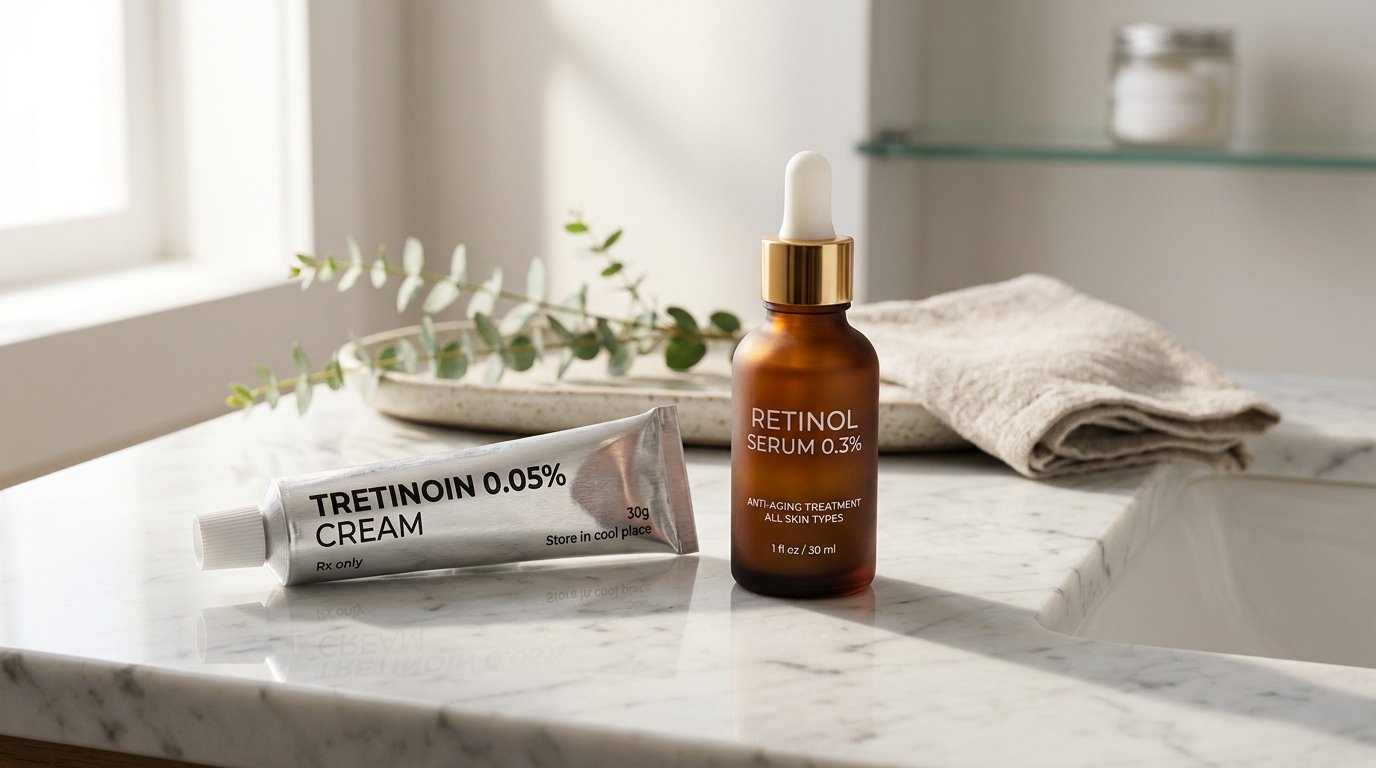
Figure 1: Prescription tretinoin 0.05% cream alongside an encapsulated cosmetic retinol serum on a clinical marble vanity counter.
The Molecular Science: How Retinoids Remodel Dermal Architecture
To grasp the performance gap between prescription tretinoin and cosmetic retinol, you must examine how human skin processes vitamin A derivatives at the microscopic level. Dermal cells do not utilize vitamin A in its raw topical format. Instead, cellular DNA responds exclusively to one active chemical key: all-trans retinoic acid.
Within the nucleus of human dermal fibroblasts and epidermal keratinocytes reside specialized protein docking stations known as Retinoic Acid Receptors (RAR) and Retinoid X Receptors (RXR). When an active retinoic acid molecule binds to these intranuclear receptors, it initiates a profound cascade of gene transcription. It stimulates the cellular machinery to accelerate keratinocyte proliferation, thicken the living epidermis, synthesize new collagen fibers, and inhibit matrix metalloproteinases (MMPs)—the destructive enzymes that dismantle elastin and structural proteins under ambient UV exposure.
Herein lies the defining pharmacological divide between tretinoin and retinol:
- Tretinoin is pure all-trans retinoic acid: It requires zero chemical transformations. The instant it absorbs across the stratum corneum, its molecules penetrate into the cell nucleus and begin unlocking RAR and RXR receptors immediately. This direct mechanism delivers maximum cellular potency but carries an increased potential for initial erythema, peeling, and transient skin barrier disturbance.
- Retinol is an inactive biological precursor: In its cosmetic bottle, retinol cannot bind directly to cellular receptors. Once absorbed across the skin barrier, epidermal enzymes must execute a mandatory two-step enzymatic oxidation:
- First, retinol is oxidized by alcohol dehydrogenases into retinaldehyde (commonly known as retinal).
- Second, retinaldehyde is oxidized by aldehyde dehydrogenases into active all-trans retinoic acid.
Because each metabolic conversion step experiences natural biological yield loss—where a substantial percentage of the active ingredient is metabolized, conjugated, or degraded before reaching nuclear receptors—cosmetic retinol is estimated to be approximately 10 to 20 times less biologically aggressive than pure tretinoin at equivalent concentrations. For individuals building an initial anti-aging regimen, reviewing our curated guide on the best retinol serums for beginners offers an accessible starting point before considering prescription medications.
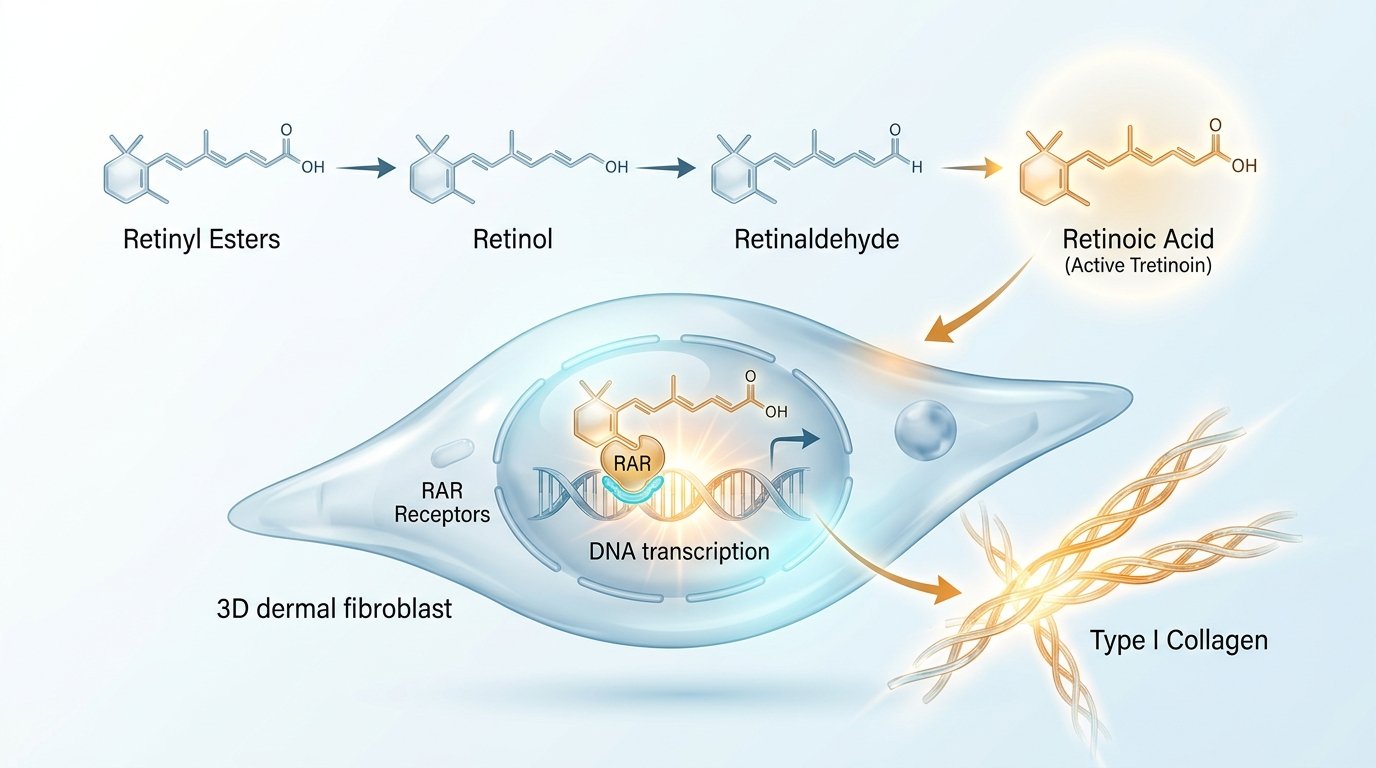
Figure 2: The biochemical retinoid conversion cascade: Esters and retinol convert step-by-step into retinoic acid to activate nuclear RAR receptors in dermal fibroblasts.
The Retinoid Ladder: Mapping Molecular Potency and Receptor Affinity
In modern clinical dermatology, vitamin A derivatives are categorized along a structured biological hierarchy commonly known as “The Retinoid Ladder.” Understanding your current position on this ladder allows you to progress methodically without triggering chronic inflammation or barrier compromise.
- Retinyl Esters (Retinyl Palmitate, Retinyl Acetate, Retinyl Propionate): The gentlest, least potent forms. They require a three-step enzymatic conversion (Esters → Retinol → Retinaldehyde → Retinoic Acid). Best suited for hyper-reactive or rosacea-prone skin types requiring mild antioxidant support and zero irritation.
- Pure Cosmetic Retinol: The global cosmetic standard. Typically formulated between 0.1% and 1.0%. It undergoes a two-step conversion, offering excellent long-term wrinkle reduction and hyperpigmentation clearing with manageable acclimation periods.
- Granactive Retinoid (Hydroxypinacolone Retinoate / HPR): A modern cosmetic ester that directly binds to retinoic acid receptors without requiring prior enzymatic cleavage, delivering high biological activity with remarkably low irritation.
- Retinaldehyde (Retinal): The direct precursor to retinoic acid. Requiring only a single metabolic conversion step, retinal acts up to 11 times faster than traditional retinol and exhibits unique antibacterial properties against Cutibacterium acnes.
- Adapalene (Differin): A third-generation synthetic retinoid specifically engineered to target RAR-beta and RAR-gamma receptors in the pilosebaceous unit. Highly photostable in daylight and available over-the-counter in the USA at 0.1% concentration.
- Tretinoin (Retin-A, Altreno, Atralin): The first-generation bio-identical retinoic acid pharmaceutical. Available strictly via prescription in concentrations ranging from 0.025% to 0.1%.
- Trifarotene (Aklief): A fourth-generation synthetic retinoid selectively targeting RAR-gamma receptors, the predominant receptor type in the human epidermis, minimizing systemic absorption.
- Tazarotene (Tazorac, Arazlo): A receptor-selective third-generation prescription retinoid, considered the most potent topical retinoid currently approved for photoaging and severe plaque psoriasis.
Head-to-Head Comparison: Tretinoin vs Retinol
To help you evaluate these two gold-standard anti-aging molecules side by side, review the clinical specifications below:
| Clinical Feature | Prescription Tretinoin | Over-the-Counter Retinol |
|---|---|---|
| Active Molecule | All-trans Retinoic Acid | Vitamin A (Retinol) |
| Biochemical Conversion | Direct binding (0 conversion steps) | 2-step conversion (Retinol → Retinal → Retinoic Acid) |
| Relative Potency | ~10x to 20x higher at baseline | Moderate, sustained release |
| Availability | Prescription only (Rx / Telehealth in USA/UK) | Over-the-counter (Sephora, Ulta, pharmacies) |
| Standard Dosages | 0.025%, 0.05%, 0.1% | 0.1%, 0.3%, 0.5%, 1.0% |
| Visible Results Timeline | 6 to 12 weeks for texture; 6 months for deep wrinkles | 12 to 24 weeks for texture; 9-12 months for wrinkles |
| Initial Purging & Peeling | High (Commonly lasts 4-8 weeks) | Low to moderate (Mild dryness for 1-3 weeks) |
| Photostability | Degrades under direct sunlight (Night use only) | Often micro-encapsulated; night use still recommended |
| Primary Indications | Severe photoaging, cystic acne, deep lines, melasma | Preventative aging, fine lines, mild texture, sensitive skin |
What the Clinical Trials Prove: Collagen Synthesis & Wrinkle Reduction
The anti-aging claims surrounding retinoids are not cosmetic marketing hyperbole; they are established through decades of rigorous histological biopsy studies. When scientists analyze human skin tissue before and after prolonged retinoid exposure, they observe measurable morphological remodeling in both the epidermis and the deep dermis.
In a landmark clinical trial published on PubMed by Kafi et al. in the Archives of Dermatology, researchers examined the histological effects of 0.4% topical retinol applied to naturally aged skin in elderly individuals. Biopsies revealed a dramatic, statistically significant induction of glycosaminoglycan (which binds moisture in the extracellular matrix) and a substantial increase in procollagen Type I synthesis. Crucially, fibroblast cellular activity was reignited, proving that cosmetic retinol genuinely reverses clinical signs of intrinsic cellular aging.
Simultaneously, extensive reviews by Mukherjee et al. in Clinical Interventions in Aging confirmed that tretinoin produces the most rapid and pronounced increases in epidermal thickness, anchoring fibril density, and dermal blood flow. Within three months of nightly 0.05% tretinoin application, baseline collagen fragmentation is suppressed through the systemic inhibition of collagenase enzymes.
While tretinoin achieves structural dermal remodeling in roughly half the timeframe of over-the-counter retinol, dermatological research highlights an essential nuance: after twelve months of continuous application, the histological gap between high-strength cosmetic retinol and low-dose prescription tretinoin narrows substantially. For patients who cannot tolerate the initial inflammatory spike of prescription tretinoin, long-term consistent retinol delivers comparable clinical outcomes with vastly superior patient compliance.
Formulation Vehicles: Cream vs. Gel vs. Microsphere vs. Lotion
When selecting your retinoid, the delivery vehicle exerts almost as much influence over your clinical outcome as the active concentration itself. The base formulation dictates penetration speed, follicular distribution, and lipid barrier interaction:
- Traditional Cream Base (e.g., Generic Tretinoin Cream): Formulated with emollients like stearic acid, isopropyl myristate, and mineral oil. Ideal for dry, mature, or barrier-compromised skin types requiring extra lipid buffering. However, isopropyl myristate can prove mildly comedogenic for individuals with highly congestion-prone pores.
- Alcohol-Based Gel Base (e.g., Generic Tretinoin Gel): Penetrates the follicular canal rapidly. Highly effective for excessively oily, sebaceous skin and active cystic acne. However, the evaporating alcohol base can trigger intense stinging and acute dehydration on dry complexions.
- Microsphere Gel (e.g., Retin-A Micro): An advanced formulation technology encapsulating tretinoin molecules inside microscopic porous polymer beads. Rather than releasing the entire medication upon application, the beads release tretinoin slowly over an 8-hour period as you sleep, slashing surface irritation by up to 60%.
- Hyaluronic Acid Lotion Vehicle (e.g., Altreno): The newest FDA-approved tretinoin 0.05% formulation, suspended in a hydrating emulsion of collagen, glycerin, and sodium hyaluronate. In clinical trials, it demonstrated remarkable tolerability with minimal peeling.
- Encapsulated Lipid Retinol Serums: High-end cosmetic retinols encapsulate the molecule in liposomes or lipid spheres (e.g., squalane or jojoba). This protects the volatile molecule from oxidation while ensuring gradual dermal delivery.
The Tretinoin “Purge” Explained: Week-by-Week Retinization Timeline
One of the most frequent reasons patients abandon prescription tretinoin is the dreaded “retinoid purge”—clinically designated as the retinization phase. Because tretinoin accelerates cellular turnover from the standard 28-day cycle down to approximately 10 to 14 days, microcomedones trapped deep beneath the follicular canal are rapidly thrust to the surface simultaneously.
Understanding the week-by-week biological progression prevents premature panic:
- Weeks 1 to 2 (The Acute Barrier Phase): Skin feels tight, parched, and slightly flushed. The stratum corneum begins shedding rapidly, manifesting as micro-flaking around the perioral area, nasolabial folds, and chin. Stinging may occur when applying gentle moisturizers.
- Weeks 3 to 6 (The Peak Purge): Microcomedones transform into inflammatory papules and pustules. This is genuine purging, not an allergic reaction, provided breakouts occur in areas where you typically congest. Transepidermal water loss (TEWL) peaks during this window.
- Weeks 7 to 10 (The Stabilization Window): Cellular desquamation harmonizes with underlying lipid barrier synthesis. Active inflammatory breakouts decelerate, flaking subsides, and skin begins tolerating application without immediate flushing.
- Weeks 11 to 16+ (The Renewal Horizon): The new, compact stratum corneum reflects light evenly, producing the characteristic “retinoid glow.” Collagen production accelerates, post-inflammatory erythema fades, and overall skin elasticity visibly improves.
By contrast, over-the-counter retinol rarely produces a violent multi-week purge. Users may experience mild localized dryness or an occasional isolated blemish during weeks two and three, making retinol the vastly superior psychological and clinical choice for individuals with high-stakes social schedules or reactive skin.
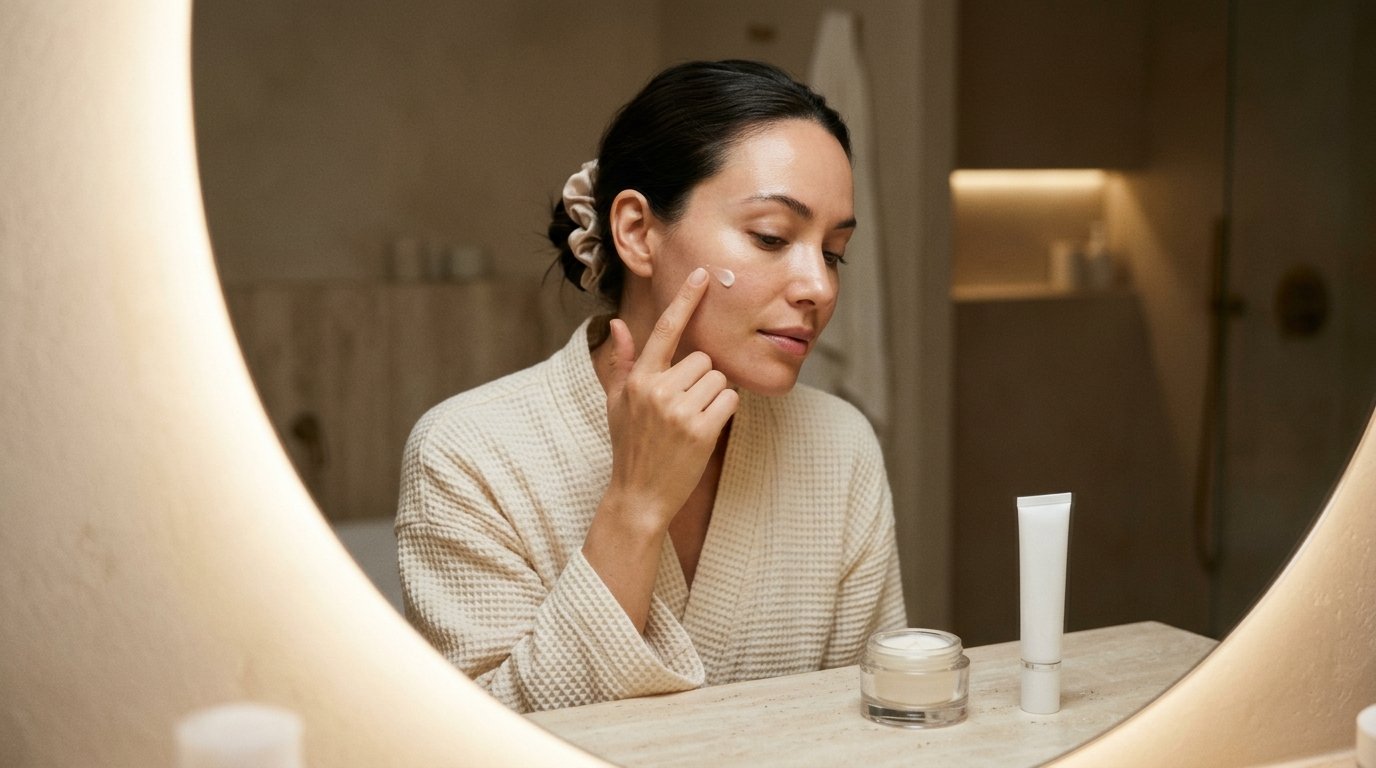
Figure 3: Applying a pea-sized amount of retinoid using the dermatological sandwich method to maintain barrier hydration.
The Dermatologist “Sandwich Method”: Step-by-Step Protocol
Whether introducing 0.025% tretinoin or a concentrated 1.0% retinol serum, adopting the clinical “sandwich method” dramatically reduces transepidermal water loss and receptor overstimulation without neutralizing the retinoid’s biological efficacy.
Step 1: Gentle Cleansing & Complete Drying
Wash your face with a non-stripping, fragrance-free, lipid-replenishing cream cleanser. Pat skin dry with a clean microfiber towel. Wait a full 10 to 15 minutes before proceeding. Applying any retinoid to damp skin dramatically accelerates trans-follicular absorption, triggering acute localized irritation and severe peeling.
Step 2: The Base Moisture Buffer
Dispense a dime-sized amount of a lightweight, ceramide-rich barrier lotion. Formulations containing skin-identical lipids, cholesterol, and soothing centella asiatica work best. Allow this foundational buffer layer to absorb completely for 3 to 5 minutes until skin feels supple but not tacky.
Step 3: The Pea-Sized Retinoid Application
Dispense exactly one standard green pea-sized droplet of your tretinoin or retinol onto your fingertip. Dot this single portion evenly across your forehead, each cheek, the bridge of the nose, and the chin. Gently blend outwards, avoiding the immediate orbital bone, upper eyelids, perioral corners, and nostrils where the skin is delicate and prone to fissuring.
Step 4: The Occlusive Barrier Seal
Wait 5 minutes for the retinoid to integrate with the epidermal buffer. Conclude your evening routine by applying a richer, lipid-dense barrier cream containing squalane, panthenol, or shea butter. This top layer encapsulates the active molecule, reinforces intercellular lipids, and prevents ambient moisture evaporation overnight.
Building a Synergistic Routine: What to Pair and What to Avoid
A retinoid does not operate in a vacuum. Combining your vitamin A treatment with complementary dermatological actives accelerates clinical results, while incompatible pairings can severely damage the acid mantle.
The Morning Shield: Vitamin C & SPF 50+
Because retinoids thin the outer stratum corneum during the first 6 months of therapy, your melanocytes become temporarily more vulnerable to ultraviolet radiation. Daily broad-spectrum SPF 50+ mineral or organic sunscreen is non-negotiable. In the morning, pairing your sunscreen with a stable topical antioxidant serum provides synergistic photoprotection against reactive oxygen species. For clinical recommendations, explore our evaluation of the 5 best SkinCeuticals C E Ferulic dupes.
Biohacking Collagen: LED Light Therapy & Peptides
Modern clinical aesthetics emphasizes pairing biochemical topicals with non-invasive biophysical modalities. Utilizing medical-grade red light therapy (633nm and near-infrared 830nm) on non-retinoid nights stimulates mitochondrial ATP production and expedites cellular tissue repair, significantly shortening the retinization adjustment phase. To review FDA-cleared devices, see our head-to-head analysis of Omnilux vs CurrentBody LED face masks. Additionally, incorporating signal peptides—such as copper peptides—on recovery evenings reinforces the extracellular matrix.
What to Strictly Avoid on Retinoid Evenings
- Direct AHAs & BHAs: Avoid glycolic acid, lactic acid, or salicylic acid cleansers, toners, and peels on the same evening you apply tretinoin or retinol. If you incorporate chemical exfoliation, learn safe cycling protocols in our guide to at-home chemical peels.
- Physical Scrubs: Granular walnut, apricot, or silicone cleansing brushes cause micro-tears in retinized skin and must be discontinued.
- High-Strength Benzoyl Peroxide: When paired simultaneously in the same bottle or layer, traditional benzoyl peroxide oxidizes and degrades first-generation tretinoin molecules, rendering both inactive (with the sole exception of modern micronized micro-encapsulated formulations like Twyneo).
Common Myths vs. Scientific Facts
Few skincare ingredients are shrouded in as much misinformation as vitamin A derivatives. Let us dispel the most prevalent misconceptions with peer-reviewed evidence:
- Myth 1: “Retinoids exfoliate the skin.”
Fact: Retinoids are not chemical exfoliants like AHAs or BHAs; they do not dissolve intercellular desmosome glue. Instead, retinoids are gene regulators that accelerate cellular turnover from the basal layer upward. The peeling you observe during the first month is a symptom of rapid desquamation and transient barrier adjustment, not cosmetic exfoliation. - Myth 2: “You must stop using retinoids during the summer months.”
Fact: While retinoids do break down when exposed directly to sunlight (which is why they are applied at night), continuous application does not increase photosensitivity once your skin has fully acclimated (typically past month three). Discontinuing retinoids every summer simply resets your cellular tolerance, forcing you to endure the retinization purge all over again in autumn. Wear daily SPF 50+ and maintain your evening routine year-round. - Myth 3: “If your skin isn’t peeling, the product isn’t working.”
Fact: Peeling is an undesirable inflammatory side effect, not an indicator of efficacy. Receptor-mediated collagen synthesis and gene expression occur independently of surface flaking. Modern micro-encapsulated retinols and buffered tretinoin formulations stimulate robust cellular renewal without causing visible desquamation. - Myth 4: “You cannot use retinoids around your eyes.”
Fact: While standard tretinoin gel should not touch the eyelids, cosmetic eye creams formulated with micro-encapsulated retinol (0.01% to 0.05%) are clinically proven to diminish periorbital crow’s feet and improve delicate skin elasticity safely.
Cost Analysis: Long-Term Financial Commitment
When calculating the true annual investment of maintaining a retinoid protocol in the United States, United Kingdom, or Canada, pricing structures diverge dramatically between prescription and cosmetic channels:
- Prescription Tretinoin (Insurance vs Cash Pay): In the United States, insurance plans typically cover tretinoin for patients under age 25 diagnosed with acne vulgaris. For anti-aging indications, insurance frequently classifies the medication as cosmetic, requiring out-of-pocket payment. Brand-name tubes (Retin-A, Altreno) can retail between $90 and $220. However, generic 45g tubes sourced via GoodRx or licensed telehealth services (Apostrophe, Curology, Agency) generally cost between $25 and $45 per tube, which lasts approximately 4 to 6 months with conservative pea-sized dispensing.
- Over-the-Counter Retinol Serums: Cosmetic retinols span an enormous price spectrum. High-efficacy drugstore formulas (The Ordinary, CeraVe, The Inkey List) cost $10 to $25. Mid-tier clinical formulations (Paula’s Choice, Medik8, RoC) range from $40 to $75. Ultra-luxury department store serums (SkinCeuticals, Sunday Riley) command $90 to $150 per 30ml bottle. Because cosmetic retinols expire within 3 to 6 months of opening due to oxidation, annual investment typically ranges from $80 to $240.
The Dermatologist Verdict: Which Should You Choose?
Selecting between tretinoin vs retinol comes down to three fundamental biological variables: your skin’s baseline barrier resilience, your primary dermatological concern, and your lifestyle tolerance for an acclimation phase.
Choose Prescription Tretinoin If:
- You have moderate to severe photoaging, deep structural facial rhytids, or stubborn adult acne that has resisted over-the-counter interventions.
- You have already acclimated to high-strength 1.0% retinol or 0.1% retinaldehyde without erythema and hit a clinical plateau.
- You want maximum collagen remodeling per microgram of active ingredient and are prepared to manage a 4 to 8 week retinization phase.
- You have access to a board-certified dermatologist or legitimate telehealth provider.
Choose Over-the-Counter Retinol If:
- You are in your 20s or early 30s seeking preventative anti-aging, antioxidant protection, and subtle skin texture refinement.
- You have a compromised lipid barrier, rosacea tendencies, eczema history, or highly sensitive skin that flushes easily.
- Your lifestyle or profession does not permit weeks of facial peeling, flaking, or active inflammatory purging.
- You prefer the convenience of purchasing your skincare over the counter without clinic appointments or prescription refills.
Frequently Asked Questions (AEO & Voice Search Snippets)
Is tretinoin significantly better than retinol for wrinkles?
Yes, in terms of molecular speed and clinical potency, tretinoin is significantly more effective than retinol. Because tretinoin is already pure retinoic acid, it activates cellular collagen synthesis immediately without undergoing metabolic conversion. Biopsy studies show tretinoin produces measurable wrinkle depth reduction within 12 to 24 weeks, whereas cosmetic retinol typically requires 6 to 12 months of consistent application to match comparable histological endpoints.
What percentage of retinol equals 0.025% tretinoin?
Due to biological conversion loss, there is no direct mathematical equivalence. However, clinical dermatologists generally estimate that a high-strength 0.5% to 1.0% pure cosmetic retinol serum delivers a biological impact roughly comparable to an entry-level 0.025% prescription tretinoin cream, but with a substantially gentler delivery rate and fewer acute barrier side effects.
How long does the tretinoin purge typically last?
The tretinoin purge typically begins during week two or three and lasts between four and eight weeks. For the vast majority of patients, active purging, peeling, and transient redness subside entirely by week 10 to 12 as the stratum corneum acclimates to accelerated cellular turnover. If inflammatory pustules or severe peeling persist past week 12, consult your prescribing physician to adjust dosage or formulation base.
Can I use retinol and tretinoin together in the same routine?
No, you should never combine retinol and tretinoin simultaneously. Stacking multiple vitamin A derivatives over-saturates cellular retinoic acid receptors, causing severe chemical burn-like dermatitis, intense desquamation, and lipid barrier failure without enhancing anti-aging outcomes. Choose one molecule and use it consistently.
Why do dermatologists recommend starting with retinol before tretinoin?
Dermatologists often recommend starting with cosmetic retinol to condition the skin’s enzymatic pathways and up-regulate cellular retinoic acid receptors gradually. Acclimating to retinol for three to six months builds cellular tolerance, ensuring that if you eventually transition to prescription tretinoin, your incidence of severe peeling, redness, and inflammatory purging is dramatically diminished.
Can you use tretinoin or retinol around the delicate eye area?
Standard tretinoin should never be applied directly onto the upper eyelids or immediately under the lower lash line, as it can migrate into Meibomian glands and cause chronic dry eye disease or severe ocular irritation. If targeting periorbital crow’s feet, use an ophthalmologist-tested cosmetic eye cream containing micro-encapsulated retinol formulated specifically for periorbital tissue.
Does tretinoin permanently thin your skin?
No, this is a widespread skincare myth. Tretinoin temporarily compacts the dead, outermost stratum corneum by accelerating shedding, which creates a smoother surface. Crucially, in the deeper living layers of the epidermis and dermis, tretinoin significantly thickens human skin over time by stimulating robust new collagen synthesis, elastin deposition, and vascular microcirculation.
Can I apply tretinoin every night right from the beginning?
No, starting tretinoin every night immediately almost guarantees barrier compromise and severe dermatitis. Dermatologists advise beginning with the ‘Rule of Threes’: apply once every three nights for the first two weeks, advance to every other night for weeks three and four, and only transition to nightly application after your skin demonstrates zero flaking or sensitivity.
Medical Editorial Disclaimer: This article is authored by Dr. Waqar for educational, scientific, and informational purposes only and does not constitute individual medical diagnosis or dermatological treatment advice. Tretinoin is a prescription medication regulated by health authorities (including the FDA in the USA and MHRA in the UK); it is strictly contraindicated during pregnancy or breastfeeding due to teratogenicity risks. Always consult a licensed board-certified dermatologist or medical physician before beginning any prescription retinoid regimen.