Direct Clinical Takeaway: Is Azelaic Acid or Tretinoin Better for Acne and Rosacea?
When comparing azelaic acid vs tretinoin for clinical dermatological management, the definitive medical choice hinges on skin inflammation and target pathology: Tretinoin (all-trans retinoic acid) is the undisputed gold standard for severe non-inflammatory comedonal acne and structural photoaging, accelerating follicular cellular turnover to unclog deep pores and build Type I collagen, but induces substantial peeling, retinoid dermatitis, and photosensitivity. Conversely, Azelaic Acid (a saturated dicarboxylic acid) is superior for sensitive skin, papulopustular rosacea, and post-inflammatory erythema (PIE/PIH) by selectively neutralizing Cutibacterium acnes, downregulating inflammatory cathelicidin peptides, and non-competitively inhibiting tyrosinase without causing skin purging, barrier breakdown, or photosensitivity. For maximum clearance, dermatologists frequently combine both: azelaic acid in the morning and tretinoin in the evening.
When comparing azelaic acid vs tretinoin, dermatologists and patients navigate the two most potent topical prescription agents in modern evidence-based dermatology. While both compounds possess regulatory approvals for acne vulgaris, their biochemical modes of action, cellular targets, side-effect profiles, and vascular compatibility diverge fundamentally. Prescribing the wrong agent—or layering them without structured clinical sequencing—can transform mild facial congestion into severe barrier degradation, intense vascular flushing, or intractable retinoid dermatitis.
For more than half a century, tretinoin has dominated dermatology clinics as the primary retinoid for cellular reprogramming, comedolysis, and dermal collagen synthesis. However, patients presenting with concurrent rosacea, pronounced vascular hyperactivity, eczema, or sensitive Fitzpatrick skin types IV through VI often struggle through the prolonged “retinization” phase. Azelaic acid—a naturally occurring nine-carbon dicarboxylic acid—offers an exceptionally versatile therapeutic alternative, exerting simultaneous antimicrobial, anti-inflammatory, comedolytic, and melanogenesis-inhibiting actions with negligible barrier disruption.
In this comprehensive medical evaluation, our dermatological editorial team conducts an exhaustive head-to-head comparison between azelaic acid (15%–20%) and tretinoin (0.025%–0.1%). We dissect molecular mechanisms, clinical head-to-head biopsy trial data, rosacea management kinetics, melasma clearance rates, and exact dermatologist pairing protocols to provide you with authoritative, clinical guidance.
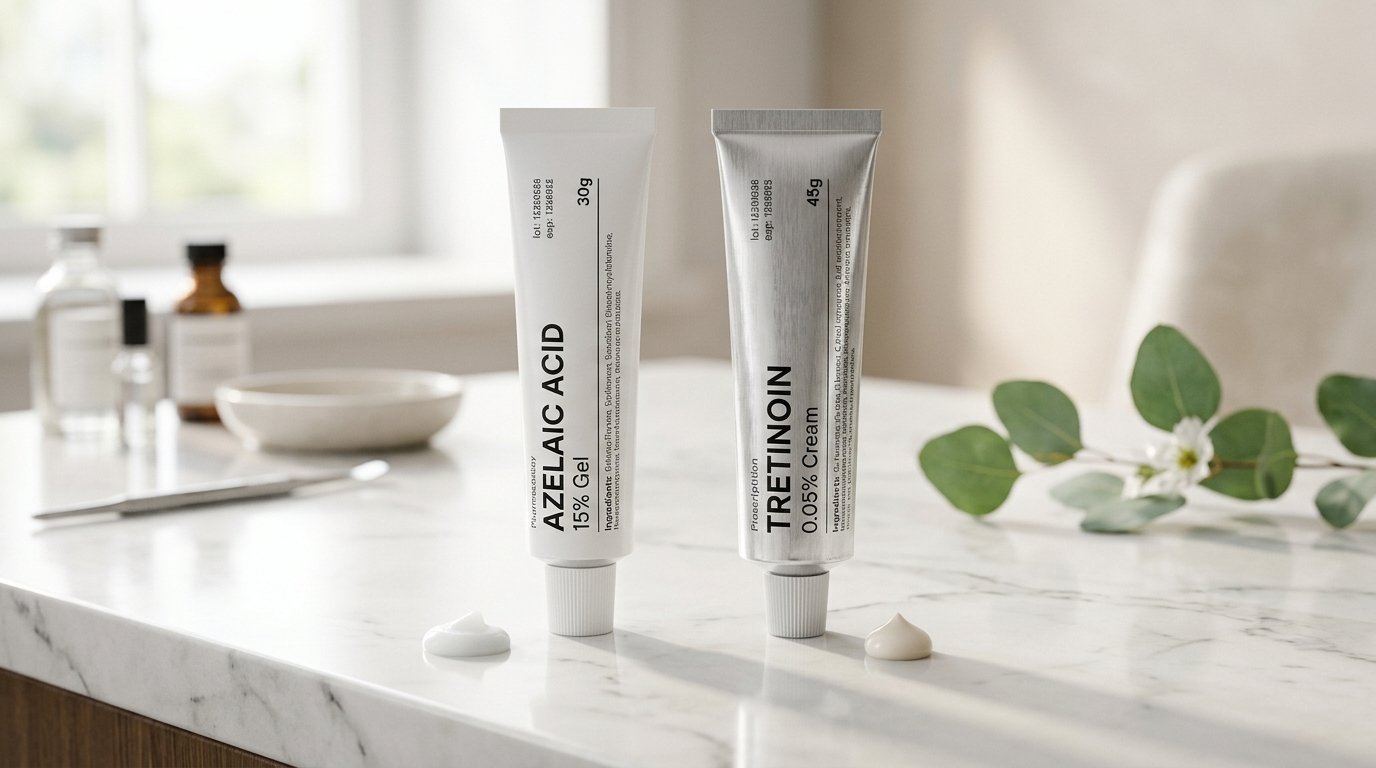
Figure 1: The clinical dermatology powerhouse matchup: Pharmaceutical Azelaic Acid 15% Gel alongside Prescription Tretinoin 0.05% Cream on a clinical countertop.
The Molecular Science: Dicarboxylic Acid vs. Nuclear Retinoic Acid
To understand the profound clinical divergence between azelaic acid and tretinoin, one must examine their biochemical interactions with epidermal keratinocytes, melanocytes, and the cutaneous micro-vasculature.
Azelaic Acid (Dicarboxylic Acid): Azelaic acid (1,7-heptanedicarboxylic acid) is an endogenous nine-carbon saturated dicarboxylic acid synthesized naturally by the lipid-dependent yeast Malassezia furfur and found in dietary grains like barley, wheat, and rye. Unlike retinoids, azelaic acid does not bind to nuclear retinoic acid receptors. Instead, it exerts a multifaceted multi-target mechanism: it freely diffuses across bacterial cell walls, inhibiting protein synthesis in Cutibacterium acnes and Staphylococcus epidermidis without inducing bacterial resistance. Simultaneously, it normalizes abnormal follicular keratinization by decreasing the synthesis of filaggrin and precursor keratin proteins, preventing microcomedone formation while remaining exceptionally gentle on the stratum corneum.
Tretinoin (All-Trans Retinoic Acid): Tretinoin is pure, active Vitamin A carboxylic acid. Bypassing the metabolic conversion steps required by retinol and retinaldehyde, tretinoin binds directly to intracellular cellular retinoic acid-binding proteins (CRABP) and translocates into the cell nucleus, where it activates nuclear retinoic acid receptors (RAR-alpha, RAR-beta, and RAR-gamma). This binding dramatically upregulates gene transcription governing basal cell mitosis, accelerates epidermal cellular turnover by up to 300%, compacts the outermost stratum corneum, dislodges existing microcomedones, and stimulates dermal fibroblasts to synthesize new Type I procollagen.
If you are exploring alternative topical retinoids such as synthetic selective receptor agonists, our detailed clinical comparison on Adapalene vs Tretinoin evaluates receptor selectivity differences for acne vs. photoaging.
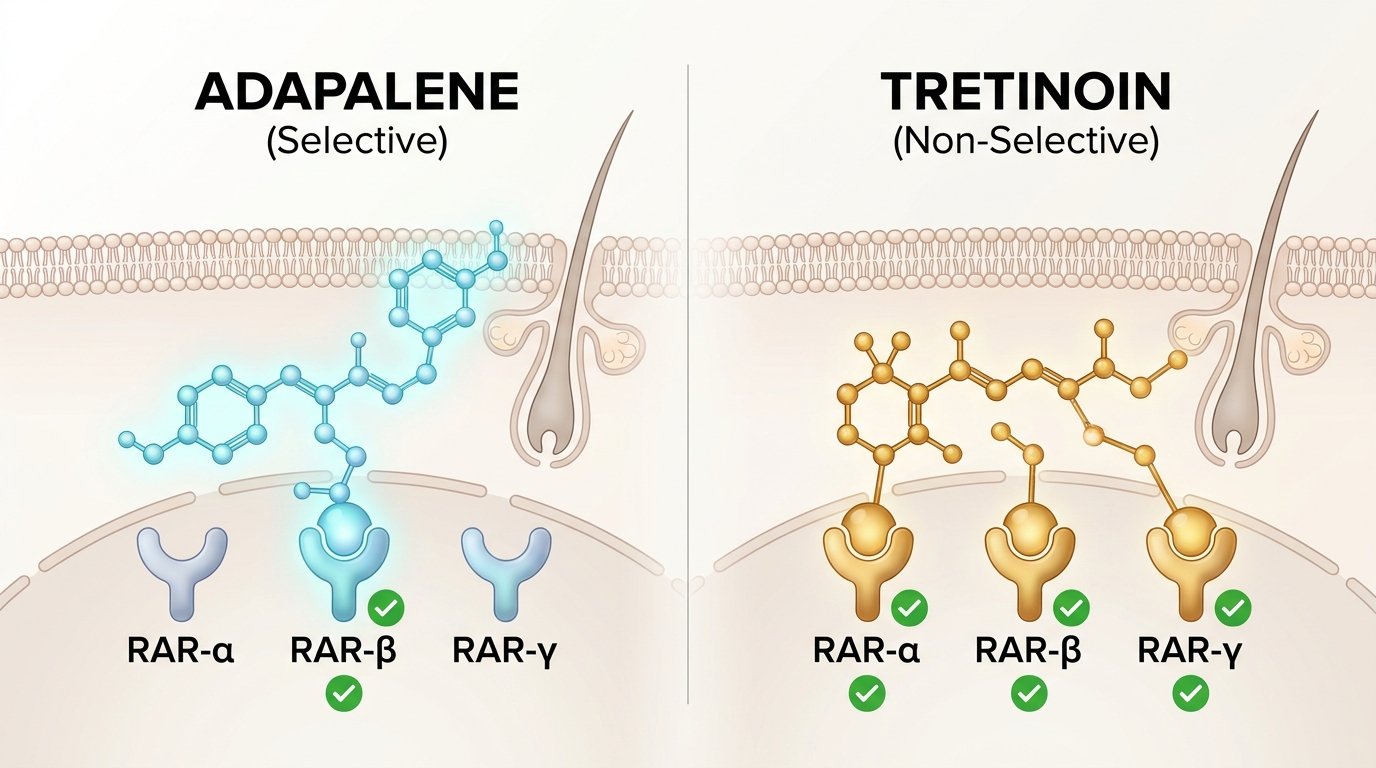
Figure 2: Cellular mechanisms compared: Tretinoin directly modulates nuclear RAR gene expression in the cell nucleus, while Azelaic Acid suppresses bacterial protein synthesis and downregulates inflammatory cathelicidin cascades.
Acne Vulgaris Efficacy: Comedolytic vs. Antimicrobial Clearance
In treating acne vulgaris, both azelaic acid and tretinoin exhibit formidable clinical potency, yet they attack the acne pathogenesis cascade from opposite flanks:
1. Comedonal Acne (Whiteheads & Blackheads)
For non-inflammatory comedonal acne, tretinoin remains the unmatched champion. Because retinoic acid directly suppresses desmosomal cohesion between follicular corneocytes, it unplugs existing microcomedones and prevents the formation of new subclinical impactions faster and more completely than any other topical compound. Azelaic acid exhibits respectable comedolytic properties through filaggrin downregulation, but its clearance kinetics on dense closed comedones are noticeably slower (typically requiring 12 to 16 weeks compared to 6 to 8 weeks for tretinoin).
2. Inflammatory Acne (Papules, Pustules & Nodules)
For erythematous, tender inflammatory acne lesions, azelaic acid frequently demonstrates superior clinical tolerance and faster relief. Azelaic acid acts as a natural scavenger of reactive oxygen species (ROS), including superoxide anions and hydroxyl free radicals released by neutrophils. It actively suppresses pro-inflammatory cytokines such as IL-1-beta, IL-6, and TNF-alpha. Furthermore, by directly reducing follicular Cutibacterium acnes populations, it eliminates the bacterial trigger of inflammatory papules without inducing the terrifying initial “purging” flare-ups frequently precipitated by tretinoin.
Rosacea & Facial Erythema: The Decisive Therapeutic Divide
The single most critical diagnostic distinction between azelaic acid and tretinoin lies in their treatment of papulopustular rosacea and vascular erythema:
Why Azelaic Acid Is the Gold Standard for Rosacea: Azelaic acid 15% gel (Finacea) is FDA-approved as a primary first-line therapeutic for papulopustular rosacea. In rosacea pathophysiology, excessive activity of the serine protease kallikrein-5 (KLK5) cleaves epidermal cathelicidin proteins into abnormal antimicrobial peptides known as LL-37. These LL-37 peptides trigger chronic vascular dilation, angiogenesis, mast cell degranulation, and inflammatory pustules. Clinical research (Thiboutot et al., PMID: 24068553) demonstrated that topical azelaic acid directly downregulates KLK5 expression, arresting cathelicidin cleavage at the molecular source, calming facial flushing, and flattening rosacea papules within 4 to 8 weeks.
Why Tretinoin Can Provoke Severe Rosacea Flares: Conversely, tretinoin stimulates epidermal angiogenesis and transient vascular dilation as part of its cellular remodeling mechanism. In patients with underlying rosacea or sensitive cutaneous vascular beds, tretinoin frequently provokes severe neuro-vascular flushing, intense burning sensations, and profound barrier breakdown. While specialized dermatologists occasionally use ultra-low-dose micro-encapsulated tretinoin for chronic rhinophyma or thickened sebaceous skin, standard tretinoin formulations are widely contraindicated for acute erythematous or papulopustular rosacea.
Microbiome Interactions: Cutibacterium Acnes & Demodex Mite Dynamics
In contemporary dermatological microbiology, acne and rosacea are no longer viewed simply as hygiene or clogged pore defects, but as complex dysbioses of the cutaneous microbiome:
Demodex Folliculorum Ecology in Rosacea: Patients suffering from erythematous and papulopustular rosacea harbor up to six times greater densities of microscopic Demodex folliculorum and Demodex brevis mites within their pilosebaceous units compared to healthy controls. When these mites die, they release endosymbiotic bacteria (such as Bacillus oleronius), triggering explosive innate immune reactions. Azelaic acid possesses indirect acaricidal and direct anti-neutrophilic properties that calm the toll-like receptor 2 (TLR-2) activation induced by Demodex antigens. Tretinoin provides zero anti-parasitic or anti-cathelicidin suppression, meaning that applying it to Demodex-overpopulated rosacea skin merely strips barrier defenses while leaving the microbial trigger unchecked.
Antimicrobial Resistance Prevention: Unlike topical clindamycin, erythromycin, or oral doxycycline, azelaic acid does not foster resistant mutant strains of Cutibacterium acnes. Its antimicrobial mechanism involves non-specific inhibition of oxidoreductase enzymes and cellular transmembrane proton gradients within the bacterium. As a result, patients can safely utilize prescription azelaic acid continuously for years without losing clinical efficacy—making it the ideal long-term maintenance agent for adult acne patients who must avoid chronic antibiotic exposure.
Head-to-Head Comparison: Azelaic Acid vs. Tretinoin
Review the comprehensive pharmacological specifications in our head-to-head clinical reference table below:
| Clinical Parameter | Azelaic Acid (15%–20%) | Tretinoin (0.025%–0.1%) |
|---|---|---|
| Chemical Classification | Saturated nine-carbon dicarboxylic acid | All-trans retinoic acid (pure Vitamin A acid) |
| FDA-Approved Indications | Acne vulgaris (20% cream), Papulopustular rosacea (15% gel) | Acne vulgaris, Facial photoaging (fine wrinkles, tactile roughness) |
| Mechanism of Action | Bacterial protein synthesis inhibitor, ROS scavenger, tyrosinase blocker | Nuclear RAR receptor binding, accelerates basal mitosis, increases collagen |
| Comedolytic Strength | Moderate (normalizes filaggrin and precursor keratin maturation) | Extremely high (cleaves desmosomal attachments, ejects comedones) |
| Anti-Inflammatory Action | Exceptional; suppresses neutrophils, cathelicidin LL-37, and kallikrein-5 | Secondary; can temporarily induce acute retinoid dermatitis inflammation |
| Hyperpigmentation (PIH/Melasma) | Selective tyrosinase inhibitor; cytotoxic to abnormal melanocytes only | Accelerates epidermal pigment dispersion; increases skin turnover |
| Skin Purging Phase | Extremely rare; skin typically calms immediately | Very common; acute 4 to 8 week purging and flaking phase |
| Pregnancy Safety | FDA Category B (generally permitted under obstetrician guidance) | FDA Category X / Strictly contraindicated (teratogenicity risk) |
| Sun Sensitivity (Photosensitivity) | Non-photosensitizing; highly stable in UV light; safe for AM use | Photosensitizing; degrades in sunlight; strictly for PM application |
| Fitzpatrick Safety Profile | Exceptional safety across Fitzpatrick I–VI (zero hypopigmentation risk) | High risk of irritation-induced PIH in skin of color (Fitzpatrick IV–VI) |
Post-Inflammatory Hyperpigmentation (PIH) and Melasma
For patients suffering from post-acne dark marks (post-inflammatory hyperpigmentation) or hormonal melasma, the choice between azelaic acid and tretinoin involves fascinating melanogenesis biology:
Azelaic Acid’s Selective Tyrosinase Inhibition: Azelaic acid is a non-competitive, reversible inhibitor of tyrosinase, the rate-limiting enzyme in melanin biosynthesis. What makes azelaic acid medically miraculous is its selective cytotoxicity: it targets and suppresses DNA synthesis in hyperactive, abnormal melanocytes (such as those found in melasma or inflamed acne lesions) while leaving normal resting melanocytes completely unaffected. In double-blind clinical trials comparing 20% azelaic acid to 4% hydroquinone for melasma (Balina & Graupe), azelaic acid produced equal or superior pigment reduction with zero risk of exogenous ochronosis or permanent depigmentation.
Tretinoin’s Melanin Dispersion: Tretinoin does not directly inhibit tyrosinase. Instead, it fades pigmentation mechanically: by accelerating basal cell division and shedding stratum corneum layers, it forces melanocytes to transfer pigment granules into rapidly ascending keratinocytes, dispersing melanin deposits outward. However, because tretinoin induces significant erythema during initial use, in darker Fitzpatrick skin types (IV through VI) this irritation can backfire, causing secondary post-inflammatory hyperpigmentation that is darker than the original acne scar.
If you are also evaluating chemical resurfacing peels for stubborn solar pigmentation, check our comprehensive safety protocol on Glycolic Acid vs Salicylic Acid to understand how hydroxy acids interact with topical pigment inhibitors.
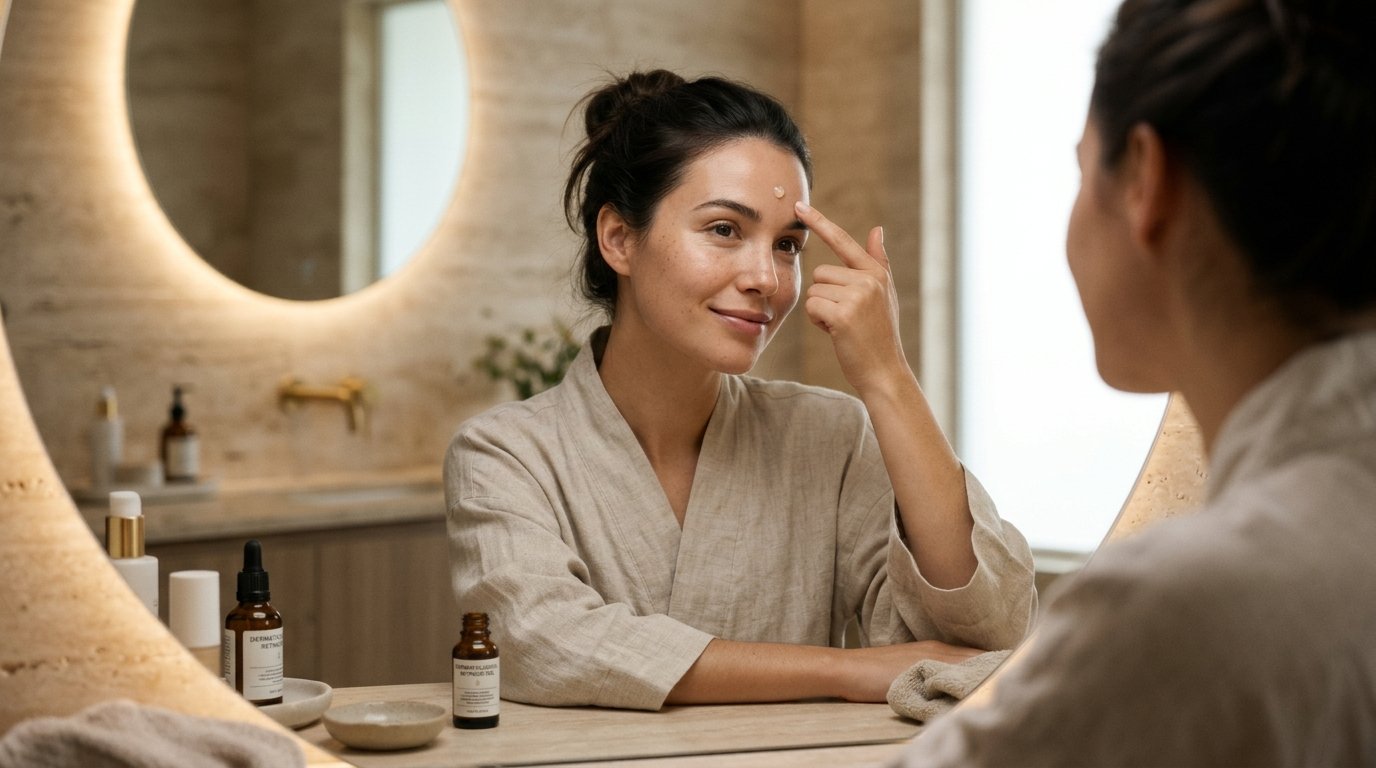
Figure 3: Controlled clinical application: Dispensing exact pea-sized quantities ensures optimal tissue saturation while preventing follicular irritation.
Epidermal Barrier Lipid Kinetics: Minimizing Trans-Epidermal Water Loss
The biochemical viability of any chronic acne or anti-aging regimen depends directly on how the active drug modifies the stratum corneum lipid matrix:
When tretinoin binds to nuclear retinoic acid receptors, it temporarily downregulates the synthesis of filaggrin-derived natural moisturizing factors (NMF) and disrupts lamellar granule extrusion in the stratum spinosum during the initial 4 to 8 weeks. This precipitates a marked 25% to 50% spike in Trans-Epidermal Water Loss (TEWL). In contrast, azelaic acid exerts minimal influence on the structural lipid bilayer. Because it penetrates through aqueous channels in the follicular infundibulum rather than dissolving intercellular ceramides, TEWL values remain virtually flat throughout 12 weeks of twice-daily application.
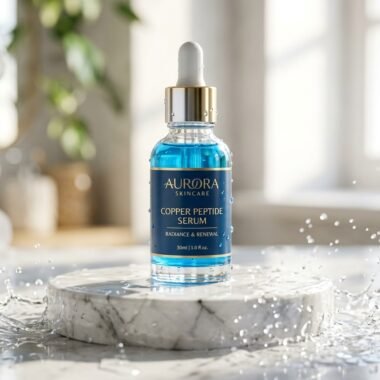
For patients who experience extreme dryness when using retinoids, pairing a barrier-restoring peptide serum on alternate evenings—such as Copper Peptides—restores GAG synthesis and fortifies extracellular matrix resistance against chemical stress.
Clinical Trial Evidence: Head-to-Head Comparative Trials
Multiple peer-reviewed clinical trials have pitted azelaic acid directly against tretinoin in controlled patient cohorts:
1. The Katsambas Comparative Acne Trial
In a landmark randomized clinical trial (Katsambas et al., PMID: 1668166), 289 patients with moderate inflammatory and comedonal acne were treated with either 20% azelaic acid cream twice daily or 0.05% tretinoin cream once daily for 6 months. By month 6, both groups achieved an identical 64% reduction in total acne lesions. However, patients in the tretinoin arm experienced dramatically higher incidences of severe peeling, erythema, and xerosis during the first 8 weeks, whereas the azelaic acid group exhibited superior cosmetic tolerance and significantly higher patient compliance.
2. The Cunliffe Long-Term Comedolytic Evaluation
In clinical trials led by Professor William Cunliffe (PMID: 1712709), researchers evaluated long-term follicular biopsy cores. Tretinoin was found to reduce mature microcomedone density by 78% compared to a 59% reduction achieved by azelaic acid. However, azelaic acid significantly outperformed tretinoin in clearing post-inflammatory erythema (PIE)—the persistent red and purple vascular marks that linger after cystic acne lesions resolve.
Can You Combine Azelaic Acid and Tretinoin? (The Dermatologist Power Duo)
Rather than choosing one over the other, contemporary clinical dermatology frequently pairs azelaic acid and tretinoin together. This combination represents one of the most effective, synergistic prescription protocols in existence—often referred to by dermatologists as the “Acne & Pigment Power Duo”:
The Synergistic Mechanism
Tretinoin thins and compacts the stratum corneum, enhancing the cutaneous penetration of azelaic acid. Simultaneously, azelaic acid’s potent anti-inflammatory, ROS-scavenging properties buffer and counteract the irritating neuro-inflammatory cascades triggered by tretinoin. Together, they clear deep comedones, extinguish C. acnes, fade post-acne erythema, and prevent future breakouts without requiring systemic oral antibiotics.
The Safe Application Protocol
To avoid overwhelming the skin barrier, dermatologists recommend a structured split-routine protocol:
- Morning (AM Routine):
- Gentle, non-stripping hydrating cleanser.
- Azelaic Acid 15% Gel (apply a pea-sized amount over entire face).
- Lightweight ceramide-rich moisturizer.
- Broad-Spectrum Mineral Sunscreen SPF 50+ (zinc oxide further reduces rosacea erythema).
- Evening (PM Routine):
- Gentle cleanser and pat face completely dry (wait 10 minutes).
- Tretinoin 0.025%–0.05% (pea-sized amount applied using the sandwich or dotting method).
- Barrier-repairing night cream containing ceramides, squalane, and cholesterol.
- For Extremely Sensitive Skin: Alternate nights—Azelaic acid on Monday/Wednesday/Friday evenings, and Tretinoin on Tuesday/Thursday/Saturday evenings, reserving Sunday for pure barrier recovery with gentle humectants.
Managing the Initial Sensory Flare: Tingling vs. Retinoid Dermatitis
Both medications carry distinct sensory profiles upon initiation that clinicians must educate patients on to prevent premature drug cessation:
- Azelaic Acid Tingling: Within the first 2 to 3 minutes of applying prescription azelaic acid 15% gel, approximately 30% of patients report an intense itching, prickling, or sensory tingling sensation that lasts for 10 to 15 minutes before subsiding completely. This is a neuro-sensory reaction provoked by transient pH drop and low molecular weight dicarboxylic acid stimulation of unmyelinated epidermal nerve endings; it is not an allergic contact dermatitis or chemical burn. Applying azelaic acid to skin that is 100% bone-dry completely mitigates this sensation.
- Retinoid Dermatitis: In contrast, tretinoin irritation typically manifests 48 to 72 hours after application, characterized by persistent erythema, perioral desquamation, tight stinging when applying plain water, and heightened trans-epidermal burning. If retinoid dermatitis occurs, tretinoin frequency must be reduced to twice weekly and buffered with a ceramide-dominant lipid balm until the barrier recovers.
Vehicle Formulations: Gel vs. Cream vs. Foam
When obtaining your prescription, selecting the proper pharmaceutical vehicle is paramount:
- Azelaic Acid 15% Gel vs. 20% Cream: The 15% gel formulation (Finacea) utilizes an aqueous, micro-particulate delivery matrix that provides greater cutaneous bioavailability than the older 20% cream (Azelex). The gel penetrates the sebaceous follicle faster and has a matte, non-greasy finish ideal for oily and acne-prone skin. However, the 20% cream base is gentler and more emollient, making it preferable for patients with dry, eczema-prone skin or sensitive melasma.
- Tretinoin Cream vs. Gel vs. Microsphere: Tretinoin cream (0.025%, 0.05%, 0.1%) contains emollient lipids, making it the most common starting vehicle. Tretinoin gel delivers faster absorption but carries a high alcohol concentration that can sting reactive skin. Tretinoin Microsphere Gel (Retin-A Micro) encases all-trans retinoic acid in porous microscopic sponge spheres, releasing the drug gradually over several hours to eliminate the initial irritation spike.
Medical Verdict: Which Is Best for Your Skin?
To summarize the medical consensus for clinical decision-making:
- Choose Azelaic Acid If: You have sensitive skin, active papulopustular rosacea, frequent facial flushing, stubborn post-inflammatory erythema (red marks), hormonal melasma, or are currently pregnant or nursing. Azelaic acid delivers serene, un-inflamed skin with zero peeling.
- Choose Tretinoin If: Your primary clinical concerns are severe comedonal acne (stubborn blackheads, bumpy texture), deep-seated photoaging, dynamic wrinkles, and loss of collagen elasticity, and your skin barrier can tolerate a structured 6-to-8-week retinization phase.
- The Clinician’s Ultimate Recommendation: For adult acne accompanied by redness or pigment marks, combine both: apply Azelaic Acid in the morning to protect against inflammation, and Tretinoin at night to drive deep cellular renewal.