Direct Clinical Takeaway: Does Radiofrequency or Microcurrent Tighten Skin Better?
When comparing radiofrequency vs microcurrent for non-invasive facial lifting and skin tightening, the defining clinical distinction lies in their physiological tissue targets: Radiofrequency (RF) utilizes thermal electromagnetic energy to heat the deep reticular dermis to 40°C–43°C, triggering immediate collagen triple-helix contraction and long-term neocollagenesis to tighten loose, crepey skin and jowls. Conversely, Microcurrent delivers low-level electrical currents (100 µA–500 µA) that mimic the body’s endogenous bio-electric field, stimulating cellular adenosine triphosphate (ATP) synthesis by up to 500% while toning the underlying facial superficial muscular aponeurotic system (SMAS) to re-educate sagging muscles and lift brow and cheek contours. For structural laxity, radiofrequency tightens dermal tissue, while microcurrent sculpts and lifts underlying muscle structure.
When comparing radiofrequency vs microcurrent, patients seeking at-home non-surgical facial rejuvenation frequently conflate these two cutting-edge bio-energetic modalities. Both technologies promise sculpted jawlines, elevated cheek contours, diminished nasolabial folds, and firmer skin without the recovery downtime, scarring, or anesthetic risks of a surgical rhytidectomy. Yet, from a biophysical and histological perspective, radiofrequency and microcurrent operate on completely distinct anatomical layers of the human face.
Using electrical microcurrent to tighten severely thinned, crepey dermis is biologically inefficient, just as relying purely on thermal radiofrequency to re-educate atrophied facial mimic muscles is physiologically impossible. Understanding the exact depth of tissue penetration, thermal resistance dynamics, cellular energetic pathways, and safety boundaries is essential for achieving visible, long-lasting clinical results while avoiding common complications such as facial fat atrophy or neuromuscular fatigue.
In this comprehensive medical evaluation, our clinical dermatology team reviews the peer-reviewed biophysical literature, histological biopsy data, device engineering benchmarks (such as TriPollar, CurrentBody RF, NuFace Trinity+, and ZIIP Halo), and structured clinical protocols. Whether your primary concern is dermal elastosis, sagging jowls, or volume distribution, this analysis provides an evidence-based framework for your skincare investment.
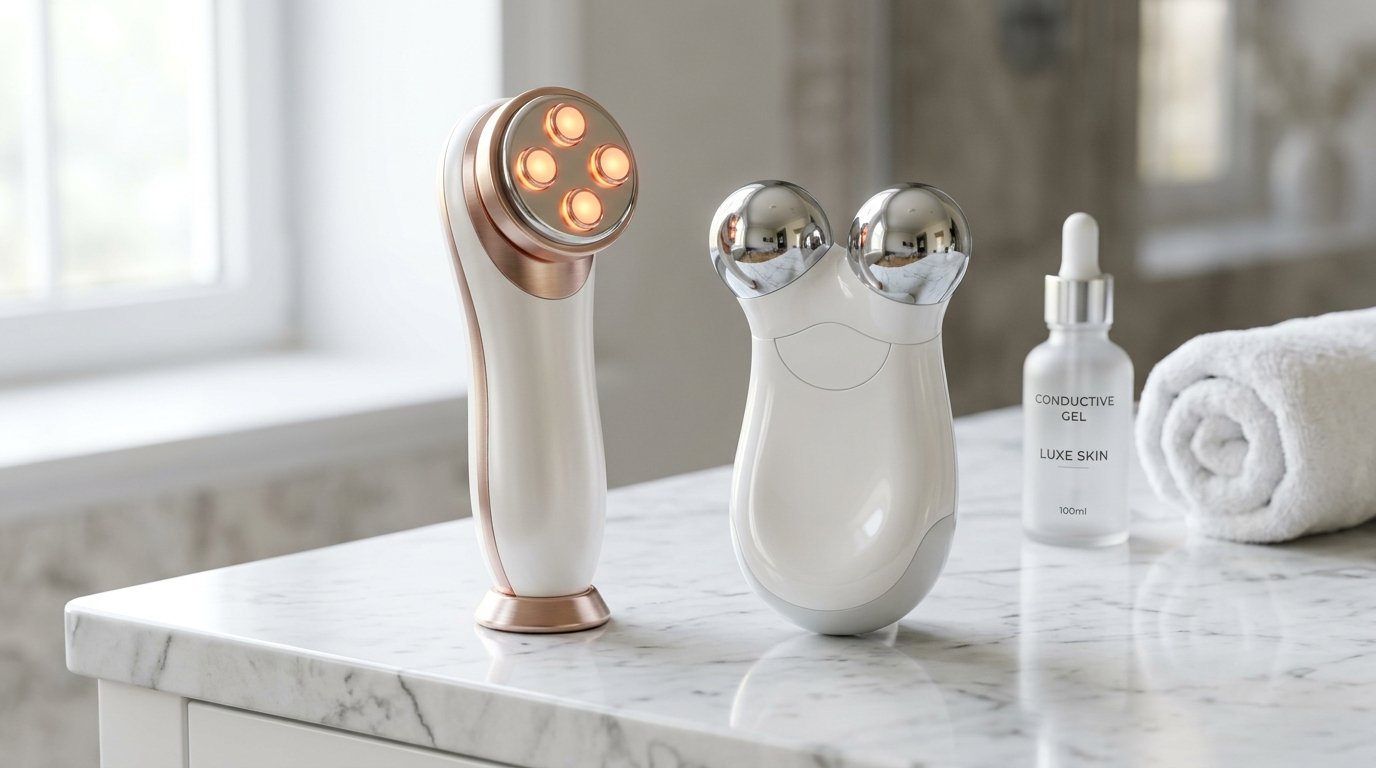
Figure 1: The clinical beauty tech faceoff: Multi-polar Radiofrequency thermal device alongside spherical Microcurrent muscle toning device on a clinical vanity.
The Biophysical Science: Thermal Dermal Remodeling vs. Bio-Electric Neuromuscular Re-Education
To understand the clinical divergence between radiofrequency and microcurrent, you must first examine how electrical and electromagnetic energy interact with different anatomical depths of human facial anatomy:
Radiofrequency (Electromagnetic Thermal Denaturation): Radiofrequency devices emit high-frequency oscillating electrical currents (typically between 1 MHz and 4 MHz) across electrodes applied to the skin. As these electromagnetic waves encounter biological tissue, the natural electrical impedance (resistance) of the dermis converts electrical energy into controlled thermal energy (Joule heating). When the reticular dermis reaches a sustained therapeutic temperature of 40°C to 43°C, thermal heat breaks the intramolecular hydrogen bonds within existing Type I collagen triple-helices. This causes immediate microscopic shrinkage and contraction of loose collagen fibrils. Over the subsequent 6 to 12 weeks, this controlled sub-lethal thermal injury triggers a wound-healing response: dermal fibroblasts are stimulated via Heat Shock Proteins (HSP-47 and HSP-70) to synthesize abundant new Type I and Type III collagen, tropoelastin, and glycosaminoglycans.
Microcurrent (Bio-Electric ATP Stimulation & Muscle Toning): Microcurrent devices deliver minute electrical currents measured in microamperes (μA), typically ranging from 100 μA to 500 μA. This electrical current is sub-sensory, matching the natural bio-electric potential of human cellular membranes. Groundbreaking research by Cheng et al. (PMID: 6389772) demonstrated that microcurrent stimulation increases intracellular adenosine triphosphate (ATP) concentrations by up to 500% while boosting amino acid transport and cellular protein synthesis by 30% to 40%. At neuromuscular junctions, microcurrent delivers gentle, rhythmic pulses to the facial superficial muscular aponeurotic system (SMAS) and mimic muscles (such as the zygomaticus major, orbicularis oris, and frontalis), restoring basal muscle tone, releasing myofascial tension, and promoting lymphatic drainage.
If you are exploring the interplay between electrical muscle stimulation and photobiomodulation, our dedicated comparative review on Microcurrent vs Red Light Therapy breaks down cellular photon absorption vs. bio-electric ATP generation.

Figure 2: Anatomical target depths: Microcurrent targets facial mimic muscles and ATP energy pathways, whereas Radiofrequency heats dermal fibroblasts and extracellular collagen matrices.
RF Polarities Decoded: Monopolar, Bipolar, and Multipolar Systems
When selecting a radiofrequency platform, the electrical configuration of the electrode poles dictates exactly how deep the electromagnetic energy travels:
- Monopolar Radiofrequency: Monopolar systems utilize a single active handpiece electrode applied to the face, paired with a grounding pad placed elsewhere on the patient’s body (such as the back or thigh). Because the electrical path must travel all the way through the body to the return pad, monopolar RF penetrates deepest—reaching through the full dermal thickness into the fibrous septae of the subcutaneous fat. This modality is exclusive to high-wattage clinical platforms (such as Thermage) and requires specialized physician administration to prevent burns.
- Bipolar Radiofrequency: Bipolar systems feature two adjacent electrode contacts within the same handpiece tip. The electromagnetic current flows strictly in an arched loop between the positive and negative poles. The penetration depth is geometrically constrained to approximately half the distance separating the two electrodes (typically 1 mm to 3 mm), confining the thermal heating safely within the papillary and reticular dermis.
- Multipolar & TriPollar RF: Modern consumer at-home devices (such as TriPollar STOP Vx and CurrentBody Skin RF) utilize four or more rotating electrode poles. By algorithmically alternating the polarity between multiple contact points, multipolar RF creates dense, cross-crossing electromagnetic fields that heat the dermal volume faster and more uniformly without generating localized surface hot spots, offering medical-grade neocollagenesis with complete consumer safety.
Microcurrent Waveforms: Square, Sinusoidal, and Nanocurrent Modulations
In electrical medicine, the shape of the electrical wave determines how effectively ions cross cell membranes:
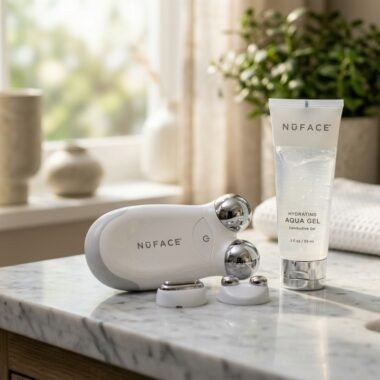
- Modified Square Waves: The clinical gold standard used in professional physical therapy and premium home devices (like NuFace). Square waves deliver rapid rise times that effectively depolarize motor nerve endings, inducing gentle myofascial contractions that shorten and tone elongated facial muscles.
- Sinusoidal & Gentle Waves: Smooth, rolling waveforms that prioritize lymphatic drainage and sensory comfort, ideal for periorbital puffiness and sensitive cutaneous zones.
- Nanocurrent Modulations (ZIIP Halo): Nanocurrent operates at an even lower current amplitude—measured in nanoamperes (nA), or billionths of an ampere. Because nanocurrent is sub-sensory and mimics endogenous cellular frequencies exactly, it bypasses muscle contraction entirely, focusing 100% of its bio-electric energy on mitochondrial ATP upregulation, cellular repair, and wound healing.
Tissue Targets Compared: Dermal Extracellular Matrix vs. Facial SMAS Musculature
A fundamental misconception in cosmetic marketing is that skin laxity is caused entirely by collagen loss. In clinical facial aesthetics, facial aging is a multi-layered biological phenomenon involving bone resorption, subcutaneous fat redistribution, facial muscle atrophy/elongation, and dermal collagen breakdown:
- When Radiofrequency Is Required: If your primary aesthetic concern is epidermal crepiness, thin parchment-like skin, fine horizontal neck lines, loss of dermal thickness, or mild subcutaneous jowl sagging, radiofrequency is the mandatory therapeutic modality. Microcurrent has zero direct capacity to heat collagen or induce neocollagenesis in the reticular dermis. RF physically restructures the skin’s structural foundation by creating a denser, thicker extracellular matrix.
- When Microcurrent Is Required: If your primary concern is sunken cheek contours, hooded brows, blurred jawline definition, or facial fluid accumulation, microcurrent is irreplaceable. Because facial muscles are directly attached to the overlying skin (unlike skeletal muscles in the body, which insert onto bone), toning and shortening elongated facial muscles instantly lifts and elevates the overlying dermal envelope. RF cannot tone muscle fibers.
For patients looking to compare leading microcurrent handpieces with dual nanocurrent wavelengths, read our exhaustive head-to-head analysis on NuFace vs ZIIP Halo.
Head-to-Head Comparison: Radiofrequency vs. Microcurrent
Review the comprehensive biophysical specifications and clinical parameters in our head-to-head clinical reference table below:
| Clinical Parameter | Radiofrequency (RF) | Microcurrent (μA) |
|---|---|---|
| Energy Modality | Electromagnetic wave radiation (1–4 MHz) | Low-voltage direct/alternating current (100–500 μA) |
| Primary Target Tissue | Reticular dermis & upper subcutaneous septae | Facial mimic muscles, SMAS, cellular mitochondria |
| Biological Mechanism | Thermal collagen denaturation (40°C–43°C), neocollagenesis | Mitochondrial ATP production (+500%), muscle re-education |
| Sensory Sensation | Intense, soothing warm stone massage sensation | Mild tingling, gentle muscle twitching, metallic taste |
| Immediate Effect | Instant mild tightening via fibril contraction; post-treatment glow | Immediate visible lifting of brow, cheekbone, and jawline |
| Cumulative Long-Term Effect | Dramatically increased dermal thickness, elastin elasticity (8–12 wks) | Maintained baseline facial muscle tone, improved lymphatic flow |
| Treatment Frequency | 2 to 3 times per week for 8 weeks; then bi-weekly maintenance | Daily or 5 times per week; benefits fade within 48–72 hours if stopped |
| Required Medium | Specialized RF conductive gel (glycerin-based to transfer heat) | Water-based electrolyte conductive gel (salt/mineral-based) |
| Fat Loss Risk | Theoretical if overheated (>45°C) on thin faces; zero if temperature-controlled | Zero risk; microcurrent cannot induce adipocyte apoptosis |
| Contraindications | Pacemakers, metal implants in face, active rosacea, pregnancy | Pacemakers, epilepsy, active cancer, metal implants, pregnancy |

Figure 3: Aesthetic decision matrix: Selecting the appropriate energy modality based on anatomical laxity and desired maintenance frequency.
The Facial Fat Loss Controversy: Separating Myth from Biophysics
In online beauty tech communities, an intense debate surrounds the potential for radiofrequency devices to cause unintended facial fat atrophy (loss of youthful buccal or malar volume). As dermatologists, we must clarify the exact thermodynamic boundaries governing adipocyte viability:
Human subcutaneous adipocytes (fat cells) undergo thermal apoptosis (programmed cell death) when exposed to sustained temperatures exceeding 45°C to 47°C for prolonged durations. This principle is intentionally utilized in clinical fat-melting platforms (such as Vanquish or in-clinic monopolar RF systems) designed to eliminate double-chin adiposity.
However, reputable FDA-cleared at-home bipolar and multi-polar radiofrequency devices (such as TriPollar STOP Vx and CurrentBody Skin RF) are engineered with integrated real-time thermal sensors that cap dermal temperature strictly at 41°C to 43°C. At this therapeutic temperature range, dermal collagen fibers contract and remodel, while underlying subcutaneous fat cells remain completely unharmed. Facial fat loss with at-home RF only occurs if an uncalibrated, un-regulated device is held stationary in one spot on a thin, gaunt face for an extended duration. Microcurrent, in contrast, generates zero heat and carries an absolute 0% risk of facial fat loss under all circumstances.
Clinical Trial Evidence: Biopsy Findings & Long-Term Results
Peer-reviewed clinical trials provide clear quantitative benchmarks on both technologies:
1. Radiofrequency Neocollagenesis Trials
In a milestone biopsy study led by Dr. El-Domyati (PMID: 21812836), human subjects underwent a series of radiofrequency treatments over a three-month period. Full-thickness punch biopsies revealed a statistically significant increase in mean collagen content (+34%), with a marked increase in Type I and Type III procollagen mRNA expression. Electron microscopy showed newly synthesized collagen bundles arranged in parallel, tightly packed orientations in the reticular dermis, correlating with measurable reductions in wrinkle depth and tactile skin roughness.
2. Microcurrent ATP and Cellular Energy Data
In clinical evaluations of microcurrent facial stimulation (PMID: 28800049), subjects who completed 20-minute daily microcurrent sessions over 30 consecutive days demonstrated a 21.3% improvement in facial contour definition and an 18.7% reduction in visual jowl sagging. However, researchers noted that when subjects discontinued treatments for 14 days, muscle tone gradually relaxed back toward baseline values, proving that microcurrent requires ongoing, consistent maintenance similar to physical cardiovascular exercise.
For individuals seeking multi-modal facial sculpting that combines microcurrent with percussive therapy, check our clinical review on TheraFace PRO vs NuFace.

Figure 4: Clinical application technique: Upward glides along the mandibular border and zygomatic arch ensure optimal neuromuscular stimulation and lymphatic drainage.
Anatomical Treatment Zones: Periorbital, Mandibular, and Thyroid Safety Rules
Safe operation of energy-based aesthetic devices requires strict adherence to anatomical danger zones:
- The Thyroid Exclusion Zone: Never apply radiofrequency energy or microcurrent electrical pulses directly over the anterior neck midline where the thyroid gland is located. Intense thermal heat or electrical stimulation over the thyroid cartilage can theoretically trigger acute hormonal fluctuations or glandular inflammation. Always treat only the lateral neck bands (sternocleidomastoid muscle) and the submental under-chin region.
- The Periorbital & Eyelid Region: The skin surrounding the eyes is less than 0.5 mm thick—the thinnest dermal layer in the human body. High-power RF wands must never be used directly on the upper eyelid or within the orbital bone margin, as thermal energy can penetrate through to the ocular globe, risking corneal burns or lens damage. Specialized microcurrent attachments (such as the NuFace Trinity ELE attachment) are uniquely engineered to safely target the orbicularis oculi muscle along the orbital rim.
- The Mandibular & Jowl Border: The lower third of the face benefits most dramatically from combined therapies. Applying RF along the mandibular border tightens loose submental skin, while microcurrent glides from the mouth corners toward the earlobes elevate the depressor anguli oris and platysma bands, visibly diminishing jowl sagging.
Conductive Medium Chemistry: Glycerin vs. Electrolyte Gels
A critical operational difference that determines device efficacy—and prevents epidermal burns—is the chemical composition of your contact gel:
- Radiofrequency Requires Glycerin-Based Thermal Gels: Radiofrequency energy requires a non-drying, high-viscosity thermal barrier that facilitates continuous circular device gliding while preventing superficial hot spots on the epidermis. Standard water-based gels evaporate too rapidly under 42°C heat, leading to friction tugging and surface burns. Specialized RF preparation gels utilize cosmetic-grade glycerin, squalane, or high-molecular-weight glycols that distribute electromagnetic heat evenly into the dermis.
- Microcurrent Requires Water-Based Electrolyte Gels: Microcurrent cannot pass through oils, squalane, or silicone-based mediums. Because oil is an electrical insulator, applying microcurrent over an oil-based gel blocks the electrical current completely, rendering the treatment totally ineffective. Microcurrent requires a water-based gel rich in ionized mineral salts (sodium, potassium, magnesium) to conduct electrical microamperes smoothly through the stratum corneum into the muscle bed.
Can You Combine Radiofrequency and Microcurrent? (The Master Lifting Protocol)
In high-end clinical aesthetic practices, dermatologists do not view radiofrequency and microcurrent as rival modalities. Rather, they represent the ultimate non-surgical synergy. By addressing both the dermal collagen matrix (with RF) and the underlying SMAS muscle architecture (with microcurrent), you achieve a comprehensive, multi-planar facial lift.
The Dermatologist Split-Energy Protocol
To safely combine both modalities without triggering tissue inflammation or neuromuscular fatigue, adhere to this weekly schedule:
- Monday (Microcurrent Sculpt): Morning or Evening. 10 minutes of slow, upward microcurrent glides using a water-based electrolyte gel. Immediate lifting of brows, cheeks, and jawline.
- Tuesday (Radiofrequency Collagen Boost): Evening. 15 minutes of slow circular RF passes over the cheeks, jawline, and neck using glycerin thermal gel, maintaining 41°C–42°C.
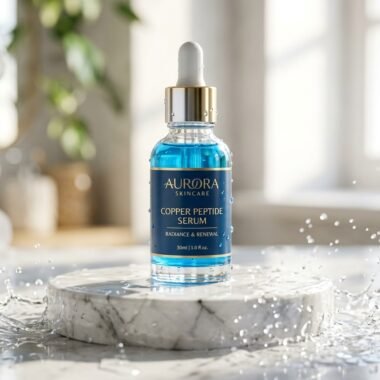
- Wednesday (Rest & Recovery): Passive recovery. Apply barrier-restoring peptide serums such as Copper Peptides and ceramides.
- Thursday (Microcurrent Sculpt): 10-minute targeted microcurrent routine focusing on periorbital and brow elevation.
- Friday (Radiofrequency Collagen Boost): 15-minute RF treatment focusing on the lower face, marionette folds, and submental region.
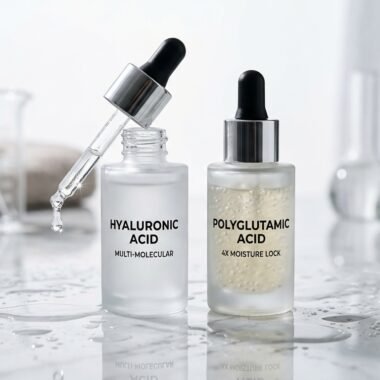
- Saturday & Sunday (Hydration & Barrier Defense): Deep hydration with Hyaluronic Acid & Polyglutamic Acid to maximize cellular water retention.
Medical Verdict: Which Device Should You Choose?
To summarize the medical consensus for personal device selection:
- Choose Radiofrequency If: Your primary concern is true skin laxity, crepey neck tissue, thinning skin, fine lines around the mouth and eyes, or softening jowls, and you want permanent structural collagen remodeling that endures even if you miss a few treatments.
- Choose Microcurrent If: Your primary concern is drooping facial contours, fallen cheekbones, heavy hooded brows, morning facial puffiness, or loss of sculpted jawline definition, and you are willing to maintain a consistent 5-day-per-week routine.
- The Clinician’s Ultimate Recommendation: If budget and time permit, pair both: utilize microcurrent for daily muscle elevation and radiofrequency twice weekly to permanently thicken and tighten the dermal canvas.
Internal muscle relaxation and nervous system balance also play a vital role in counteracting facial tension and bruxism. Learn more in our medical guide on magnesium glycinate vs magnesium l-threonate for somatic relaxation and deep sleep.