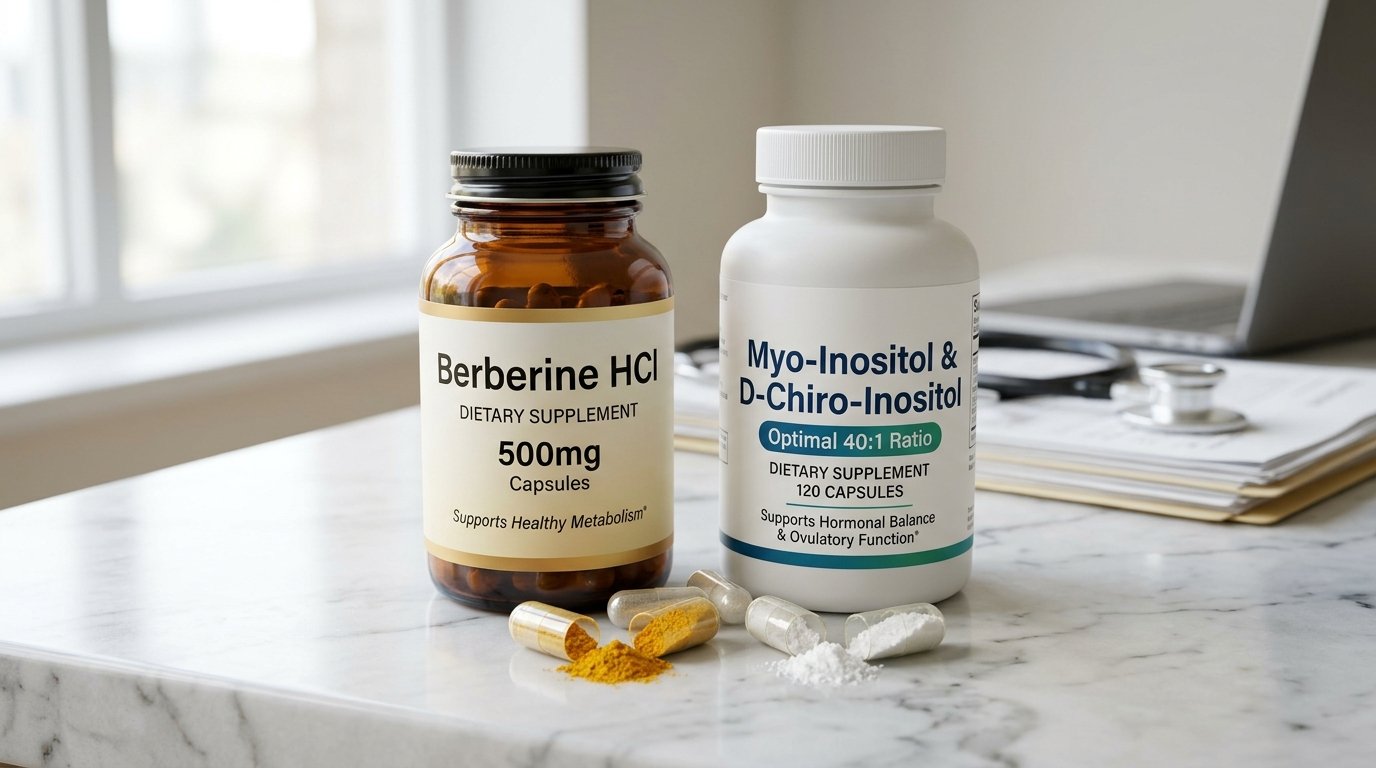
When evaluating berberine vs inositol for metabolic dysfunction, hormonal acne, and endocrine regulation, the fundamental clinical decision hinges on your primary underlying pathophysiology: whether you are battling systemic glucose intolerance and visceral adiposity via hepatic metabolic pathways, or navigating ovarian insulin resistance, follicular arrest, and ovulatory infertility driven by an intracellular secondary messenger deficiency.
🩺 Quick Clinical Verdict: Berberine vs Inositol
Choose Berberine (500 mg 2–3x daily) if your primary diagnostic struggle is high fasting blood glucose, elevated HbA1c (>5.7%), stubborn visceral midsection fat, metabolic syndrome, or elevated LDL cholesterol. Berberine operates as an isoquinoline alkaloid that potently stimulates Adenosine Monophosphate-Activated Protein Kinase (AMPK), functioning inside the body very similarly to pharmaceutical metformin.
Choose Inositol (specifically a 40:1 Myo-Inositol to D-Chiro-Inositol ratio, 2,000–4,000 mg daily) if you suffer from Polycystic Ovary Syndrome (PCOS), anovulatory menstrual cycles, fertility challenges, high luteinizing hormone (LH), or hormonal cystic acne. Inositol is not an herb but a pseudovitamin that acts as an essential secondary messenger in ovarian follicular fluid, restoring spontaneous ovulation and egg quality without the gastrointestinal distress typical of berberine.
The Modern Endocrine Crisis: Understanding Insulin Resistance in PCOS
In outpatient clinical endocrinology and women’s health practice, insulin resistance is frequently misunderstood as merely a dietary consequence or a precursor to type 2 diabetes. In reality, hyperinsulinemia is a profound master-hormone disruptor that wreaks havoc on ovarian physiology, thyroid function, hypothalamic-pituitary-adrenal (HPA) axis balance, and vascular integrity. Over 70% of women diagnosed with Polycystic Ovary Syndrome (PCOS) suffer from cellular insulin resistance regardless of their body mass index—a clinical reality known as “Lean PCOS.”
When peripheral cells in skeletal muscle and adipose tissue become desensitized to insulin, the pancreas responds by hyper-secreting compensatory insulin to clear glucose from the bloodstream. While skeletal muscle resists this flood, the ovaries remain hypersensitive to insulin. Elevated circulating insulin acts as a direct co-gonadotropin on ovarian theca cells, up-regulating the cytochrome P450c17α enzyme (CYP17A1). This enzymatic surge drives the overproduction of ovarian androgens—primarily androstenedione and free testosterone.
Simultaneously, hyperinsulinemia suppresses the hepatic synthesis of Sex Hormone-Binding Globulin (SHBG). With lower SHBG available in circulation to bind and sequester circulating androgens, the percentage of bioactive free testosterone skyrockets, driving the clinical manifestations of hyperandrogenism: terminal hair growth on the chin and jawline (hirsutism), androgenetic thinning at the crown, severe cystic acne along the lower third of the face, and chronic anovulation. Resolving this hormonal catastrophe requires targeting the upstream cellular defect. This brings us to the comparative clinical evaluation of berberine vs inositol.
Molecular Pharmacology: How Berberine and Inositol Actually Work
Although both compounds are frequently grouped together on wellness social media as “natural metabolic aids,” their biochemical mechanisms, molecular targets, and organ tissue distributions could not be more distinct.
1. Berberine: The Isoquinoline Alkaloid and AMPK Master Switch
Berberine is a quaternary ammonium salt extracted from the roots, rhizomes, and stem bark of medicinal plants such as Berberis aristata (tree turmeric), Hydrastis canadensis (goldenseal), and Coptis chinensis (coptis). For centuries a cornerstone of Ayurvedic and Traditional Chinese Medicine, modern molecular pharmacology has identified berberine’s primary mechanism: the potent, dose-dependent activation of Adenosine Monophosphate-Activated Protein Kinase (AMPK).
AMPK serves as the central cellular energy sensor across all eukaryotic biology. When berberine mildly inhibits Complex I of the mitochondrial respiratory chain, it alters the intracellular AMP/ATP ratio. In response, AMPK triggers a cascade of metabolic adaptations:
- Enhanced GLUT4 Translocation: It mobilizes glucose transporter type 4 (GLUT4) from intracellular storage vesicles directly to the cellular membranes of skeletal muscle and adipocytes, facilitating insulin-independent glucose uptake from the bloodstream.
- Down-Regulation of Hepatic Gluconeogenesis: It suppresses key rate-limiting gluconeogenic enzymes in the liver—specifically phosphoenolpyruvate carboxykinase (PEPCK) and glucose-6-phosphatase (G6Pase)—halting nocturnal hepatic sugar dumping.
- Lipid Metabolism Modulation: Through an ERK-dependent pathway, berberine up-regulates the expression of low-density lipoprotein receptors (LDLR) on hepatocytes via post-transcriptional mRNA stabilization, substantially reducing serum total cholesterol, triglycerides, and ApoB particles.
- Intestinal Incretin Stimulation: Berberine stimulates the secretion of Glucagon-Like Peptide-1 (GLP-1) from intestinal neuroendocrine L-cells, promoting delayed gastric emptying and enhanced pancreatic beta-cell sensitivity (the physiological basis for its viral nickname, “Nature’s Ozempic”).
2. Inositol: The Intracellular Secondary Messenger and Ovarian Sensitizer
In contrast to the botanical alkaloid berberine, inositol is a nine-stereoisomer carbocyclic sugar (hexahydroxycyclohexane) that naturally occurs in cellular membranes. Formerly misclassified as Vitamin B8, inositol is synthesized endogenously by human kidneys (producing roughly 2 grams per day) and obtained through citrus fruits, legumes, and whole grains. In human physiology, two isomers are of paramount importance: Myo-Inositol (MI) and D-Chiro-Inositol (DCI).
Inositols do not function as metabolic enzyme stimulants; rather, they form the structural backbone of glycosylphosphatidylinositol (GPI) second-messenger precursors. When insulin binds to its cell-surface receptor, inositol phosphoglycan (IPG) mediators are cleaved and released into the cytoplasm to execute insulin’s cellular commands:
- Myo-Inositol (MI): Facilitates cellular glucose cellular uptake via GLUT4 activation and serves as the second messenger for Follicle-Stimulating Hormone (FSH) in ovarian granulosa cells. Adequate MI is indispensable for proper FSH receptor signaling, healthy follicular recruitment, and oocyte maturation.
- D-Chiro-Inositol (DCI): Regulates glycogen synthesis and acts as a regulator of insulin-stimulated testosterone production in the theca cells of the ovary. Under healthy conditions, an epimerase enzyme converts MI to DCI based on tissue needs.
In healthy systemic plasma, the physiological ratio of Myo-Inositol to D-Chiro-Inositol is strictly maintained at 40:1. However, in women suffering from PCOS, an endocrine paradox occurs: peripheral tissues display impaired epimerase activity (leading to cellular DCI deficiency and insulin resistance), whereas ovarian theca cells demonstrate accelerated epimerization. The resulting excessive ovarian DCI depletes the follicular Myo-Inositol pool, impairing FSH signaling and causing follicle arrest—the hallmark cystic appearance visible on ultrasound.
Head-to-Head Comparison: Berberine vs Inositol
To provide clinical clarity, the following table synthesizes pharmacokinetics, clinical indications, target biochemical markers, and safety considerations when evaluating berberine vs inositol:
| Clinical Dimension | Berberine (HCl / Phytosome) | Inositol (40:1 MI/DCI Ratio) |
|---|---|---|
| Primary Molecular Mechanism | AMPK activation; mitochondrial complex I inhibition; LDLR stabilization. | Inositol phosphoglycan second messenger; FSH signaling sensitization. |
| Target Clinical Endpoint | Fasting glucose reduction, HbA1c control, visceral fat loss, lipid clearing. | Ovulation induction, menstrual cycle regularity, egg quality, LH/FSH balance. |
| Standard Clinical Dosage | 500 mg 2 to 3 times daily with meals (Total: 1,000–1,500 mg/day). | 2,000 mg Myo + 50 mg DCI twice daily (Total: 4,000 mg MI / 100 mg DCI). |
| Effect on Menstrual Regularity | Moderate; mediated primarily through downstream visceral insulin reduction. | High / Direct; clinically proven to restore spontaneous ovulation in 65–72% of patients. |
| Cardiometabolic & Lipid Impact | Superior: significantly drops triglycerides (-15% to -25%) and LDL-C. | Mild to Moderate: improves HDL and metabolic syndrome parameters secondarily. |
| Common Side Effects | GI distress: cramping, diarrhea, constipation, nausea, flatulence. | Exceptionally mild: occasional mild nausea or loose stool at >12g doses. |
| Pregnancy & Conception Safety | Contraindicated: crosses placenta; may cause uterine contractions/kernicterus. | Safe & Recommended: reduces gestational diabetes risk and neural tube defects. |
| Monthly Treatment Cost (US/UK) | $18 – $32 per month. | $24 – $45 per month (powder/capsule). |
What Landmark Clinical Trials Prove (PubMed Analysis)
To separate viral marketing claims from verifiable medical evidence, we must review the randomized controlled trial (RCT) literature evaluating berberine vs inositol in human cohorts.
1. Berberine vs Metformin in Anovulatory PCOS (An et al., PMID: 24523910)
In a randomized, double-blind clinical trial comparing berberine hydrochloride against metformin in women undergoing IVF treatment with PCOS, berberine demonstrated equivalent efficacy in reducing fasting blood glucose, fasting insulin, and Homeostatic Model Assessment of Insulin Resistance (HOMA-IR). However, berberine achieved a statistically superior reduction in body mass index (BMI), waist circumference, total cholesterol, and triglycerides compared to pharmaceutical metformin, along with higher clinical pregnancy rates per cycle without the severe lactic acidosis risks of pharmacological biguanides.
2. The 40:1 Inositol Ratio for Ovulation and Oocyte Quality (Unfer et al., PMID: 29042448)
A multi-center consensus trial evaluated various ratios of Myo-Inositol to D-Chiro-Inositol in anovulatory PCOS patients. The clinical findings conclusively established that the physiological 40:1 ratio produced the highest rates of spontaneous ovulation (72.4%), significantly elevated serum progesterone during the luteal phase, and restored normal menstrual cycles within 12 weeks of daily therapy. Crucially, formulas containing high concentrations of D-Chiro-Inositol alone (e.g., 5:1 or pure DCI) actually exerted a detrimental effect on oocyte morphological quality and blastocyst formation, underscoring the vital necessity of using the verified 40:1 ratio.
3. Berberine’s Direct Antimicrobial Action on the Gut Microbiome (Zhang et al., PMID: 32087529)
Recent multi-omics research indicates that berberine’s systemic metabolic benefits are heavily mediated through gut microbiome remodeling. Berberine acts as a selective antimicrobial, suppressing lipopolysaccharide (LPS)-producing Gram-negative bacteria in the colon while selectively enriching short-chain fatty acid (SCFA)-producing taxa—predominantly Akkermansia muciniphila and Bifidobacterium. By reducing systemic circulating endotoxemia, berberine eliminates low-grade metabolic endotoxin-driven insulin receptor resistance.
The “Nature’s Ozempic” Trend: Debunking the Weight Loss Hype
Over the past two years, social media channels have extensively branded berberine as “Nature’s Ozempic.” From a clinical perspective, this comparison is both pharmacologically misleading and potentially hazardous to patient expectations. Pharmaceutical semaglutide (Ozempic/Wegovy) and tirzepatide (Mounjaro/Zepbound) are synthetic peptide GLP-1 and GIP receptor agonists administered via subcutaneous injection that reach supraphysiological blood concentrations, causing profound central nervous system appetite suppression and slowing gastric motility by up to 40%.
Berberine does stimulate modest endogenous GLP-1 release from intestinal enteroendocrine cells and suppresses adipogenesis via C/EBPα and PPARγ pathway inhibition. However, typical weight loss in peer-reviewed clinical trials averages approximately 3 to 5 pounds over a 12-week period—driven primarily by improvements in insulin sensitivity, reduced water retention, and moderate visceral fat oxidation rather than dramatic central appetite erasure. Berberine is a potent metabolic stabilizer, not a pharmacological appetite suppressant. Patients expecting 20-pound weight drops from berberine alone will be sorely disappointed.
Can You Take Berberine and Inositol Together? (The Hybrid Protocol)
Because berberine and inositol operate via complementary, non-competing biological pathways—berberine acting upstream on hepatic gluconeogenesis and AMPK, and inositol acting downstream at the cellular membrane receptor and ovarian follicular level—co-administration is not only safe for most adults, but often yields synergistic clinical outcomes in refractory PCOS and metabolic syndrome.
Dr. Waqar’s “Neuro-Endocrine” Dual-Stack Protocol:
- Morning (With Breakfast):
- 2,000 mg Myo-Inositol + 50 mg D-Chiro-Inositol (40:1 ratio powder dissolved in water).
- 500 mg Berberine HCl (taken halfway through a meal containing dietary fats).
- Mid-Day (With Lunch):
- 500 mg Berberine HCl (optional: omit if prone to gastrointestinal cramping or loose stools).
- Evening (With Dinner):
- 2,000 mg Myo-Inositol + 50 mg D-Chiro-Inositol (40:1 ratio).
- 500 mg Berberine HCl (taken with the evening meal).
Clinical Caveat: When combining both agents, monitor for signs of reactive hypoglycemia (shakiness, cold diaphoresis, lightheadedness, or sudden palpitations). If these occur, reduce berberine to 500 mg once daily with the largest carbohydrate meal of the day while maintaining the twice-daily inositol regimen.
Gastrointestinal Safety, Cycling Protocols & Contraindications
Understanding the safety boundaries and pharmacological contraindications of berberine vs inositol is vital before beginning therapeutic supplementation:
1. Berberine Safety, Gut Tolerance & The 8-Week Cycling Rule
Because berberine possesses broad-spectrum antimicrobial properties, prolonged, uninterrupted high-dose supplementation can alter commensal gut microflora. In clinical practice, I recommend an 8 to 12 weeks on, 2 to 4 weeks off cycling protocol. This prevents microfloral adaptation and allows baseline evaluation of fasting metabolic labs.
Furthermore, berberine is a known inhibitor of hepatic cytochrome P450 enzymes—most notably CYP3A4, CYP2D6, and CYP2C9. If you are taking prescription medications metabolized by these pathways (including statins, calcium channel blockers, immunosuppressants, or anti-depressants), berberine can elevate blood concentrations of these pharmaceuticals to potentially toxic thresholds. Always consult your prescribing physician.
2. Inositol Safety & Pregnancy Profile
Inositol exhibits one of the safest clinical safety profiles of any dietary supplement. Because it is an endogenous physiological sugar alcohol, toxicity is virtually non-existent. Doses up to 12,000 mg daily have been administered in psychiatric trials for panic disorder and obsessive-compulsive tendencies with only minor digestive softening. Crucially, unlike berberine (which is strictly contraindicated during pregnancy due to potential uterine stimulation and risk of fetal bilirubin displacement), inositol is widely prescribed throughout pregnancy to significantly reduce the incidence of Gestational Diabetes Mellitus (GDM) by up to 50% in at-risk women (PMID: 26514749).
Tier-1 Sourcing Guide: How to Buy in the US, UK, Canada & Australia
The dietary supplement marketplace is notoriously plagued by poor raw material purity and sub-potent active yields. When sourcing inositol and berberine across Tier-1 regulatory jurisdictions, adhere to these rigorous criteria:
- For Inositol:
- Ensure the product explicitly verifies the 40:1 Myo-Inositol to D-Chiro-Inositol ratio on the Supplement Facts panel. Avoid products that list only “Inositol” without isomer differentiation.
- Look for patented, clinically tested raw materials such as Miyarisan or Caronositol.
- Verify third-party certification logos: NSF International, USP (United States Pharmacopeia), or Informed-Choice.
- Preferred formats: Unflavored powder sachets or tubs (providing 2,000 mg MI + 50 mg DCI per scoop) are significantly more cost-effective than swallowing 4 to 8 large capsules daily.
- For Berberine:
- Standardize to Berberine Hydrochloride (Berberine HCl) at 97% purity or consider advanced phospholipid delivery formulations like Berbevis (Berberine Phytosome), which improves oral bioavailability by up to 4-fold while reducing gastrointestinal irritation.
- Ensure heavy metal testing: Berberis species can bioaccumulate soil lead and cadmium. Demand an accessible Certificate of Analysis (CoA) from ISO 17025 accredited third-party laboratories.
Cellular Receptor Crosstalk: The GLUT4 Translocation Dynamics & Epimerase Cascade
To fully understand why metabolic endocrinologists frequently differentiate between berberine vs inositol, one must examine the specific intracellular signaling pathways governing glucose clearance. In healthy tissue, insulin binding to its extracellular alpha-subunits triggers tyrosine phosphorylation of insulin receptor substrates (IRS-1 and IRS-2). This activates phosphatidylinositol 3-kinase (PI3K), which produces phosphatidylinositol (3,4,5)-trisphosphate (PIP3), stimulating protein kinase B (Akt). Akt then releases the inhibitory brake on AS160, allowing glucose transporter 4 (GLUT4) storage vesicles to translocate and fuse with the plasma membrane, clearing circulating glucose from the bloodstream into skeletal myocytes and adipocytes.
In women with PCOS and patients with profound metabolic endotoxemia, this IRS-1/PI3K/Akt pathway is severely compromised by serine phosphorylation mediated by inflammatory kinases such as IKK-beta, JNK, and PKC-theta. Here is where the pharmacodynamic divergence of our two compounds becomes profound:
Inositol acts precisely within this damaged post-receptor cascade. Myo-inositol forms the structural backbone of inositol phosphoglycan (IPG) secondary messengers that directly couple the insulin receptor to intracellular metabolic enzymes. D-chiro-inositol, conversely, promotes glycogen synthase activity, accelerating the conversion of intracellular glucose into safe glycogen stores. When inositol is supplemented at physiological 40:1 ratios, it directly repairs this broken second-messenger bridge without forcing unnatural cellular work.
Berberine operates via a radically different, insulin-independent mechanism. By creating a mild, transient energetic stress within the inner mitochondrial membrane—inhibiting Complex I of the respiratory chain—berberine increases intracellular AMP/ATP ratios. This energetic deficit directly activates 5′-AMP-activated protein kinase (AMPK). Activated AMPK triggers GLUT4 translocation to the cell surface completely bypassing the defective insulin receptor and IRS-1 pathways. Furthermore, berberine upregulates insulin receptor gene expression by activating protein kinase C (PKC)-dependent pathways, increasing the total density of functional insulin receptors on the cell surface over continuous 12-week cycles.
Long-Term Safety & Cycling Protocols: Avoiding Hepatic Overload & Micronutrient Chelation
Because berberine functions biochemically like an oral pharmaceutical while inositol functions as a physiological pseudovitamin, their long-term management protocols require distinct medical approaches.
Berberine Cycling Guidelines: Berberine strongly suppresses hepatic cytochrome P450 enzymes—particularly CYP3A4, CYP2D6, and CYP2C9. Continuous unmonitored use can lead to competitive inhibition with prescription pharmaceuticals (such as statins, beta-blockers, and oral contraceptives), altering their serum concentrations. Furthermore, berberine’s potent broad-spectrum antimicrobial properties mean that long-term continuous ingestion exceeding 16 weeks can selectively deplete beneficial commensal gut microbes like Faecalibacterium prausnitzii. In clinical practice, we strictly recommend the “8 Weeks On, 2 Weeks Off” or “12 Weeks On, 4 Weeks Off” cycling protocol. During the off-cycle, patients transition to low-dose inositol or alpha-lipoic acid to maintain glycemic sensitivity while allowing the hepatic enzymatic clearing mechanisms and colonic microbiota to recalibrate.
Inositol Safety & Micronutrient Stability: Unlike berberine, inositol exhibits an extraordinarily benign toxicity profile. Because the human body endogenously biosynthesizes approximately 2 to 4 grams of inositol daily from glucose within the renal parenchyma, exogenous oral supplementation does not suppress endogenous organ production nor burden the hepatic cytochrome system. It can be safely consumed uninterrupted for 12 to 24 consecutive months, through pre-conception, pregnancy (under obstetric guidance to prevent gestational diabetes), and postpartum lactation without tolerance development or receptor desensitization.
Doctor Waqar’s Clinical Decision Matrix for Hormonal vs Metabolic Predominance
To provide unequivocal clarity for our patients and readers, we have structured this clinical diagnostic decision matrix to match your specific laboratory and phenotypic presentations:
| Clinical Presentation | Primary Biomarkers | First-Line Therapeutic Choice | Clinical Rationale |
|---|---|---|---|
| Ovulatory Dysfunction & Menstrual Irregularity | LH:FSH ratio > 2:1, Free Testosterone > 45 ng/dL, AMH > 5.0 ng/mL | 40:1 Myo-Inositol to D-Chiro-Inositol (4,000 mg / 100 mg daily) | Restores ovarian theca cell epimerase balance, reduces intra-ovarian androgens, triggers spontaneous follicle maturation without gastrointestinal cramping. |
| Acanthosis Nigricans & Severe Visceral Adiposity | Fasting Insulin > 15 uIU/mL, HOMA-IR > 3.0, Triglycerides > 180 mg/dL | Berberine Phytosome (500 mg 2-3x daily with meals) | Direct AMPK activation downregulates SREBP-1c and ChREBP lipogenic genes, clearing hepatic steatosis and stimulating rapid muscular GLUT4 glucose uptake. |
| Metabolic Syndrome with Infertility (Combined Phenotype) | Elevated HOMA-IR combined with anovulatory oligomenorrhea | Staggered Synergy (Inositol morning/night + Berberine with highest-carb meal) | Provides simultaneous receptor repair (inositol) and mitochondrial energetic activation (berberine) without overwhelming gut motility. |
| Post-Pill PCOS with Severe Mood Swings & Anxiety | Normal fasting glucose, elevated DHEA-S, low progesterone, anxiety | Myo-Inositol (4,000 mg daily with L-Methylfolate) | Sensitizes brain serotonin (5-HT2A) and GABAergic receptor complexes, calming the hypothalamic-pituitary-adrenal (HPA) stress axis. |
Frequently Asked Questions: Berberine vs Inositol
Final Medical Verdict: Choosing the Right Endocrine Protocol
When choosing between berberine vs inositol, remember that both represent elite, evidence-based nutraceuticals that genuinely rival pharmaceutical counterparts in peer-reviewed clinical trials—provided they are matched to your exact hormonal and metabolic phenotype.
If you are navigating Polycystic Ovary Syndrome, striving to restore ovulatory regularity, actively planning for pregnancy, or battling androgenic hair thinning, Myo-Inositol and D-Chiro-Inositol at the verified 40:1 ratio is your primary, non-negotiable medical foundation. Its direct sensitization of the ovarian FSH receptor and flawless safety profile make it the gold standard in reproductive endocrinology.
If your clinical challenges center on severe insulin resistance, elevated fasting blood glucose, high triglycerides, stubborn visceral abdominal adiposity, and metabolic endotoxemia, Berberine HCl (500 mg 2–3 times daily) is the superior therapeutic tool. For complex, multi-factorial cases presenting with both ovulatory dysfunction and severe metabolic resistance, combining both via our structured dual-stack protocol delivers comprehensive, synergistic endocrine restoration.
Medical Disclaimer: This article is for informational and educational purposes only and does not constitute formal medical diagnosis, individualized treatment, or prescription advice. Always consult a licensed healthcare professional or board-certified endocrinologist before starting new high-potency nutritional supplements, particularly if you are pregnant, nursing, or managing prescription medications.
\n\n