> Medical Disclaimer: This content is for educational purposes only. It does not replace professional dental advice. If you have severe gum pain or bleeding, consult a dentist immediately.
It is the question every dentist asks, and every patient dreads: “Have you been flossing?”
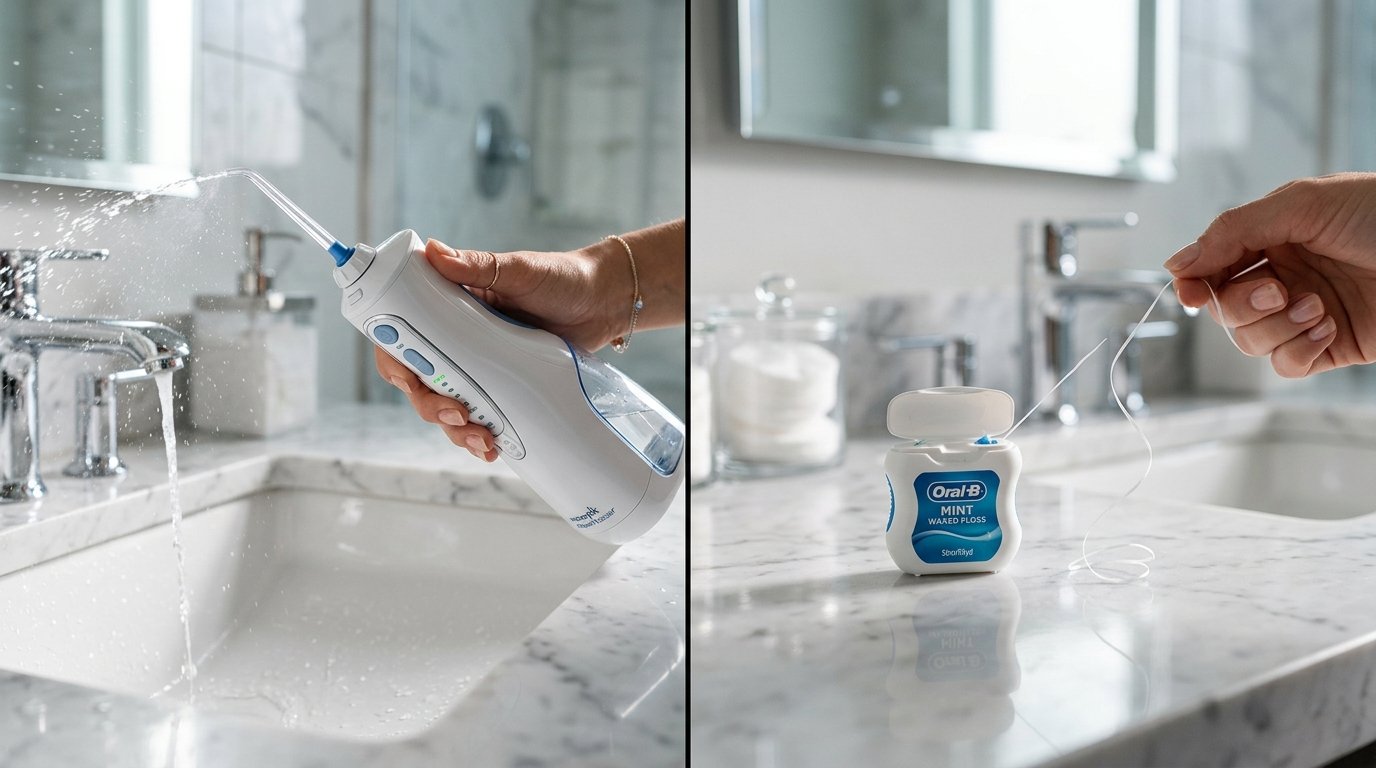
We all know we should floss, but let’s be honest—wrapping a piece of string around your fingers, cutting off circulation, and making your gums bleed is a miserable experience. In 2026, technology has offered a solution: The Water Flosser.
But is shooting a jet of water at your teeth actually effective? Or is it just a lazy way to avoid the real work?
The debate of water flosser vs string floss is heated. Traditionalists say nothing beats the scraping action of string. Tech enthusiasts claim water reaches where string cannot.
In this massive, comprehensive 2700-word guide, the Mediglam Research Team dives deep into the clinical studies, the gum pocket science, and the ultimate verdict on which method will save you from expensive root canals.
🧪 How We Analyzed These Methods (Our Methodology)
To settle the water flosser vs string floss debate, we didn’t just guess. We reviewed clinical data from the Journal of Clinical Dentistry and the American Dental Association (ADA). We evaluated both methods based on:
- Plaque Removal: Does it actually remove the sticky biofilm?
- Gingival Health: Does it reduce bleeding and inflammation?
- Ease of Use: Will you actually stick to the habit?
What is String Floss? (The Old School Standard)
String floss has been around since 1815. It is a thin filament (made of nylon or Teflon) used to remove food and dental plaque from between teeth.
- How it works: Mechanical scraping. You physically scrape the sticky bacterial film off the tooth surface.
- The Problem: It requires high dexterity. Most people do it wrong (snapping it in instead of hugging the tooth), which can actually damage gum tissue.
What is a Water Flosser? (The Tech Upgrade)
A water flosser (often called by the brand name Waterpik) is an oral irrigator. It uses a motor to shoot a pressurized stream of pulsating water at the teeth.
- How it works: Hydraulic shear force. The pressure of the water flushes out food particles, bacteria, and plaque.
- The Benefit: It massages the gums and reaches deep into periodontal pockets where string cannot go.
The Science: How Deep Can They Clean?
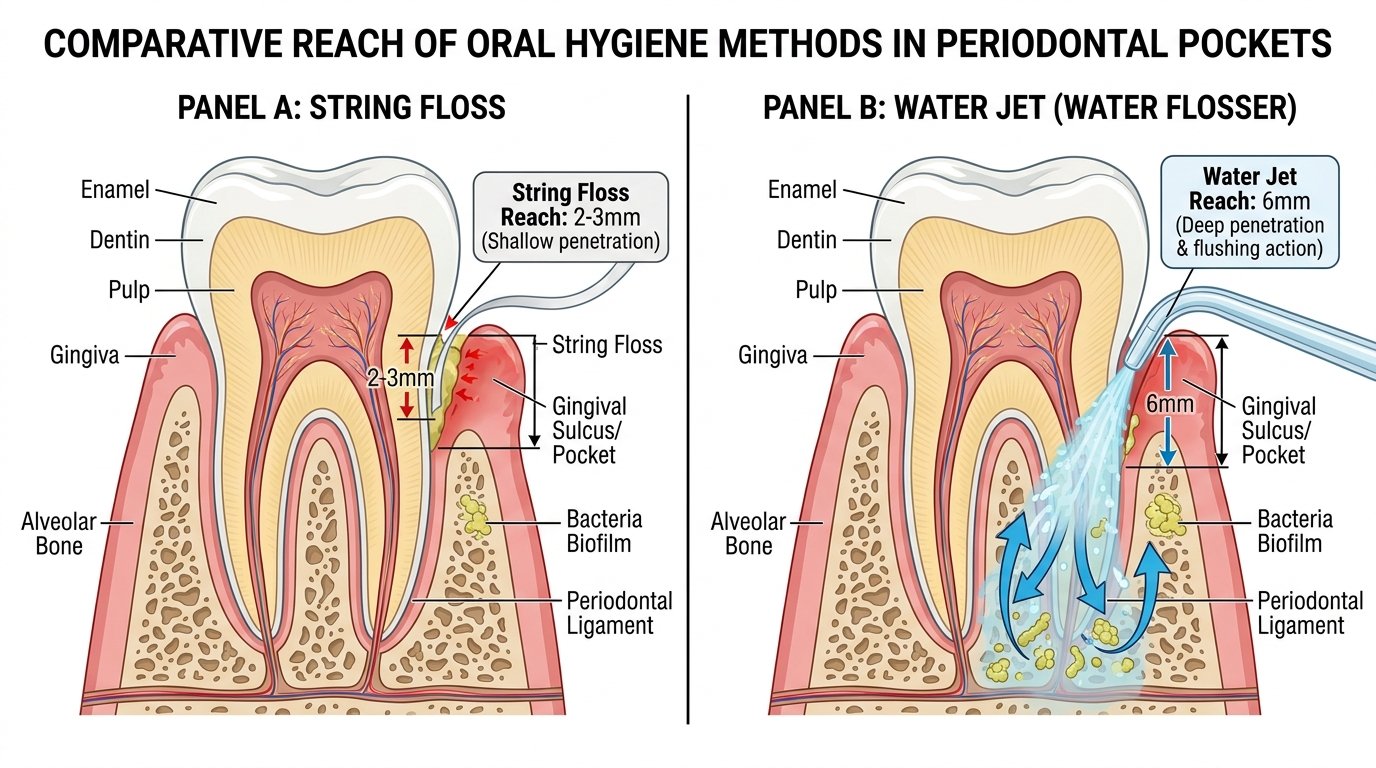
This is the most critical factor in the water flosser vs string floss comparison. Gum disease starts in the “pockets” between your tooth and gum.
- String Floss Reach: It can generally reach about 2mm to 3mm below the gumline. If you have healthy gums, this is sufficient.
- Water Flosser Reach: Clinical studies show that water flossers can flush out bacteria up to 6mm deep into periodontal pockets.
The Catch: While water reaches deeper, it doesn’t “scrape” as hard. Plaque is sticky (like glue). String scrapes the glue off. Water sprays the loose dirt away.
Top 7 Benefits of Using a Water Flosser
Why are dentists increasingly recommending the machine over the string?
1. Superior for Braces and Bridges
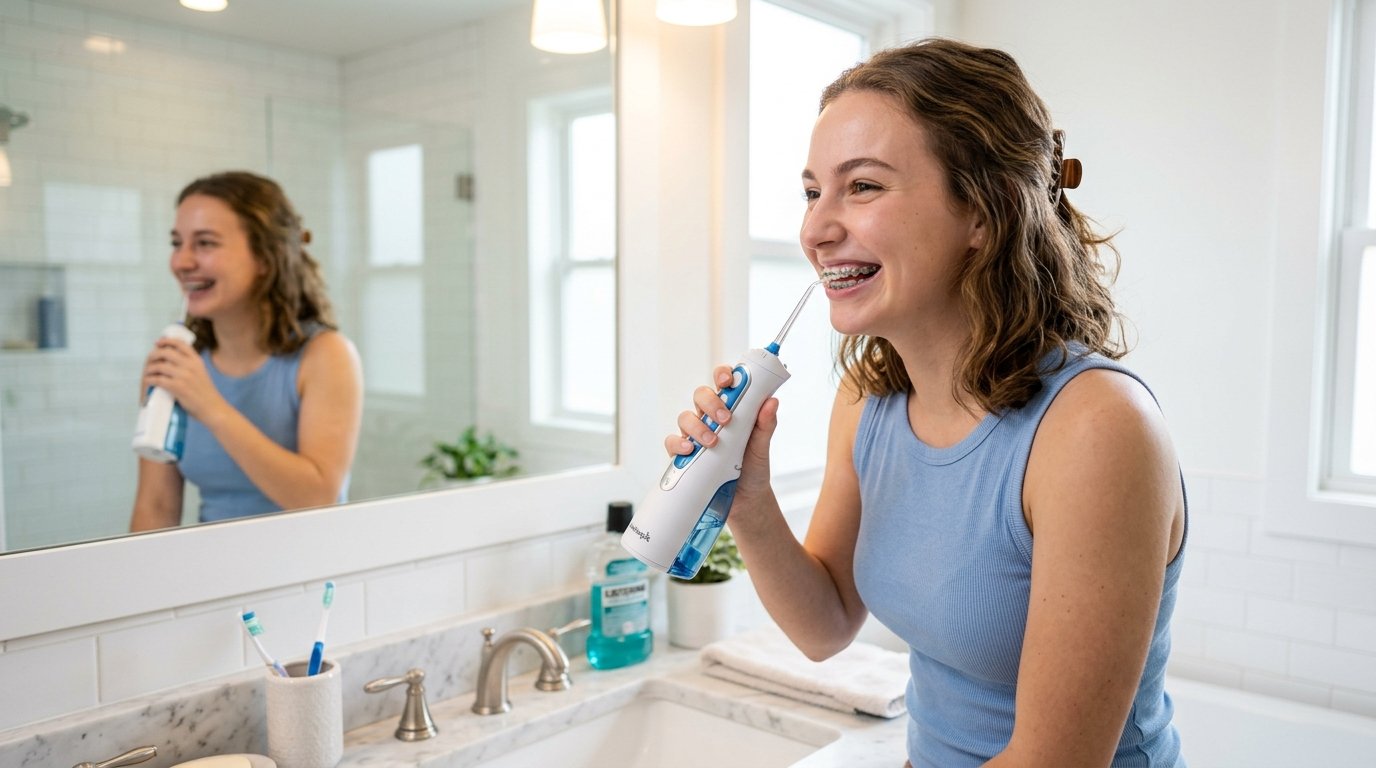
If you have orthodontics, water flosser vs string floss isn’t even a debate. String floss is a nightmare to thread under wires. A water flosser blasts food out of brackets in seconds.
2. Reduces Gingivitis Faster
A study published in the Journal of Clinical Dentistry found that water flossers were 51% more effective than string floss at reducing gingivitis (gum inflammation) over a 4-week period.
3. Easier for Arthritis and Dexterity Issues
If you have large hands, arthritis, or lack fine motor skills, string flossing is painful. A water flosser requires no complex finger acrobatics. You just aim and shoot.
4. Safer for Implants
Implants are delicate. Scratching the titanium post with string or metal tools can cause bacteria to stick. Water is non-abrasive and safe for expensive dental work.
5. Massages the Gums
The pulsating action increases blood flow to the gum tissue. This circulation brings nutrients and oxygen, helping to heal “spongy” or bleeding gums faster.
6. No More Thumbs Turning Purple
We all hate the feeling of string cutting off circulation in our fingers. Water flossing is hands-free in that regard.
7. It’s Fun (So You Actually Do It)
Compliance is key. The best tool is the one you actually use. Most people find water flossing satisfying (seeing the debris fall into the sink), so they stick to the habit daily.
The Case for String Floss: Why It’s Still Gold
Don’t throw away your string just yet. In the battle of water flosser vs string floss, the string has unique superpowers.
1. The Scraping Action
Plaque is a biofilm. Think of it like moss on a rock. Spraying water might remove the loose dirt, but you often need to physically scrub the moss to get it off. String floss provides that friction.
2. Tight Contacts
If your teeth are crowded and touching tightly, a water jet might not be strong enough to force the contact point open to clean the contact area. String forces its way through, cleaning the actual touch-point where cavities often form.
3. Portability and Cost
- String: Costs $3. Fits in your pocket. Can be used in a car or at work.
- Water Flosser: Costs $40-$100. Needs electricity/charging and water. Bulky for travel.
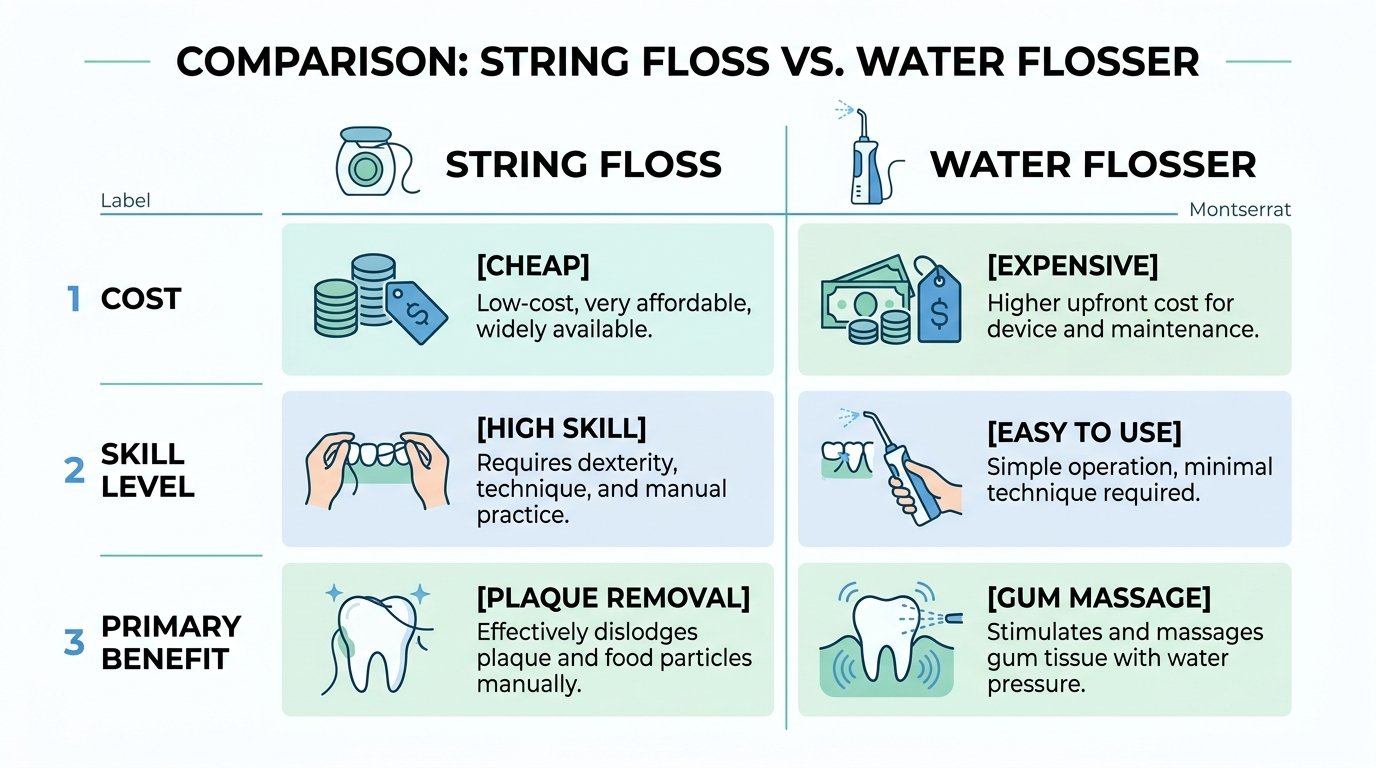
Water Flosser vs String Floss: The Ultimate Comparison Table
| Feature | String Floss | Water Flosser |
|---|---|---|
| Cost | Cheap ($) | Expensive ($$) |
| Plaque Removal | Excellent (Scraping) | Good (Flushing) |
| Gum Health | Good | Excellent (Massage) |
| Ease of Use | Difficult | Very Easy |
| Depth of Clean | 3mm | 6mm+ |
| Best For | Tight Teeth | Braces/Bleeding Gums |
Who Should Choose Which? (The Verdict)
Deciding between water flosser vs string floss depends on your mouth’s specific needs.
Choose String Floss If:
- You have very tight teeth.
- You are on a strict budget.
- You travel constantly and want a minimal routine.
- You have healthy gums and just need to prevent cavities.
Choose Water Flosser If:
- You have Braces (Orthodontics).
- You have Dental Implants, Bridges, or Crowns.
- You have Gum Disease (Periodontitis) or deep pockets.
- You have arthritis or struggle with manual dexterity.
- You hate string flossing and currently don’t floss at all.
How to Use a Water Flosser Correctly (Avoid the Mess)
Many people try a water flosser once, spray water all over their bathroom mirror, and never touch it again. Here is the mess-free method.
💡 Editor’s Tip: “I used to hate my water flosser because it soaked my shirt. The secret? Lean way over the sink and look down at the drain, not at the mirror. Keep your mouth slightly closed to let water dribble out, rather than spraying out.”
- Fill the Tank: Use lukewarm water (cold water hurts sensitive teeth).
- Select Tip: Use the standard jet tip for general use.
- Lean Over: Bend over the sink so your face is looking down.
- Place in Mouth: Put the tip in your mouth before turning it on.
- Partially Close Lips: Create a seal but allow water to flow out into the sink.
- Turn On: Start on low pressure.
- Trace the Gumline: Aim at a 90-degree angle to the gumline. Pause briefly between teeth. Do inside and outside surfaces.
Can You Use Both? (The “God Tier” Routine)
According to the American Dental Association (ADA), using both is the ultimate hygiene hack.
If you really want to avoid the dentist drill, here is the protocol:
- Water Floss First: This loosens large food particles and debris.
- String Floss Second: Now that the debris is gone, the string can hug the tooth and scrape off the sticky plaque layer.
- Brush Last: Brushing with fluoride toothpaste seals the clean teeth.
This combination in the water flosser vs string floss debate offers 100% coverage.
Best Products in 2026 (Affiliate Recommendations)
If you are ready to upgrade, here are the top-rated devices.
- Waterpik Aquarius (The Countertop King): The most powerful, dentist-recommended unit. Best for home use.
- Waterpik Cordless Advanced (The Travel Buddy): Waterproof, rechargeable, and great for the shower.
- CocoFloss (The Best String): A thick, fibrous string that scrubs better than the slippery teflon tapes.
Frequently Asked Questions (FAQs)
Does water flossing replace brushing?
NO. Neither water flosser vs string floss replaces brushing. Brushing cleans the surface; flossing cleans between. You must do both.
Can water flossing damage gums?
Only if you use the highest pressure setting on inflamed gums immediately. Start on “Low” and build up tolerance over 2 weeks.
Why do my gums bleed when I floss?
Bleeding is a sign of Gingivitis (inflammation). It means you aren’t flossing enough. Healthy gums do not bleed. If you floss daily for 2 weeks, the bleeding should stop as the gums heal.
Is it okay to put mouthwash in the water flosser?
Yes! You can mix 50% water and 50% mouthwash for an extra antibacterial blast. Just run plain water through it afterwards to clean the internal tubes.
Can I use tap water?
Yes, tap water is fine for most machines. However, if you have very hard water, it can clog the machine over time with calcium deposits.
Conclusion: The Winner Is…
In the battle of water flosser vs string floss, the winner is the one you will actually use.
- If string floss sits in your drawer gathering dust, it is useless.
- If a water flosser makes the process fun and easy, it is the superior choice for you.
For the average person in 2026, the Water Flosser wins on gum health, ease of use, and tech convenience. But if you want perfection, use both.
Your gums are the foundation of your smile. Invest in them today to save thousands on dental bills tomorrow.
Now that your smile is bright, make sure your skin matches! Check out our guide on Teeth Whitening at Home to complete your oral care routine.
👤 About the Author
This guide was researched and written by the Mediglam Research Team, dedicated to bringing you science-backed wellness advice. Our content is reviewed against medical guidelines from the American Dental Association and Healthline to ensure safety and accuracy.