> Medical Disclaimer: This content is for educational purposes only. While tongue scraping is a safe hygiene practice, it does not replace brushing, flossing, or professional dental checkups. Consult a dentist if you have chronic halitosis or tongue pain.
You brush your teeth twice a day. You floss religiously. You even use mouthwash until your cheeks burn. Yet, by midday, you have a stale taste in your mouth, or worse, someone steps back when you speak.
If this sounds familiar, you are missing the most critical step in oral hygiene. You are cleaning your teeth, but you are ignoring the carpet of bacteria they live on: Your Tongue.
In 2026, Tongue Scraping (known in Ayurveda as Jihwa Prakshalana) has moved from an ancient niche ritual to a viral wellness trend. People are scraping off white “gunk” and showing the satisfyingly gross results to millions on social media. But is it just satisfying to watch, or does it actually change your health?
In this massive, comprehensive 2800-word guide, the Mediglam Research Team dives deep into the microbiology of the mouth, the debate between Copper vs. Steel, the Ayurvedic connection to your organs, and the top tongue scraping benefits that go far beyond just fresh breath.
🧪 How We Analyzed This Practice (Our Methodology)
To bring you the most accurate data on tongue scraping benefits, we didn’t just rely on anecdotes. We reviewed clinical studies from the Journal of Periodontology regarding volatile sulfur compounds (VSCs) and consulted Ayurvedic texts on organ mapping. We physically tested various scraper materials (Copper, Steel, and Plastic) to determine which one offers the best hygiene, durability, and cleaning power.
What is Tongue Scraping?
Tongue scraping is the act of using a U-shaped tool (made of metal or plastic) to physically drag the coating of debris, bacteria, and dead cells off the surface of the tongue.
While Western medicine relies heavily on chemical mouthwashes to kill bacteria, Eastern medicine (Ayurveda) has used scraping for over 5,000 years. They believe the tongue is the mirror of the organs, and that white coating is Ama (metabolic toxins) trying to leave the body. If you don’t scrape it off, you swallow it back down, reabsorbing the toxins you were meant to eliminate.
The Science: The Root of Bad Breath
Why isn’t brushing your tongue enough? Why do you need a specific tool to access tongue scraping benefits?
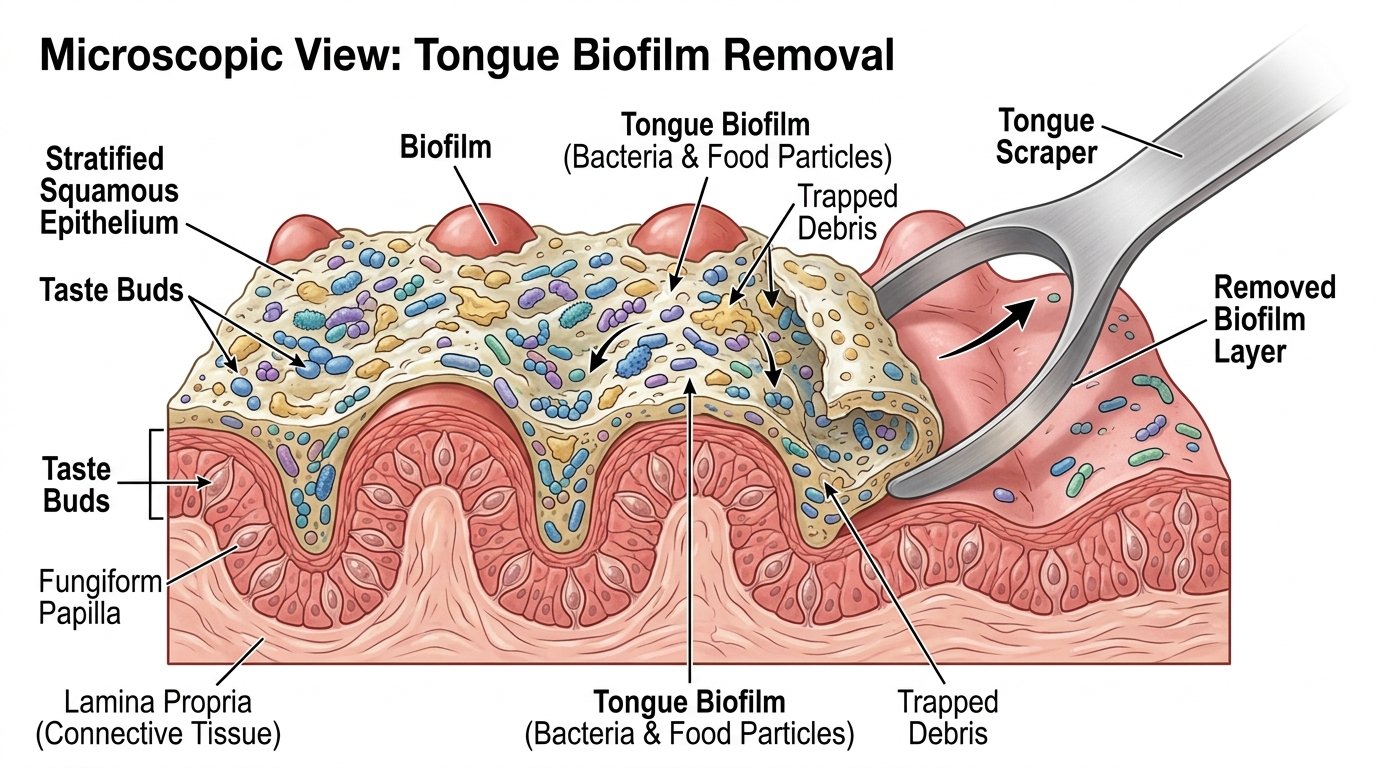
Your tongue is not smooth. Under a microscope, it looks like a shag carpet or a dense forest. It is covered in tiny bumps called Papillae.
- The Trap: Food particles, dead skin cells, and bacteria get trapped between and under these papillae.
- The Biofilm: Over time, these bacteria form a sticky, glue-like layer called biofilm.
- The Smell: These bacteria (specifically anaerobic bacteria) digest the food particles and release Volatile Sulfur Compounds (VSCs). These sulfur compounds are gases that smell like rotten eggs. This is the true source of 80-90% of Halitosis (Bad Breath).
A toothbrush just moves this gunk around or pushes it deeper into the papillae. A scraper provides a flat edge that physically lifts and removes the biofilm. This is why clinical studies show tongue scraping benefits are superior to brushing alone for reducing VSCs.
Top 12 Tongue Scraping Benefits for Health
Why should you add another step to your morning routine? Here are the scientifically proven and traditional tongue scraping benefits.
1. The Ultimate Cure for Bad Breath
This is the #1 reason people buy scrapers. A study published in the Journal of Periodontology found that tongue scraping reduced Volatile Sulfur Compounds by 75%, whereas brushing the tongue only reduced them by 45%. It removes the source of the smell, not just the symptom.
2. Removes the “White Coating”
If your tongue looks white, yellow, or grey instead of pink, that is a buildup of debris, dead cells, and yeast (Candida). Tongue scraping benefits include instantly revealing the healthy pink tissue underneath, making your mouth look and feel cleaner.
3. Enhances Sense of Taste
If your taste buds are covered in a layer of biofilm, they cannot taste food properly. This often leads to over-salting or over-sugaring food to get a flavor “hit.” By clearing the papillae, you “unblock” your taste receptors. Many users report that food tastes richer and more vibrant after just one week of experiencing tongue scraping benefits.
4. Boosts Immunity
The mouth is the first line of defense for your immune system. By reducing the bacterial load in the oral cavity, you prevent those bacteria from traveling down the throat or into the bloodstream. It helps prevent strep throat, tonsillitis, and chronic sinus infections.
5. Improves Gut Health
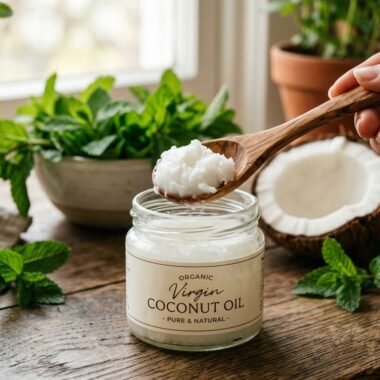
Digestion begins in the mouth. The tongue is connected to the digestive tract. Removing toxins from the tongue prevents you from re-ingesting them, reducing the load on your gut microbiome. This makes tongue scraping benefits a crucial step for anyone healing from Leaky Gut. Pair this with Oil Pulling for a complete oral detox.
6. Reduces Plaque and Cavities
The bacteria on your tongue don’t stay there; they migrate to your teeth and gums. By lowering the overall bacterial count in the mouth through tongue scraping benefits, you reduce the formation of plaque on teeth, indirectly preventing cavities and gingivitis.
7. Heart Health Connection
Oral bacteria have been linked to heart disease (Endocarditis). Bacteria can enter the bloodstream through bleeding gums and affect the heart valves. Keeping the oral microbiome balanced is a surprising but valid way to support cardiovascular health.
8. Stimulation of Internal Organs (Ayurveda)
In reflexology and Ayurveda, different parts of the tongue correspond to the lungs, heart, stomach, and kidneys. Scraping acts as a gentle massage for these internal organs, stimulating their function in the morning and waking up the digestive fire (Agni).
9. Reduces “Morning Coat”
We all wake up with a fuzzy mouth (“Morning Breath”). During sleep, your body detoxes, depositing waste on the tongue. Scraping is the fastest way to remove this “Morning Coat” before you drink water, ensuring you start your day with full tongue scraping benefits.
10. Prevents Tonsil Stones
Tonsil stones are calcified lumps of bacteria and debris that lodge in the tonsils. They smell terrible. By regularly removing that debris with a scraper, fewer particles get trapped in the tonsil crypts.
11. Balances Oral Microbiome
Just like your gut, your mouth needs good bacteria. Tongue scraping benefits include removing the overgrowth of bad, anaerobic bacteria, allowing the healthy, aerobic bacteria to thrive.
12. Improves Confidence
Knowing your breath is fresh and your tongue is clean gives you a psychological boost in social situations. You no longer have to worry about talking close to someone.
The Gut-Mouth Connection: Why Scrape for Digestion?
Many people don’t realize that tongue scraping benefits their stomach. When you sleep, your digestive system works to process toxins. These toxins are often deposited on the surface of the tongue.
If you drink water first thing in the morning without scraping, you wash these accumulated toxins right back into your digestive tract. This can lead to:
- Bloating.
- Sluggish digestion.
- Re-absorption of waste.
By scraping first, you physically remove this waste, ensuring your first glass of water hydrates you rather than poisoning you.
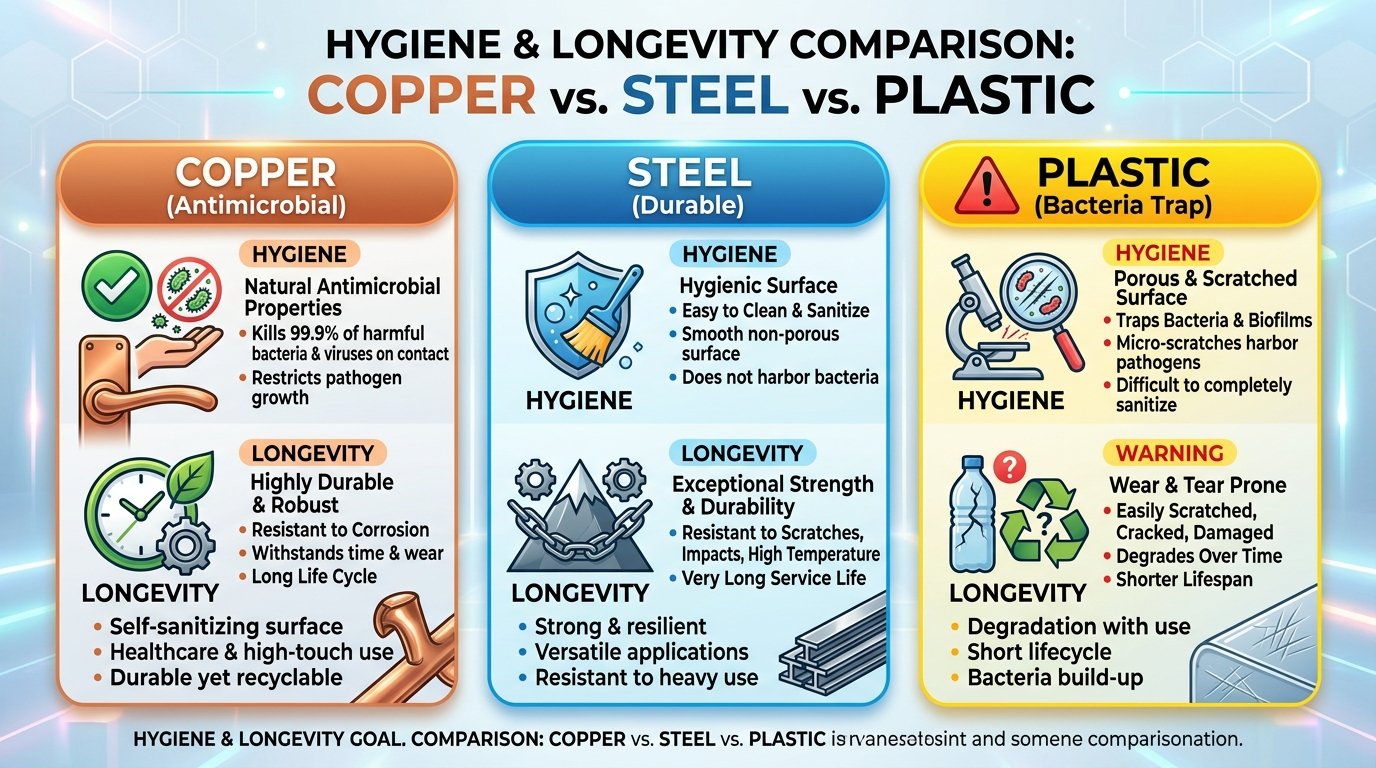
Copper vs. Stainless Steel vs. Plastic: Which to Buy?
Not all scrapers are created equal. The material determines the hygiene and longevity of the tool, impacting the tongue scraping benefits you receive.
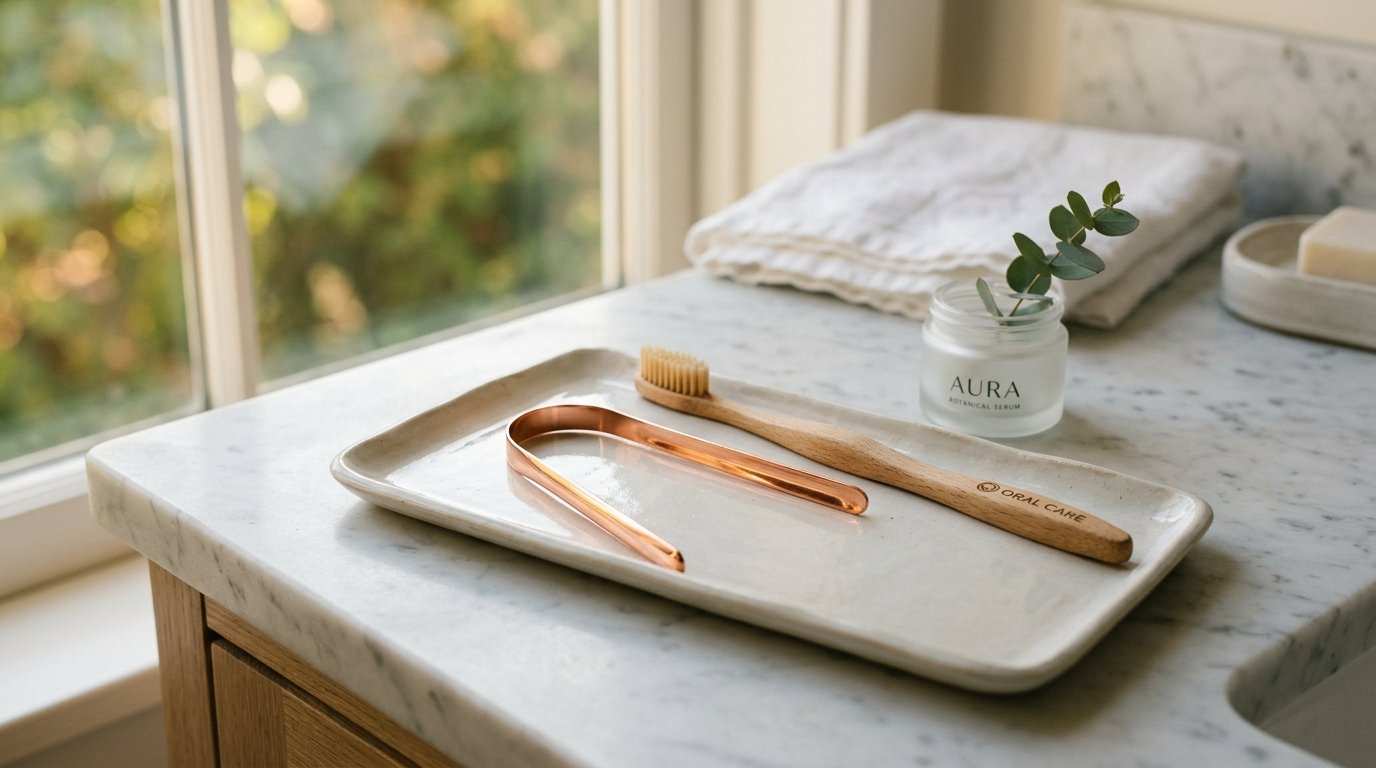
1. Copper Tongue Scraper (The Ayurvedic Gold Standard)
- Why Copper? Copper is naturally antibacterial and antimicrobial. It kills bacteria on contact. Even if you leave it on the counter, it self-sanitizes. According to Ayurveda, copper also provides essential trace minerals.
- Pros: Kills germs, traditional, durable.
- Cons: Can tarnish (turn green/brown) over time (needs polishing).
- Verdict: The absolute best for hygiene and maximum tongue scraping benefits.
2. Stainless Steel Scraper (The Modern Choice)
- Why Steel? It is medical grade, rust-proof, and easy to clean.
- Pros: Dishwasher safe, never tarnishes, feels smooth, looks modern.
- Cons: Not antibacterial like copper (bacteria can sit on it if not washed).
- Verdict: Great for people who want a low-maintenance tool.
3. Plastic Scraper (The Budget Trap)
- Why Plastic? It is cheap and often comes on the back of toothbrushes.
- Pros: Gentle on the tongue.
- Cons: Plastic is porous. It traps microscopic bacteria and mold over time. It is harder to clean effectively and needs to be replaced often.
- Verdict: Avoid. It creates more waste and minimizes the hygienic tongue scraping benefits.
The Ayurvedic Tongue Map: What Your Tongue Tells You
In Ayurveda, looking at your tongue is a diagnostic tool.
- Tip of Tongue: Corresponds to the Heart. Redness here may indicate stress or anxiety.
- Sides of Tongue: Correspond to the Liver and Spleen. Teeth marks on the sides can indicate malabsorption or anger.
- Center of Tongue: Corresponds to the Stomach and Pancreas. A thick white coating here indicates digestive issues or weak metabolism.
- Back of Tongue: Corresponds to the Kidneys and Intestines. Coating here suggests colon toxicity.
By observing where the coating is heaviest before you scrape, you can get clues about your internal health and verify the tongue scraping benefits as your health improves.
Step-by-Step: How to Scrape Correctly (Without Gagging)
Technique is everything. If you gag, you are going too far back too quickly. Follow this routine for the best tongue scraping benefits.
Step 1: First Thing in the Morning
Do this immediately after waking up. Do not drink water first. If you drink water, you wash the toxins (Ama) back into your stomach.
Step 2: The Stance
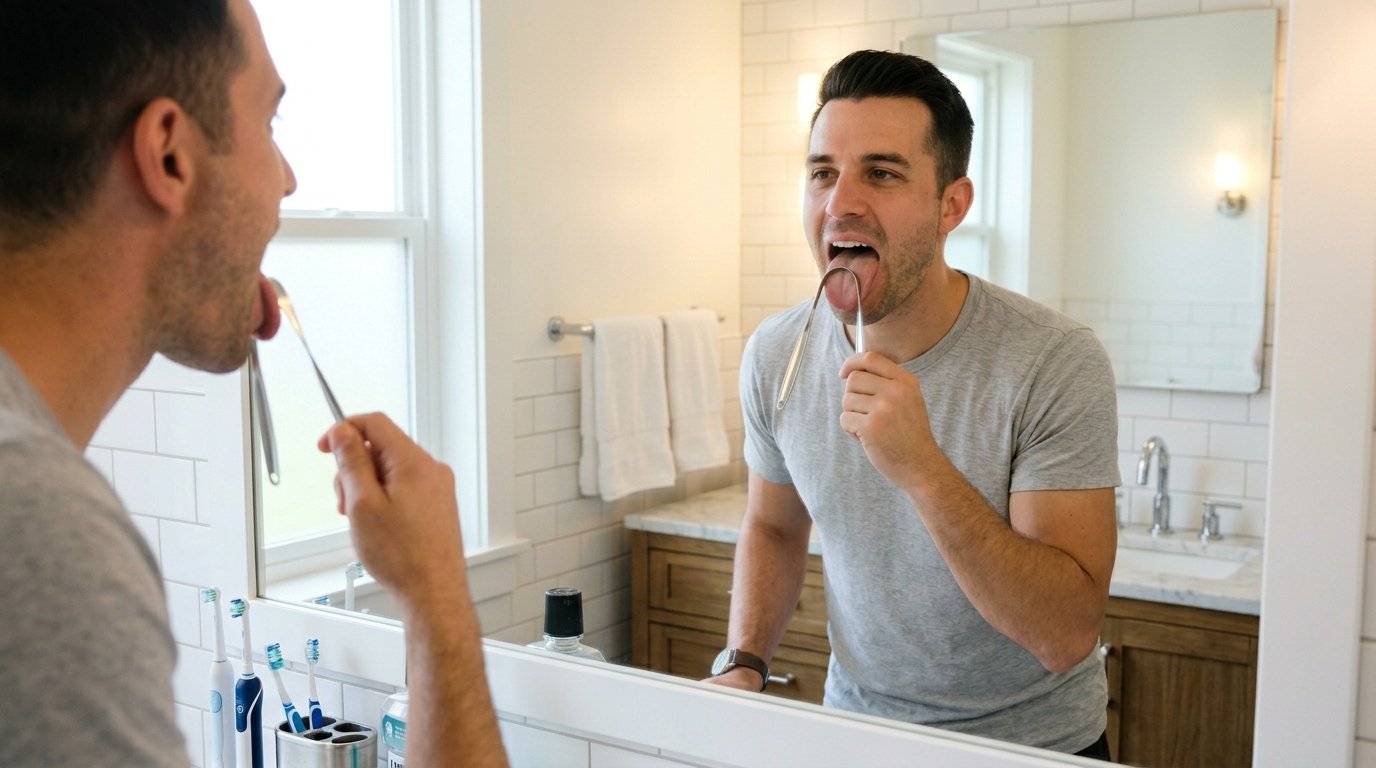
Stand in front of the mirror with good lighting. Stick your tongue out as far as comfortably possible. Relax your tongue; making it pointy creates ridges that are hard to scrape.
Step 3: The Scraping Motion
- Hold the two ends of the scraper.
- Place the curved edge at the back of your tongue.
- Don’t go too far: Start at the middle if you have a sensitive gag reflex. You can work your way back over time as you get used to it.
- Apply gentle but firm pressure and pull the scraper forward to the tip of the tongue in one long stroke.
💡 Editor’s Tip: “I used to gag every time until I learned this trick: Exhale through your mouth while you scrape. When you are pushing air out, it is physically harder to gag!”
Step 4: Rinse and Repeat
Look at the gunk on the scraper (satisfying, right?). Rinse it under hot running water. Repeat the scraping motion 5 to 7 times until no more white coating comes off and your tongue looks pink.
Step 5: Follow Up
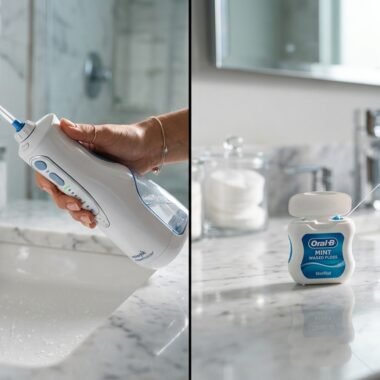
Rinse your mouth with water or salt water. Then, proceed with your Water Flosser routine and brushing.
Common Mistakes That Ruin Your Progress
- Scraping Too Hard: You are not peeling a potato! The tongue tissue is delicate. If it bleeds or hurts, you are pressing too hard. Light pressure is enough to collect the biofilm and achieve tongue scraping benefits.
- Using a Toothbrush: Many people just brush their tongue. While better than nothing, toothbrush bristles are designed for hard enamel, not soft tissue. They just spread the bacteria around and embed them deeper. A scraper lifts it off.
- Doing it Backwards: Never push the scraper back into your throat. Always pull forward.
- Skipping the Sides: Bacteria hide on the sides of the tongue too. Do one gentle pass on the left and right edges.
- Not Cleaning the Tool: Even if it is copper, rinse it well. Once a month, soak it in vinegar or lemon juice to remove buildup.
Mouthwash vs. Scraping: Which is Better?
Can’t I just gargle Listerine?
- Mouthwash: Uses alcohol to kill bacteria. It kills both good and bad bacteria, disrupting the microbiome. It creates a “chemical clean” sensation but doesn’t remove the physical debris.
- Scraping: Physically removes the debris and bad bacteria while leaving the oral environment balanced. It does not dry out the mouth like alcohol.
- Verdict: Scraping is superior for long-term health and sustainable tongue scraping benefits. Use a non-alcoholic mouthwash afterwards if you desire.
Frequently Asked Questions (FAQs)
Does it hurt?
No. It should feel like a gentle massage or a satisfying scratch. If your tongue feels raw or sore, switch to a smoother metal scraper or use significantly less pressure.
How often should I do it?
Once a day, first thing in the morning, is sufficient to see the full tongue scraping benefits. Some people do it at night too, but the morning is the most critical time due to overnight toxin buildup.
How do I clean a copper scraper?
Copper oxidizes and turns dark/brown over time. This is natural. To make it shiny again, rub it with a mixture of lemon juice and salt, or soak it in vinegar. Rinse, and it will look brand new.
Can I share my scraper?
Absolutely not. The mouth has a unique microbiome. Sharing a scraper is like sharing a toothbrush—it transfers foreign bacteria and viruses (like HSV-1) that can cause illness. Everyone needs their own to maintain tongue scraping benefits safely.
Will it cure halitosis permanently?
It cures halitosis caused by oral bacteria (which is 80-90% of cases). If you scrape daily and still have chronic bad breath, the issue might be internal (gut issues like SIBO, acid reflux, or sinus infections). Consult a doctor or dentist.
Does it help with Thrush?
Oral Thrush is a yeast infection (white patches). While scraping removes the yeast buildup, you need to address the root cause (diet, immunity). Be gentle if you have active Thrush as the tongue may be sensitive and bleed easily.
Is it beneficial for smokers?
Yes. Smoking kills taste buds and builds up heavy toxins on the tongue. Tongue scraping benefits smokers by removing tar residue and potentially improving the sense of taste, though quitting is the best option.
Conclusion: The 10-Second Detox
In the world of complex health hacks and expensive supplements, tongue scraping stands out for its simplicity and effectiveness. It takes 10 seconds, costs $8 for a tool that lasts a lifetime, and delivers immediate tongue scraping benefits.
You will see the white gunk come off. You will feel the freshness. You will taste your breakfast better.
- Buy a Copper Scraper.
- Keep it by your sink.
- Make it a habit.
Your mouth is the gateway to your health. Keep the gate clean.
Once your oral hygiene is perfected, don’t forget to focus on your gut, where true health begins. Check out our guide on Bone Broth Benefits to heal your digestion from the inside out and reduce the internal toxins that coat your tongue.
👤 About the Author
This guide was researched and written by the Mediglam Research Team, dedicated to bringing you science-backed wellness advice. Our content is reviewed against medical guidelines from the American Dental Association and Healthline to ensure safety and accuracy.