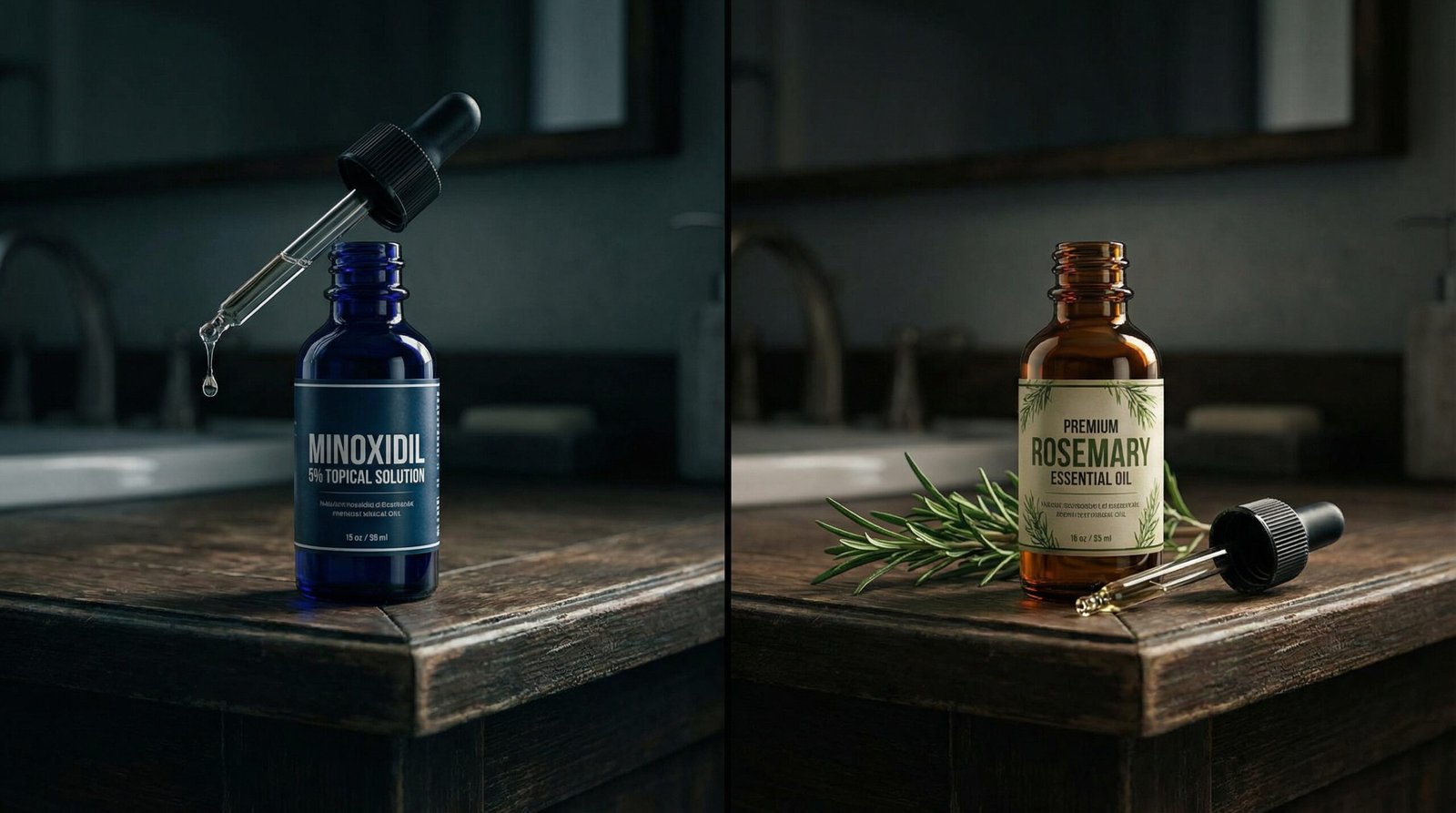
Are you staring at a receding hairline or a patchy beard, wondering if you should go the medical route or the natural route? The debate of Minoxidil vs Rosemary oil is the biggest topic in men’s grooming in 2026.
On one side, you have Minoxidil (brand name Rogaine), the FDA-approved heavyweight champion backed by decades of science. On the other side, you have Rosemary Oil, the viral TikTok challenger that claims to be just as effective without the scary side effects.
But which one actually works faster? Can you use them for your beard? In this comprehensive 1300-word guide, we break down the science, the cost, and the side effects to declare a winner in the battle of Minoxidil vs Rosemary oil.
What is Minoxidil? (The Chemical King)
Minoxidil is a vasodilator. It works by widening the blood vessels in the scalp or face, allowing more oxygen, blood, and nutrients to reach the hair follicle.
- History: It was originally a blood pressure medication. Patients noticed they were growing hair everywhere, and thus, a hair loss cure was born.
- Forms: It comes in 2% (for women) and 5% (for men) liquid or foam.
- The Promise: It forces hair follicles from the resting phase (Telogen) into the growing phase (Anagen).
What is Rosemary Oil? (The Natural Challenger)
Rosemary essential oil is extracted from the Rosmarinus officinalis plant. It contains a compound called Carnosic acid, which heals nerve damage and improves cellular turnover.
- The Promise: It improves blood circulation and acts as a mild DHT blocker (the hormone responsible for male pattern baldness).
- The Appeal: It is natural, cheap, and smells great.
The Viral 2015 Study: Does Nature Beat Chemistry?
Why is everyone talking about Minoxidil vs Rosemary oil? It all comes down to one famous study published in PubMed.
The Experiment: Researchers split men with androgenic alopecia (male pattern baldness) into two groups.
- Group A used 2% Minoxidil.
- Group B used Rosemary Oil.
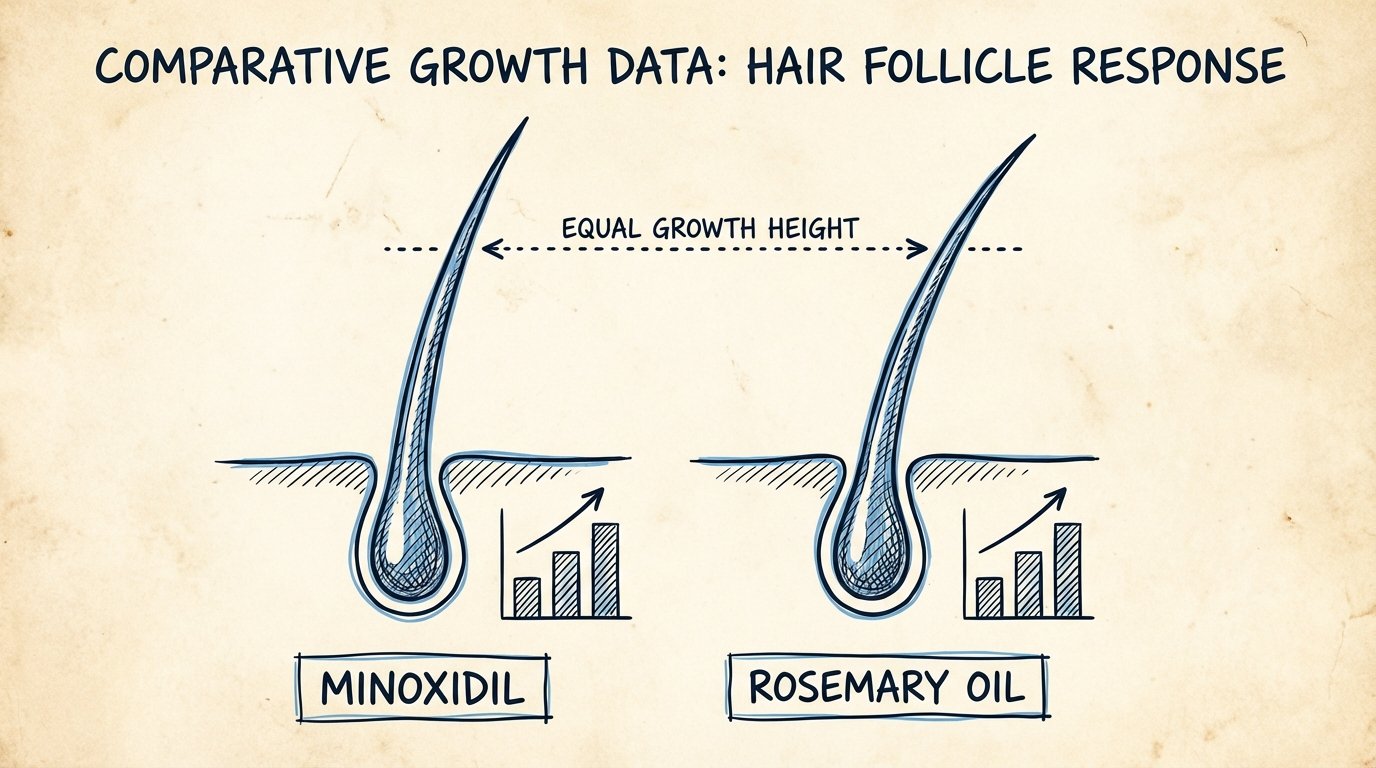
The Result: After 6 months, both groups saw the exact same amount of hair regrowth. Yes, Rosemary Oil performed just as well as the drug, but with significantly less scalp itching.
The Showdown: Which One Wins?
Let’s compare Minoxidil vs Rosemary oil head-to-head on the factors that matter most to you.
Round 1: Speed of Results 🚀
- Minoxidil: Winner. You will likely see baby hairs within 3 to 4 months. It is a powerful chemical stimulant.
- Rosemary Oil: Slower. It typically takes 6 months to see visible density changes.
- Verdict: If you are impatient, choose Minoxidil.
Round 2: Side Effects ⚠️
- Minoxidil: Can cause dry skin, heart palpitations, headaches, and dark circles under the eyes. Also, if you stop using it, the new hair will fall out.
- Rosemary Oil: Can cause scalp irritation if not diluted. No systemic side effects.
- Verdict: Rosemary Oil is much safer for long-term health.
Round 3: Beard Growth 🧔
- Minoxidil: The “Minox Beard” community swears by it. It turns peach fuzz (vellus hair) into terminal beard hair better than anything else.
- Rosemary Oil: Great for conditioning and thickening an existing beard, but less effective at filling in completely bald patches on the face.
- Verdict: Minoxidil is the king of beard growth.
Can You Use Both Together? (The Hybrid Method)
Why choose one when you can use both? Using Minoxidil vs Rosemary oil isn’t necessary; you can stack them for maximum gains.
The Routine:
- Morning: Apply Minoxidil Foam (it dries faster). Let it absorb for 4 hours.
- Evening: Apply a Rosemary Oil Blend (diluted in Jojoba or Castor oil). This combats the dryness caused by Minoxidil and nourishes the follicles while you sleep.
How to Apply Them Correctly
For Minoxidil:
- Apply 1ml to the target area (scalp or beard).
- Rub it in gently.
- Wash your hands immediately (you don’t want hair growing on your fingers!).
For Rosemary Oil:
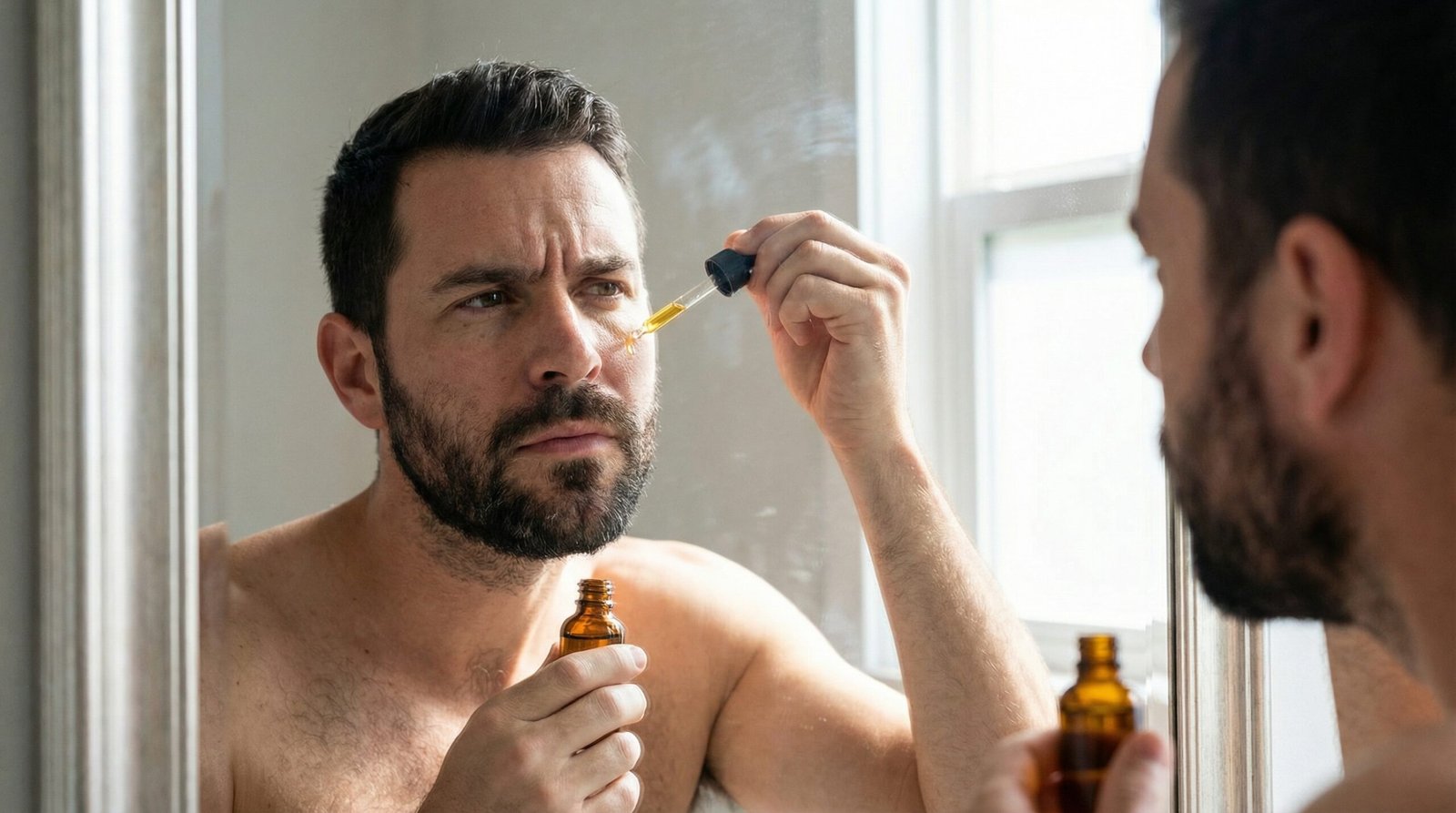
- NEVER use essential oil directly. It will burn your skin.
- Dilute: Mix 5 drops of Rosemary Essential Oil with 1 tablespoon of Carrier Oil (like Castor Oil or Coconut Oil).
- Massage into the scalp/beard for 5 minutes.
Enhance Results with Derma Rolling
Whether you choose Minoxidil vs Rosemary oil, you can double your results by adding microneedling.
Using a Beard Growth Roller (0.5mm) once a week creates micro-channels that allow the oil or drug to penetrate 5x deeper.
- Rule: Do not apply Minoxidil immediately after rolling (it will burn). Wait 24 hours. You can apply Rosemary oil immediately after rolling.
Frequently Asked Questions (FAQs)
Will I lose hair if I stop Rosemary Oil?
Unlike Minoxidil, Rosemary oil improves the actual health of the scalp. While you may lose some volume if you stop, you generally won’t experience the drastic “Minoxidil Shedding” phase.
Does Rosemary Oil block DHT?
Yes, studies suggest rosemary oil prevents DHT from binding to androgen receptors in the hair follicle, tackling the root cause of male pattern baldness.
Is foam or liquid Minoxidil better?
For the beard, Foam is better because it dries fast and causes less irritation. Liquid contains propylene glycol, which often causes acne and dry flakes.
Conclusion: The Final Verdict
In the battle of Minoxidil vs Rosemary oil, the winner depends on your goals.
- Choose Minoxidil if: You want the fastest possible results, especially for filling in a patchy beard, and don’t mind the commitment.
- Choose Rosemary Oil if: You want a natural, toxic-free approach to stop thinning hair and preserve scalp health.
For the ultimate “God Mode” hair routine, use both. Start your journey today, and remember: hair growth is a marathon, not a sprint.
If you are working on your overall health while growing your hair, don’t forget to check out our guide on Ashwagandha Benefits to lower the stress hormones that cause hair loss in the first place.
Disclaimer: This content on Mediglamhub is for informational purposes only. Minoxidil is a drug; consult a doctor before use, especially if you have heart conditions.