Are you searching for the best retinol serums for beginners to fight wrinkles and acne? In the world of skincare, trends come and go, but Retinol remains the gold standard.
In the world of skincare, trends come and go. Snail mucin had its moment, and Hyaluronic acid is everywhere. But there is one ingredient that has stood the test of time for over 40 years: Retinol. Dermatologists consider it the “Gold Standard” for anti-aging. Whether you want to erase fine lines, smooth out rough texture, or fight stubborn adult acne, retinol is the answer.
However, starting a retinol journey can be intimidating. You have probably heard horror stories about peeling skin, redness, and the dreaded “Retinol Burn.” This usually happens when people choose the wrong product or apply it incorrectly.
If you are ready to turn back the clock but don’t know where to start, you are in the right place. This comprehensive guide covers everything you need to know about the best retinol serums for beginners, how to use them safely, and what results to expect in 2026.
What is Retinol and Why Do You Need It?
Retinol is a derivative of Vitamin A. Unlike exfoliants (acids) that simply scrub away dead skin from the surface, retinol works on a cellular level. It penetrates deep into the dermis and sends a signal to your skin cells to “behave younger.”
The Science Behind the Glow
As we age, our cell turnover rate slows down. In your 20s, your skin renews itself every 28 days. By your 30s and 40s, this process can take 40-60 days. This leads to dullness and wrinkles. Retinol speeds this turnover back up.
Key Benefits:
- Boosts Collagen: It thickens the deeper layers of skin, smoothing out wrinkles.
- Treats Acne: It unclogs pores and reduces oil production.
- Fades Pigmentation: It helps fade sun spots and acne scars faster.
The Different Types of Retinoids (Know Your Strength)

Before buying the best retinol serums for beginners, you must understand that “Retinol” is just one type of retinoid. They come in different strengths. Using a strength that is too high for your skin will cause damage.
- Retinyl Palmitate (The Weakest): Perfect for extremely sensitive skin. It is very gentle but takes longer to show results.
- Retinol (The Gold Standard): The most common over-the-counter option. It converts into retinoic acid when it hits your skin.
- Retinaldehyde (Retinal): Works 11 times faster than retinol but can be more irritating.
- Adapalene (Differin): Primarily used for acne treatment.
- Tretinoin (Prescription Only): The strongest pure retinoic acid. Beginners should NOT start here.
Recommendation: As a beginner, always stick to 0.1% to 0.3% Retinol or encapsulated retinol formulas.
How to Choose the Best Retinol Serum for Beginners
“When shopping for the best retinol serums for beginners, you need to look for a cocktail of ingredients to counteract irritation.
Ingredients to Look For:
When checking the label, ensure the serum also contains:
- Niacinamide: To calm redness and strengthen the barrier.
- Ceramides: To keep the skin hydrated.
- Hyaluronic Acid: To plump the skin.
Ingredients to Avoid:
Do not buy a retinol serum that also contains fragrance, alcohol, or high concentrations of Vitamin C, as this mix is too harsh for new users.
How to Apply Retinol: The Sandwich Method
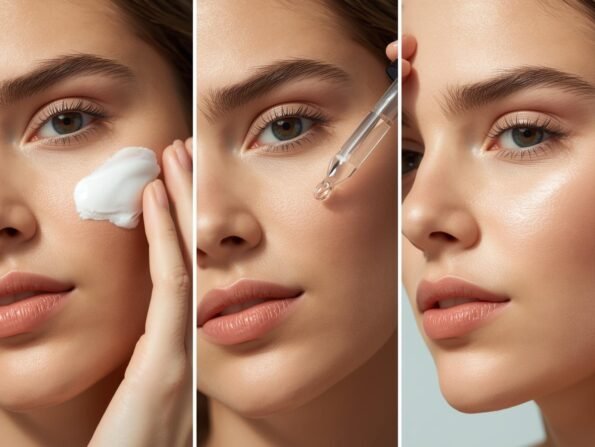
The “Sandwich Method” is a dermatologist-approved technique to prevent dryness. It acts as a buffer system for your skin.
The Step-by-Step Night Routine:
Step 1: Cleanse
Wash your face with a gentle, non-foaming cleanser. Pat your face completely dry. Never apply retinol to damp skin, as it absorbs too deep and causes irritation.
Step 2: The First Slice of Bread (Moisturizer)
Apply a thin layer of your regular moisturizer. Let it absorb for 5 minutes.
Step 3: The Meat (Retinol)
Take a pea-sized amount of your chosen retinol serum. Dot it on your forehead, cheeks, and chin. Gently spread it. Avoid the eye area and corners of the mouth.
Step 4: The Second Slice of Bread (Moisturizer)
Wait another 5-10 minutes, then apply a thicker layer of moisturizer on top to seal everything in.
The “Retinol uglies”: What is Purging?
Around week 2 or 3, you might notice more pimples popping up. This is called “Purging.” Since retinol speeds up cell turnover, it brings hidden clogged pores to the surface faster.
- Is it bad? No, it is actually a sign the product is working.
- How long does it last? Usually 2 to 4 weeks.
- What to do: Do not stop! Keep using it, and the clear skin will follow.
Timeline: When Will I See Results?
Patience is the most important ingredient when using the best retinol serums for beginners in your routine.
- Week 1-4: Skin might feel drier. You may see purging. No major visible changes yet.
- Month 3: Skin feels smoother and softer. Acne starts to clear up.
- Month 6: Fine lines appear reduced. Dark spots start fading. The “Retinol Glow” kicks in.
- Year 1: Significant reduction in wrinkles and improved skin firmness.
Common Mistakes That Ruin Your Skin
Even if you buy the best retinol serums for beginners, you can damage your barrier if you skip sunscreen.
- Forgetting Sunscreen: This is non-negotiable. Retinol reveals fresh baby skin which burns easily. If you don’t wear SPF 50 daily, you will get more wrinkles and sun spots.
- Using it Every Night: Beginners should start with 2 nights a week. Slowly increase to every other night after a month.
- Mixing with Acids: Do not use AHA/BHA (Exfoliants) or Vitamin C at the same time as Retinol. Use Vitamin C in the morning and Retinol at night.
Conclusion
Incorporating one of the best retinol serums for beginners into your routine is the best investment you can make for your skin in 2026. While the process requires patience and sun protection, the results—smoother, clearer, and younger-looking skin—are worth the wait.
Start slow, listen to your skin, and don’t forget to hydrate. If you are also looking to improve your overall health, check out our trending guide on the Oatzempic Recipe for Weight Loss to feel as good as you look.
Disclaimer: This content on Mediglamhub is for informational purposes only. Always perform a patch test. If you are pregnant or breastfeeding, consult your doctor before using Retinol.