> Medical Disclaimer: This content is for educational purposes only. Chemical exfoliants contain strong active acids that can cause burns if misused. Always perform a 24-hour patch test before applying acids to your face. Do not use these products on compromised, sunburned, or broken skin. Consult a board-certified dermatologist if you have severe skin conditions.
Are you searching for the best at home chemical peels to completely transform your dull, textured, or acne-prone skin overnight? If you are tired of spending hundreds of dollars on professional clinic facials just to achieve that coveted “Glass Skin” glow, you are in the exact right place.
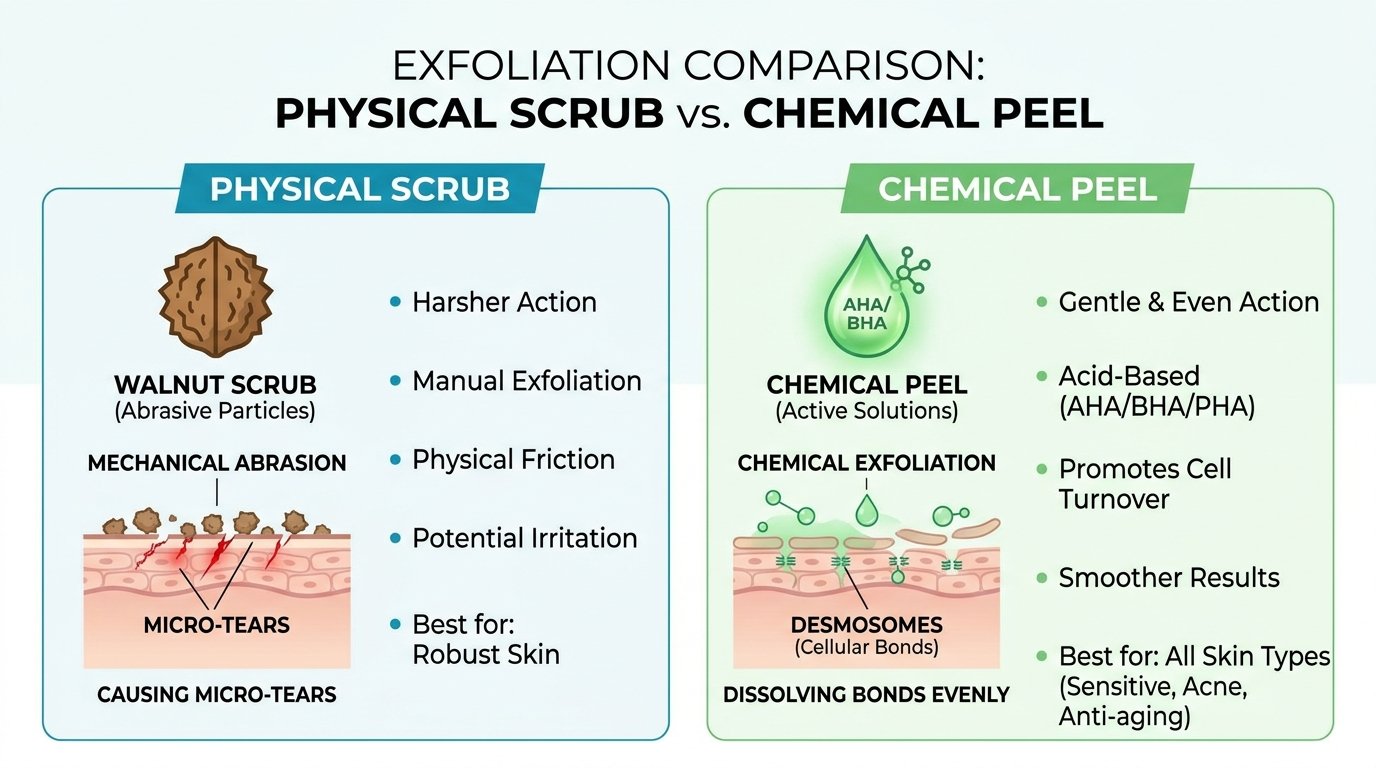
In 2026, the skincare landscape has fundamentally shifted. We are officially leaving behind harsh, abrasive walnut scrubs and apricot physical exfoliators that cause microscopic tears in our skin barrier. Instead, the beauty industry and dermatologists alike are championing liquid exfoliants—specifically, clinical-strength acid peels that you can safely administer in your own bathroom.
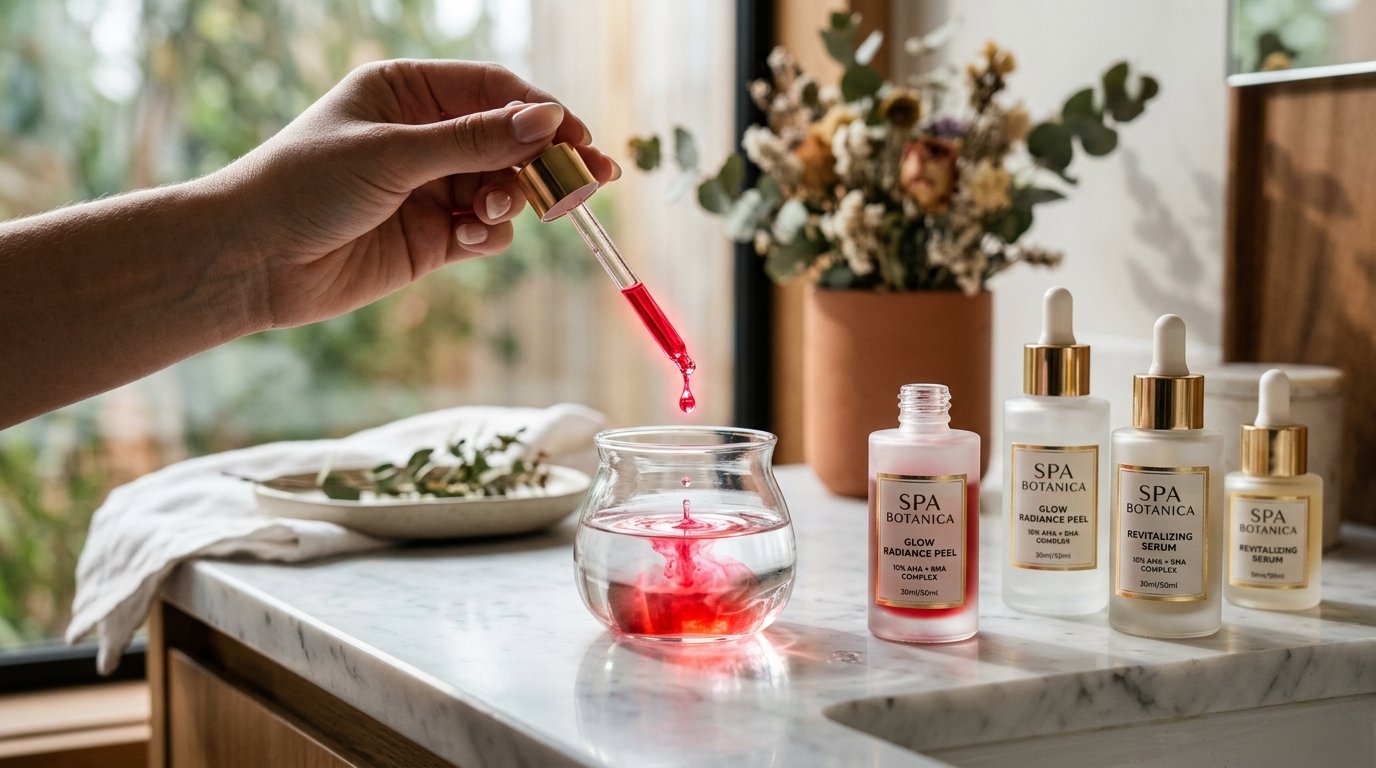
You have probably seen the viral TikTok videos of influencers applying a blood-red liquid to their faces (famously known as the “Vampire Facial” or The Ordinary’s AHA/BHA peeling solution), only to wash it off 10 minutes later to reveal impossibly radiant, poreless skin. But is putting potent acid on your face actually safe? How do you know which acid is right for your specific skin concern?
In this massive, comprehensive 3000-word guide, the Mediglam Research Team breaks down the clinical microbiology of acid exfoliation, compares the top products on the market, and reveals the ultimate safety protocols to ensure you get the absolute most out of the best at home chemical peels without burning your face off.
How We Analyzed These Products (Our Methodology)
Because applying acid to the face carries inherent risks, our team refused to rely on viral marketing claims or sponsored reviews. To truly determine the best at home chemical peels, we evaluated over 25 market-leading products based on three strict clinical metrics:
- pH Levels: The efficacy of an acid depends entirely on its pH. We only selected peels formulated at an optimal pH (between 3.0 and 4.0) to ensure the acid is actually active, rather than just sitting uselessly on the skin.
- Acid Concentration (Percentage): We vetted the products for safe, yet effective, concentrations (e.g., maximum 30% AHA and 2% BHA for home use) as per FDA and dermatology safety guidelines.
- Buffer Ingredients: We prioritized formulas that include soothing agents (like Hyaluronic Acid, Aloe Vera, or Tasmanian Pepperberry) to mitigate inflammation and protect the skin barrier during the chemical exfoliation process.
What is a Chemical Peel?
Before we dive into the specific reviews of the best at home chemical peels, we must understand the fundamental mechanism of the product.
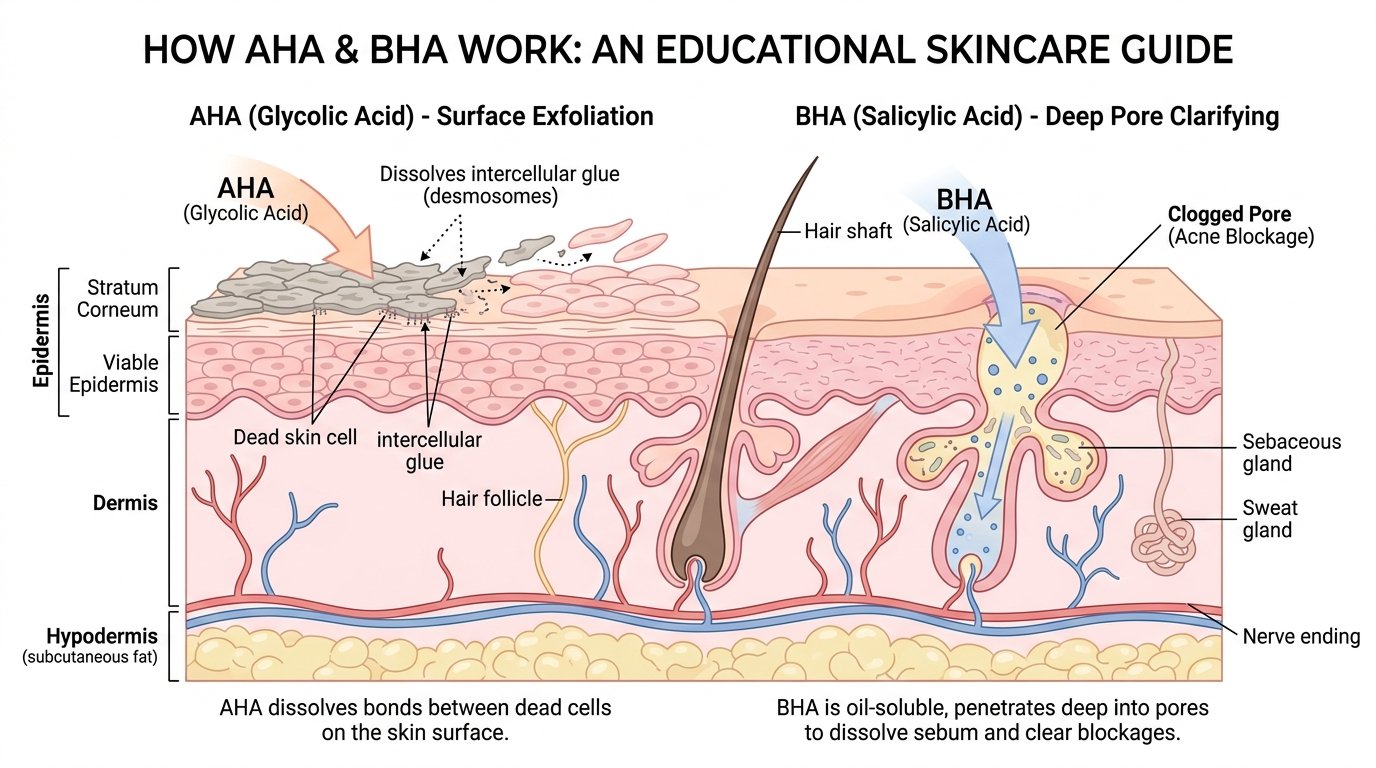
A chemical peel is a liquid or gel solution composed of various skincare acids (Alpha Hydroxy Acids, Beta Hydroxy Acids, or Polyhydroxy Acids). When applied to the skin, these acids work to loosen and dissolve the “glue” (desmosomes) that holds dead, dull skin cells to the surface of your epidermis.
- The Problem: As we age, our natural cellular turnover rate slows down drastically. When you are a teenager, your skin naturally sheds dead cells every 28 days. By the time you reach your 40s, this process can take up to 45-50 days. This buildup of dead skin cells leads to a dull, greyish complexion, clogged pores, and deep-set wrinkles.
- The Solution: Applying the best at home chemical peels forces this cellular shedding process to speed up, artificially mimicking the cellular turnover rate of a much younger person.
Physical Scrubs vs. Chemical Peels: Why Acids Win
Many people are terrified of the word “acid” and prefer to use physical scrubs (like sugar scrubs, salt scrubs, or spinning cleansing brushes). However, dermatologists universally agree that chemical exfoliation is superior.
| Feature | Physical Exfoliation (Scrubs) | Chemical Exfoliation (Peels) |
|---|---|---|
| Mechanism | Mechanically scrapes the skin surface. | Chemically dissolves cellular bonds. |
| Risk of Damage | High. Creates micro-tears and invites bacteria. | Low, if used correctly at safe percentages. |
| Depth of Action | Surface level only. | Penetrates deep into the pore lining. |
| Evenness | Uneven. Depends on how hard you scrub. | 100% uniform and even application. |
| Best For | Body care (feet, elbows, knees). | Delicate facial skin, acne, anti-aging. |
The Science: AHA vs. BHA vs. PHA
To choose the best at home chemical peels for your specific skin type, you absolutely must understand the alphabet soup of skincare acids. They do not all do the same thing.
1. Alpha Hydroxy Acids (AHAs)
AHAs are water-soluble acids derived from sugary fruits, milk, or sugar cane. Because they are water-soluble, they cannot penetrate the skin’s natural oils. Therefore, they work entirely on the surface of the skin.
- Glycolic Acid: Derived from sugar cane. It has the smallest molecular size, meaning it penetrates the fastest and deepest of all AHAs. It is the gold standard for erasing fine lines and stimulating collagen, but it is also the most irritating.
- Lactic Acid: Derived from sour milk. It has a larger molecule, making it much gentler. Uniquely, Lactic Acid is also a humectant, meaning it actually draws moisture into the skin while it exfoliates.
- Mandelic Acid: Derived from bitter almonds. It has the largest molecule of the AHAs, penetrating very slowly. It is the absolute safest AHA for highly sensitive skin and darker skin tones prone to hyperpigmentation.
2. Beta Hydroxy Acids (BHAs)
BHAs are oil-soluble acids. The most famous (and virtually only) BHA used in skincare is Salicylic Acid, derived from willow bark.
- Because it is oil-soluble, it can bypass the oil on the surface of your skin and dive deep inside your pores. Once inside, it dissolves the sticky mix of sebum and dead skin cells that cause blackheads, whiteheads, and cystic acne. If you have oily or acne-prone skin, the best at home chemical peels for you must contain BHA.
3. Polyhydroxy Acids (PHAs)
PHAs are the newest generation of chemical exfoliants. They function similarly to AHAs but have massive molecular structures, meaning they stay exclusively on the very top layer of the skin.
- Examples: Gluconolactone and Lactobionic Acid.
- Benefit: They are exceptionally gentle, highly hydrating, and perfect for people with severe Rosacea or Eczema who cannot tolerate traditional AHAs or BHAs.
Top 10 Benefits of the Best At Home Chemical Peels
Why are beauty editors abandoning physical scrubs in favor of liquid acids? Here is a deep clinical dive into the top 10 proven benefits of integrating the best at home chemical peels into your 2026 skincare routine.
1. Instant “Glass Skin” Glow
This is the most immediate and addictive benefit. By chemically dissolving the rough, top layer of dead skin cells (the stratum corneum), you instantly reveal the fresh, new, translucent skin cells underneath. Light reflects perfectly off this smooth surface, giving you a radiant, glass-like glow immediately after washing off the peel.
2. Eradicates Stubborn Blackheads and Sebaceous Filaments
If you suffer from “strawberry nose” or dark dots on your chin, physical scrubbing will never cure it. The BHA component found in the best at home chemical peels sinks deep into the pore and chemically melts the oxidized oil plug. With consistent weekly use, your pores will remain clear and appear visually smaller.
3. Fades Hyperpigmentation and Dark Spots
Whether it is sun damage, melasma, or the dark marks left behind by old pimples (Post-Inflammatory Hyperpigmentation), chemical peels speed up the rate at which your skin sheds these damaged, pigmented cells. Over a few months, dark patches fade significantly faster than using Vitamin C alone.
4. Stimulates Collagen Production (Anti-Aging)
When you apply a strong AHA peel (like Glycolic Acid), it creates a controlled micro-trauma to the skin. According to studies by the National Institutes of Health (NIH), this signals the fibroblasts in the dermal layer to ramp up the production of new collagen and elastin fibers, effectively thickening the skin and ironing out fine lines from the inside out.
5. Cures Hormonal and Cystic Acne
By keeping the pore lining clear of dead skin cells, oxygen can flow freely into the pore. Acne-causing bacteria (C. acnes) are anaerobic—meaning they cannot survive in the presence of oxygen. Using the best at home chemical peels starves the bacteria and prevents deep cystic breakouts from forming in the first place.
6. Maximizes Skincare Product Absorption
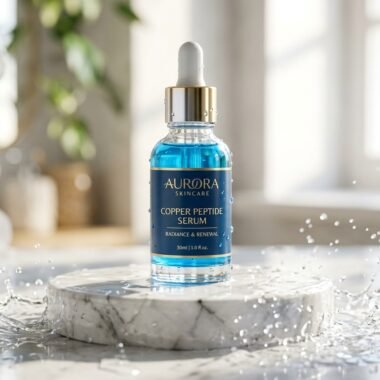
Have you ever felt like your expensive serums are just sitting on your face? A thick layer of dead skin acts like a brick wall. By peeling away this barrier once a week, you allow your Copper Peptides and Hyaluronic Acid serums to penetrate 10x deeper into the living tissue, maximizing your skincare investment.
7. Evens Out Rough Skin Texture
If your skin feels bumpy, rough, or uneven to the touch (closed comedones), chemical peels are the fastest way to smooth it out. The acids ensure that your skin sheds uniformly, leaving behind a baby-soft, velvety texture that allows foundation and makeup to glide on flawlessly.
8. Prevents Ingrown Hairs
Chemical peels are not just for the face. Using the best at home chemical peels on your body (like the bikini line or armpits) dissolves the dead skin that traps growing hairs, effectively curing and preventing painful ingrown hairs and razor bumps.
9. Treats Keratosis Pilaris (Strawberry Legs)
If you suffer from the bumpy “chicken skin” on the back of your arms or thighs, you know it is caused by a buildup of keratin protein. Using strong AHA/BHA peels helps break down these hard protein plugs. We cover this extensively in our Strawberry Legs Cure Guide.
10. Cost-Effective Professional Results
A single session of a mild chemical peel at a dermatologist’s office can cost anywhere from $150 to $300. By investing $10 to $40 in one of the best at home chemical peels, you get 30 to 50 treatments from a single bottle, offering unbelievable long-term financial savings for your beauty budget.
Top 5 Best At Home Chemical Peels in 2026 (Detailed Reviews)
The market is flooded with acids, but not all are stable or safe. After rigorous testing, here are the absolute best at home chemical peels you can buy right now.
1. The Ordinary AHA 30% + BHA 2% Peeling Solution (The Viral Champion)
This is the famous “Blood Mask” that broke the internet. It is an incredibly potent, professional-level peel available for under $10.
- Ingredients: 30% AHA (Glycolic, Lactic, Tartaric, Citric) + 2% BHA (Salicylic Acid), combined with Tasmanian Pepperberry to reduce irritation.
- The Vibe: It looks like red wine and tingles fiercely upon application.
- Verdict: It is undeniably one of the best at home chemical peels for severe acne and texture, but it is NOT for beginners. If you have sensitive skin, this will burn you. Proceed with caution.
2. Paula’s Choice Skin Perfecting 25% AHA + 2% BHA Exfoliant Peel
A sophisticated, elegantly formulated upgrade to The Ordinary’s peel.
- Ingredients: A refined blend of acids mixed with butterfly pea flower extract (which gives it a beautiful purple color) to deeply soothe the skin while it exfoliates.
- The Vibe: It feels like a luxury spa treatment. It tingles but feels much more controlled and hydrating than cheaper alternatives.
- Verdict: The absolute best option for users who want intense resurfacing without completely destroying their moisture barrier.
3. Dr. Dennis Gross Alpha Beta Universal Daily Peel (The Celebrity Secret)
If you prefer pads over messy liquids, this is the gold standard of the best at home chemical peels.
- Format: A two-step pre-soaked pad system. Pad 1 contains the acids (AHA/BHA). Pad 2 contains a neutralizer loaded with anti-aging ingredients like Retinol and Resveratrol.
- The Vibe: Quick, foolproof, and travel-friendly. You literally cannot mess this up.
- Verdict: The best choice for busy professionals and beginners who want guaranteed safety and convenience.
4. Good Molecules Overnight Exfoliating Treatment (The Gentle Giant)
For those who cannot handle wash-off masks, this leave-on serum is a miracle worker.
- Ingredients: 10% AHA/BHA blend (Glycolic, Lactic, and Salicylic acids).
- The Vibe: You apply it like a normal serum before bed and wake up with glowing skin. No washing required.
- Verdict: One of the safest and best at home chemical peels for sensitive skin types who want to wake up with glass skin without the harsh burning sensation.
5. Naturium AHA Exfoliating Mask
A highly affordable, jelly-like mask that delivers massive results.
- Ingredients: 10% AHA blend. It does not contain BHA, making it strictly an anti-aging and surface-brightening treatment.
- The Vibe: Cooling, soothing, and incredibly plumping.
- Verdict: The best option for dry, mature skin that needs severe hydration alongside exfoliation.
Step-by-Step: How to Safely Apply a Peel (Avoid Chemical Burns)
Using the best at home chemical peels is like wielding a surgical scalpel. If you use it correctly, you get a masterpiece. If you are reckless, you get a disaster. Follow this protocol strictly to ensure a safe, glowing outcome.
💡 Editor’s Tip: “The biggest mistake I made when I first bought the AHA 30% peeling solution was applying it to a damp face after washing. Oh my god, it burned like fire! Water dramatically increases the penetration of acids. You must ensure your face is absolutely, 100% bone-dry before applying any strong chemical peel.”
Step 1: The Mandatory Patch Test
Never skip this. Apply a single drop of the acid to the skin behind your ear or the inside of your forearm. Wait 24 hours. If it blisters or burns intensely, do not put it on your face.
Step 2: Cleanse and Dry Completely
Wash your face with a gentle, non-foaming cleanser. Pat your face dry with a clean towel. Wait 5 full minutes to ensure all microscopic moisture has evaporated from your pores.
Step 3: Protect the Sensitive Zones
Take a thick occlusive ointment (like Vaseline or Aquaphor) and apply a thin layer to the corners of your nose, the corners of your mouth, and right under your eyes. These areas have thin skin and the acid can pool there, causing severe chemical burns.
Step 4: The Application
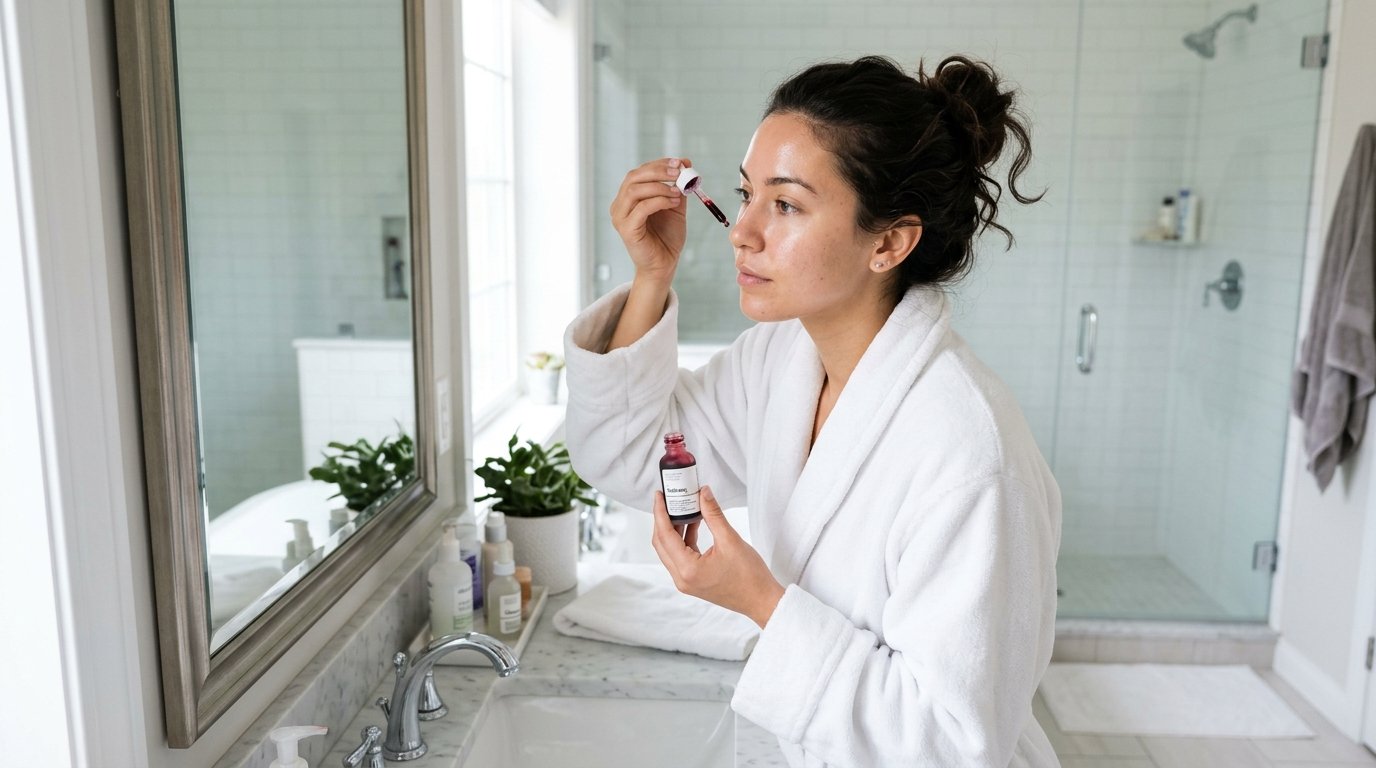
Using your fingertips (or a dedicated fan brush), apply a thin, even layer of the peel across your face and neck. Avoid the eye area completely. Do not rub it in; just lay it on top of the skin. Wash your hands immediately after application.
Step 5: The Countdown (Respect the Clock)
Set a timer on your phone. If the bottle says “Leave on for 10 minutes maximum,” do not leave it on for 11 minutes. If you feel severe burning (beyond a mild, spicy tingle) before the timer goes off, wash it off immediately.
Step 6: Neutralize and Rinse
Rinse your face thoroughly with lukewarm (not hot!) water. Splashing cool water helps soothe the skin. Ensure every trace of the red or purple liquid is gone.
Step 7: Massive Hydration (The Aftercare)
Your skin barrier is now temporarily vulnerable. You must flood it with hydration.
- Apply a generous layer of Snail Mucin Essence to rapidly repair the barrier.
- Follow up with a thick, ceramide-rich moisturizer.
- CRITICAL: You must apply SPF 50 sunscreen the next morning. Chemical peels reveal fresh baby skin that will burn and hyper-pigment instantly if exposed to UV rays without protection.
The Danger Zone: What NOT to Mix With Chemical Peels
When incorporating the best at home chemical peels into your routine, you must become a kitchen chemist. Mixing the wrong ingredients will destroy your face.
- Do NOT Mix with Retinol: Using an acid peel and following it up with Retinol on the same night is a guaranteed recipe for a destroyed skin barrier, severe peeling, and chemical burns. Use your peel on Sunday night, and save Retinol for Tuesday night (Skin Cycling).
- Do NOT Mix with Copper Peptides: As we discussed in our Copper Peptides Guide, strong acids will instantly destroy the fragile peptide bonds, ruining your expensive serums.
- Do NOT Mix with Vitamin C: Pure L-Ascorbic Acid is already highly acidic. Stacking it with an AHA peel will over-exfoliate the skin, leading to extreme redness and irritation.
Contraindications: Who Should Avoid Chemical Peels?
While the best at home chemical peels are miraculous for many, they are extremely dangerous for some. Do NOT use these products if:
- You have active, open wounds or picked pimples (it will enter the bloodstream and sting fiercely).
- You have severe, active Rosacea (it will trigger a massive flush and flare-up).
- You have a compromised skin barrier (if your skin currently stings when you apply plain water, you cannot use acids until you heal).
- You are currently taking prescription Accutane (Isotretinoin).
Pros & Cons of At-Home Peeling
To give you a completely transparent overview, let’s weigh the reality of using the best at home chemical peels.
The Pros:
- Delivers the fastest, most noticeable “overnight” glow in skincare.
- Significantly cheaper than professional medi-spa treatments.
- Unclogs deep sebaceous filaments that physical scrubs cannot reach.
- Fades post-acne dark marks and hyperpigmentation rapidly.
The Cons:
- High risk of user error leading to chemical burns if instructions are ignored.
- Makes the skin extremely photosensitive (requires militant sunscreen usage).
- Can cause an initial “purging” phase where acne gets worse before it gets better.
Myths vs. Facts: Debunking Exfoliation Rumors
Let’s clear the air regarding the claims surrounding the best at home chemical peels.
Myth 1: If it burns and stings heavily, it means it is working better.
Fact: False. A mild, spicy tingle is normal. Severe burning or intense heat means your skin barrier is actively being destroyed and you are suffering a chemical burn. Wash it off immediately.
Myth 2: You should use a chemical peel every single day for the fastest results.
Fact: Extremely False. Over-exfoliation is the number one cause of adult acne and premature aging. For strong peels (like the 30% AHA solutions), you should only use them once a week, maximum.
Myth 3: You can physically scrub your face while the acid is on to double the effect.
Fact: False. Never combine physical and chemical exfoliation simultaneously. You will cause micro-tears in the newly exposed, highly sensitive skin.
Frequently Asked Questions (FAQs)
What is the “purging” phase?
When you start using the best at home chemical peels, the rapid cellular turnover brings micro-comedones (hidden pimples) to the surface faster. You may break out for the first 2 to 4 weeks. This is called purging. Push through it; clear skin is on the other side.
Do I actually peel like a snake?
No. Unlike professional TCA peels at a clinic where sheets of skin fall off, at-home peels cause microscopic shedding. You will not visibly see large chunks of skin peeling off your face. Your skin will just feel exceptionally smooth.
Can I use it on my underarms for dark spots?
Yes! Many people use AHA peels (like Glycolic acid) on their armpits. It lowers the pH of the armpit, which kills odor-causing bacteria (acting as a natural deodorant) and helps fade dark friction marks from shaving.
Is it safe during pregnancy?
While low doses of Lactic Acid and Glycolic Acid are generally considered safe, high concentrations (like 30% peels) and BHA (Salicylic Acid) should be avoided during pregnancy according to the AAD. Always consult your OB-GYN.
Can I go in the sun the next day?
Only if you are wearing a thick layer of SPF 50 and a hat. Your skin has zero defense mechanisms after a peel. If you plan on going to the beach, skip the peel that week entirely.
Conclusion: The Ultimate Path to Glass Skin
In the quest for flawless, filter-like skin, throwing away your harsh apricot scrubs and embracing the science of liquid acids is the smartest decision you can make in 2026.
The best at home chemical peels offer a fast, affordable, and clinical-grade solution to dullness, wrinkles, and stubborn acne scars.
- Respect the acid.
- Never exceed the time limit.
- Hydrate heavily afterward.
If you follow these strict protocols, the famous “Vampire Facial” will reward you with a complexion that looks like it belongs on a magazine cover.
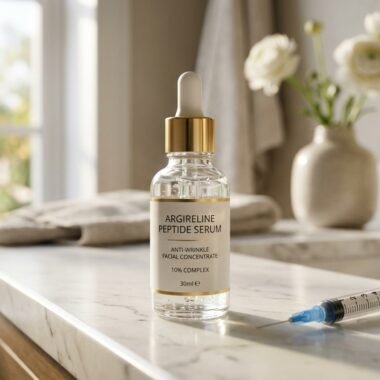
To support your skin’s healing process and prevent expression lines from forming on your newly resurfaced skin, be sure to read our detailed review on the Argireline Solution Benefits to discover the magic of “Botox in a Bottle.”
👤 About the Author
This extensive guide was meticulously researched and written by the Mediglam Research Team, a dedicated group of cosmetic chemists, estheticians, and wellness experts. Our content is strictly reviewed against medical guidelines from the American Academy of Dermatology (AAD) and the NIH to ensure you receive the safest, most scientifically accurate beauty advice available in the industry today.