Are you curious about intermittent fasting for women but scared it might mess up your hormones? You have probably seen the incredible transformation photos on social media. Men dropping 50 pounds by skipping breakfast, biohackers claiming mental clarity, and celebrities swearing by the 16:8 method.
But here is the truth that most fitness gurus ignore: Women are not small men.
In 2026, we know that the female body is biologically wired to protect fertility. Aggressive fasting can trigger a stress response, spike cortisol, and cause hair loss or missed periods in women.
Does that mean you shouldn’t fast? Absolutely not. It just means you need to do it differently.
In this massive, comprehensive 2600-word guide, we break down the science of intermittent fasting for women, the “Crescendo Method,” and how to burn fat without wrecking your metabolism.
What is Intermittent Fasting? (It’s Not a Diet)
Intermittent Fasting (IF) is not about what you eat; it is about when you eat. It cycles between periods of eating and fasting.
- The Goal: To lower insulin levels enough that the body switches from burning sugar to burning stored body fat.
- Autophagy: After about 14-16 hours, your cells start a “self-cleaning” process, recycling old damaged cells. This is the anti-aging magic.
However, while men can fast for 18 hours easily, women’s bodies are extremely sensitive to energy deprivation due to a molecule called Kisspeptin.
The Science: Why Women Are Not Small Men
When a man fasts, his body simply burns fat. When a woman fasts aggressively, her body might think a famine has arrived.
The Kisspeptin Connection
Kisspeptin is a neuron that regulates reproductive hormones.
- In Men: Fasting boosts Kisspeptin (increasing testosterone).
- In Women: Fasting suppresses Kisspeptin. When this drops, your brain tells your ovaries to stop producing estrogen and progesterone.
- Result: Missed periods, hair loss, anxiety, and the dreaded “Cortisol Belly.”
This is why intermittent fasting for women requires a gentler approach. According to Johns Hopkins Medicine, sticking to shorter fasting windows can provide benefits without the hormonal risks.
Top 7 Benefits of Intermittent Fasting for Women
When done correctly (hormone-safe), the benefits are transformative.
1. rapid Fat Loss (Visceral Fat)
By lowering insulin, your body finally unlocks stubborn fat stores, especially around the middle. It is one of the most effective tools for reversing insulin resistance.
2. Reduces Inflammation
Fasting gives your gut a break. It lowers inflammatory markers (CRP), which helps clear skin, reduce joint pain, and de-bloat the face.
3. Improves PCOS Symptoms
Polycystic Ovary Syndrome (PCOS) is driven by insulin resistance. By fixing insulin sensitivity, intermittent fasting for women can help regulate cycles and reduce excess testosterone (which causes acne and facial hair).
4. Anti-Aging (Autophagy)
Fasting increases growth hormone (HGH), which preserves muscle and keeps skin youthful. Autophagy cleans out the “junk” cells that cause aging.
5. Brain Health & Focus
When you fast, your body produces ketones. Ketones are a super-fuel for the brain, reducing brain fog and improving mental clarity (similar to the effects of Maca Root).
6. Corrects Leptin Resistance
Leptin is the “I’m full” hormone. Overweight individuals often can’t hear this signal. Fasting resets the sensitivity, so you naturally want to eat less.
7. Gut Microbiome Reset
Giving your digestion a 14-hour break allows the migrating motor complex (MMC) to sweep bacteria out of the small intestine, preventing SIBO and bloating.
The Best Fasting Schedules for Women
Forget the standard advice. Here are the female-friendly protocols.
1. The 14:10 Method (The “Goldilocks” Zone)
- Fast: 14 Hours.
- Eat: 10 Hours.
- Why: This is the safest daily method for women. It gets you into mild ketosis without spiking cortisol.
- Example: Finish dinner at 7 PM, eat breakfast at 9 AM.
2. The 16:8 Method (Advanced)
- Fast: 16 Hours.
- Eat: 8 Hours.
- Why: Good for post-menopausal women or those with severe insulin resistance. Premenopausal women should monitor their cycle closely on this plan.
3. The Crescendo Method (Best for Beginners)
- Fast: 12-16 hours.
- Frequency: Only 2-3 non-consecutive days a week (e.g., Monday, Wednesday, Friday).
- Why: It shocks the body into burning fat but gives it “safety days” to keep hormones happy.
Fasting According to Your Menstrual Cycle
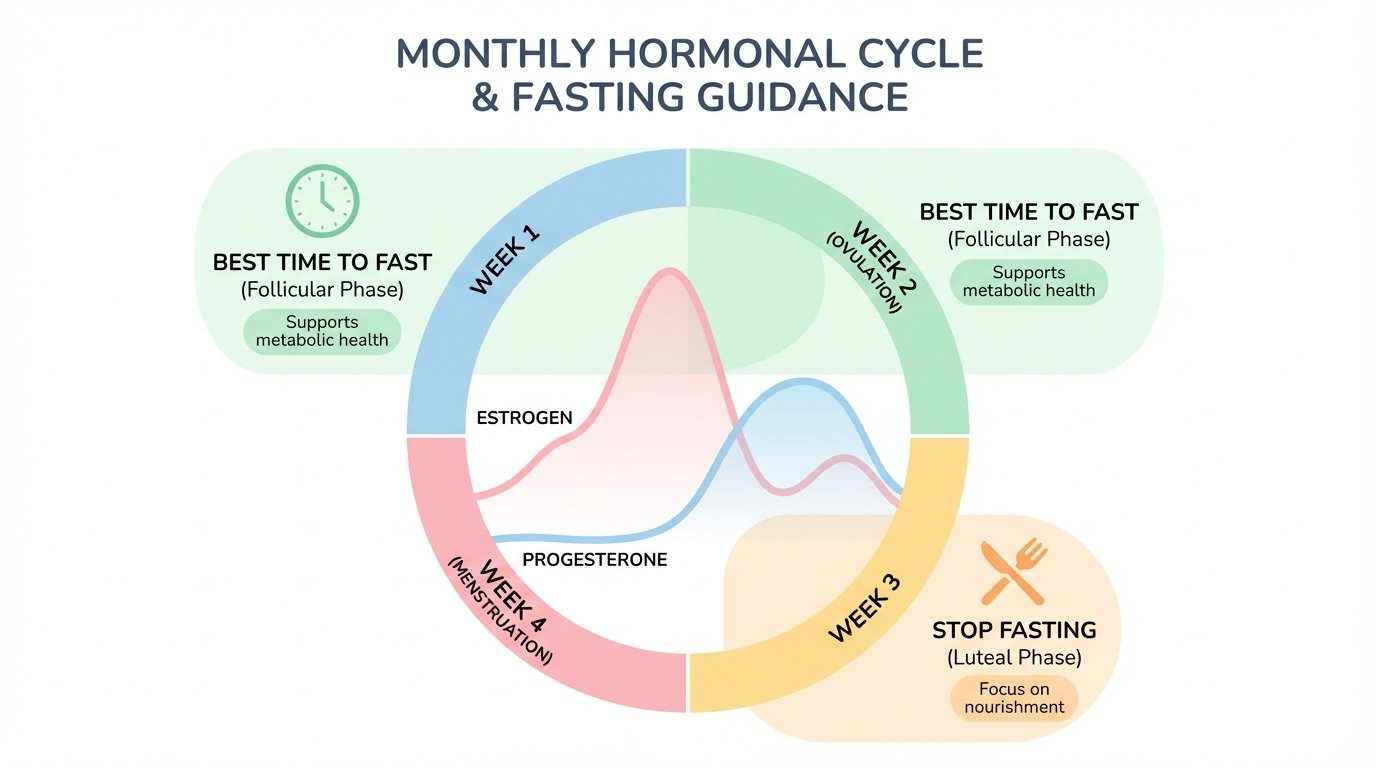
This is the ultimate secret to intermittent fasting for women. You should change your fast based on the week of your cycle.
Days 1-10 (Period & Follicular Phase)
- Hormones: Estrogen is building. Insulin sensitivity is high.
- Fasting: Go for it. You can do 16:8 or even longer fasts. Your body is resilient and ready to burn fat.
Days 11-15 (Ovulation)
- Hormones: Estrogen peaks. Testosterone rises.
- Fasting: Limit to 12-14 hours. Too much stress now can delay ovulation.
Days 16-28 (Luteal Phase & PMS)
- Hormones: Progesterone is dominant. Your body needs more calories and carbs to build the uterine lining. Cortisol is naturally higher.
- Fasting: STOP. Do not fast more than 12 hours (overnight only). Eat breakfast. Fasting now causes extreme cravings, mood swings, and hormonal acne.
What to Eat to Break Your Fast
How you break your fast determines your results. Do not eat a bagel.
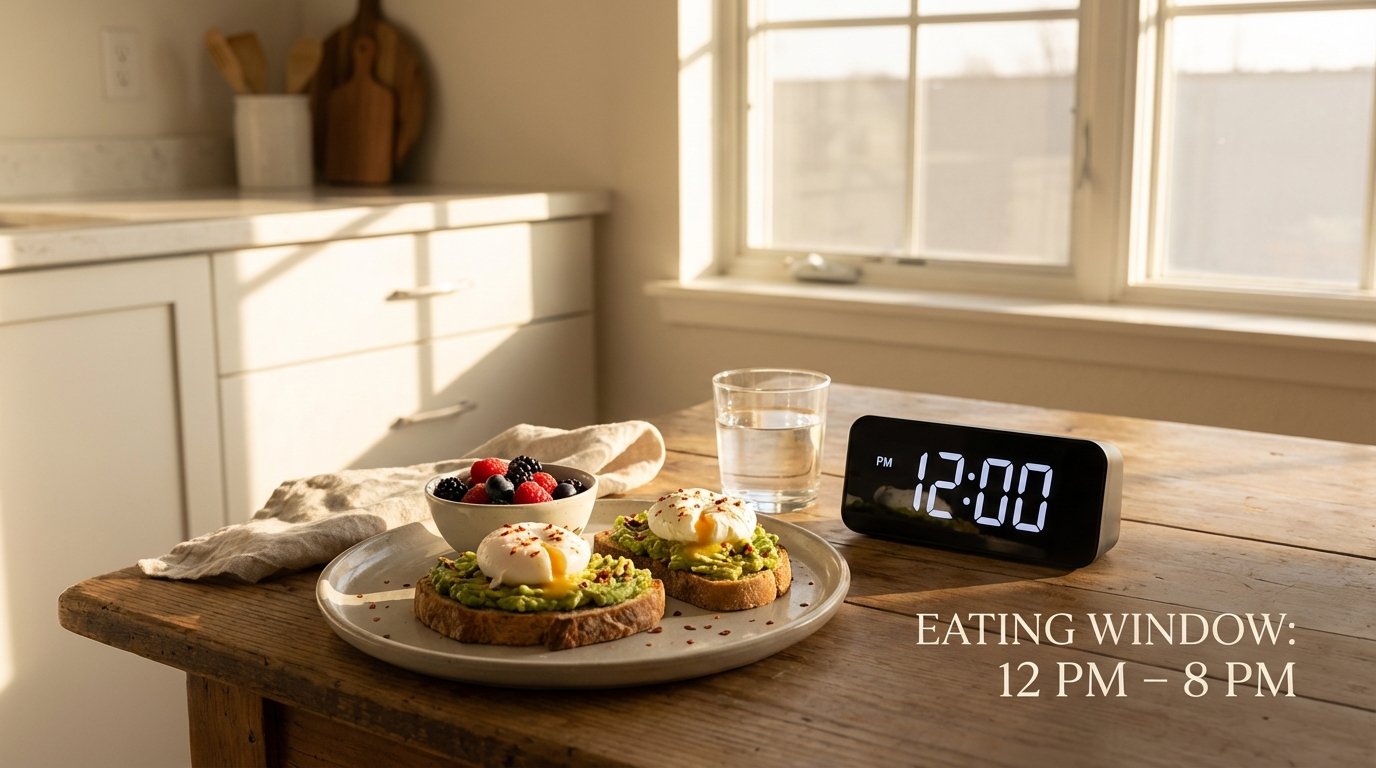
- The Rule: Protein + Healthy Fats first.
- Best Option: Bone Broth. It soothes the gut and prepares it for food.
- Second Best: Eggs, Avocado, or a Collagen Smoothie.
- Avoid: Sugar and refined carbs. These will spike insulin massively after a fast, causing a “food coma.”

Common Mistakes Women Make
- Drinking “Dirty” Coffee: Adding creamer, sugar, or collagen to your morning coffee breaks the fast. Stick to black coffee, tea, or water.
- Not Eating Enough: If you shrink your eating window, you must still eat enough calories. Starvation slows metabolism.
- Ignoring Electrolytes: Fasting flushes out water and minerals. If you get a headache, you need salt, magnesium, and potassium. (Read our upcoming guide on Electrolytes!).
- Fasting While Stressed: If you had a bad night’s sleep or a stressful week, do not fast. Your cortisol is already too high. Do a Cortisol Detox Workout instead.
Frequently Asked Questions (FAQs)
Can I drink lemon water?
Yes. A squeeze of lemon in water has negligible calories and does not spike insulin. It helps with liver detox.
Does it cause hair loss?
It can, if you don’t eat enough protein during your eating window. Hair needs fuel. Ensure you are hitting your protein goals.
Will it shrink my breasts?
Weight loss generally reduces breast tissue since it is mostly fat. However, fasting itself does not specifically target breasts.
Can I exercise while fasting?
Yes, low-intensity cardio (walking) or yoga is great. If you do heavy lifting or HIIT, it is better to do it during your eating window or take amino acids.
Does it work for menopause?
Yes! It is fantastic for menopause belly fat because it targets the insulin resistance that naturally increases with age.
Conclusion: Listen to Your Body
Intermittent fasting for women is a powerful tool, but it is not a religion. The goal is metabolic flexibility, not suffering.
If you feel energized and light, keep going. If you feel dizzy, anxious, or your period stops, eat.
- Start with 12:12.
- Work up to 14:10.
- Stop fasting the week before your period.
By respecting your biology, you can harness the fat-burning power of fasting without sacrificing your hormonal health.
To support your fasting window, try drinking Banana Tea at night to ensure you sleep through the fast and wake up refreshed.
Disclaimer: This content on Mediglamhub is for informational purposes only. Do not fast if you are pregnant, breastfeeding, or have a history of eating disorders. Consult a doctor first.