You spend 8 hours a night with your face pressed against a pillow. That is 2,920 hours a year. If you are still sleeping on a standard cotton pillowcase, you might be unknowingly damaging your hair and skin every single night.
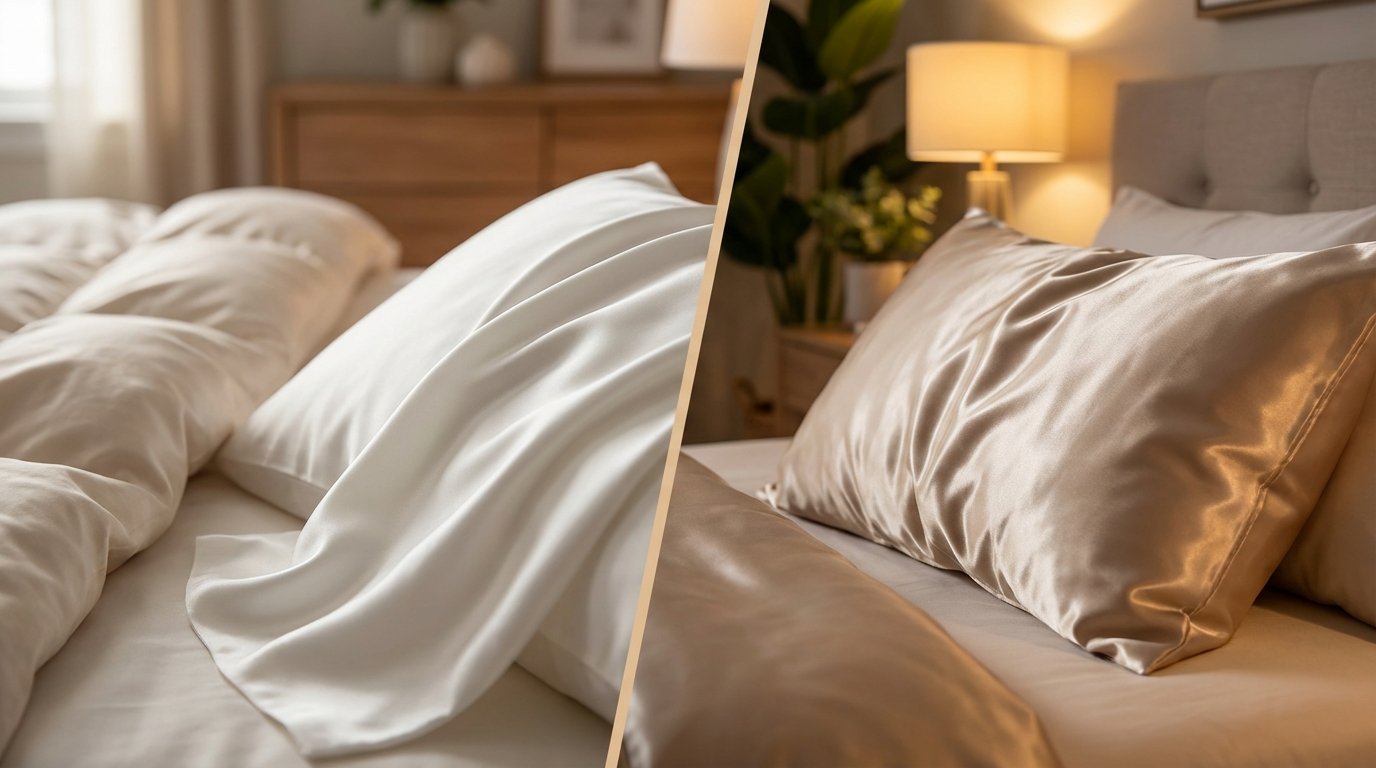
In 2026, the “Beauty Sleep” industry has exploded. Influencers and dermatologists alike are swearing by slippery surfaces to prevent wrinkles and bedhead. But when you go to buy one, you are hit with a confusing choice: Silk vs Satin pillowcase.
One costs $80, and the other costs $10. They look the same, feel similar, and promise the same results. So, what is the catch?
In this massive 2500-word buying guide, we break down the molecular differences, the benefits for acne and frizz, and help you decide which fabric wins in the Silk vs Satin pillowcase debate.
Part 1: The Friction Factor: Why Cotton is the Enemy
Before we compare the Silk vs Satin pillowcase, we need to understand why you should ditch cotton immediately.
Cotton is a hydrophilic material. This means it loves water.
- It Dehydrates You: Cotton absorbs moisture from your skin and hair. If you apply a $50 night cream or Retinol Serum, your cotton pillowcase is stealing it before your skin can absorb it.
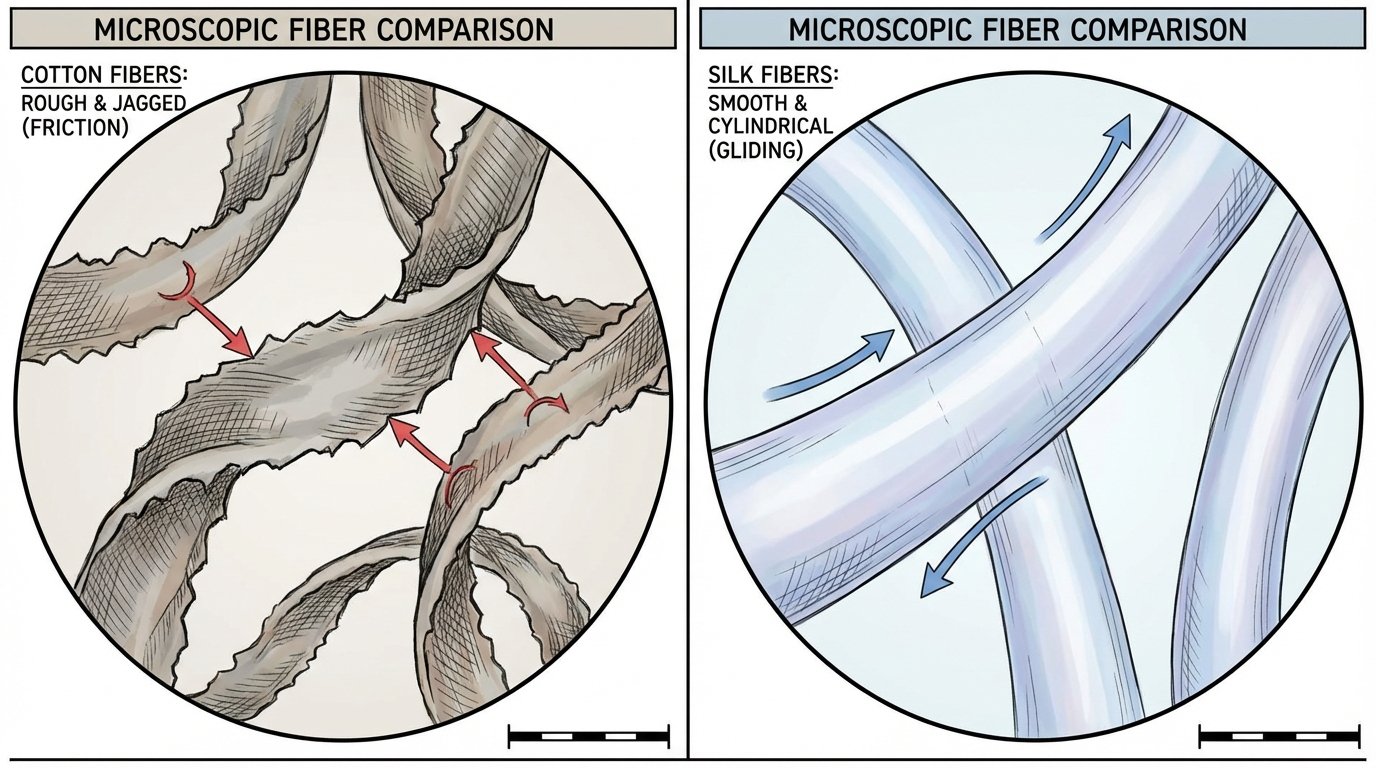
- It Causes Friction: Cotton fibers, under a microscope, look rough and twisted. When you toss and turn, these fibers snag your hair (causing breakage) and tug at your skin (causing sleep creases).
Choosing either a Silk vs Satin pillowcase solves this problem by providing a “Slip” surface. But they do it in very different ways.
Part 2: What is Silk? (The Natural Luxury)
Silk is a natural protein fiber produced by silkworms (specifically the Bombyx mori moth). It has been a symbol of luxury for thousands of years.
The Properties of Silk
- Natural Protein: Because it is an animal protein, it contains amino acids that are compatible with human skin. According to Healthline, silk does not absorb moisture as much as cotton, keeping your skin hydrated.
- Breathable: It regulates temperature. It keeps you cool in summer and warm in winter.
- Hypoallergenic: It naturally repels dust mites, fungus, and mold, making it the best choice for allergy sufferers.
Understanding “Momme” (The Thread Count of Silk)
When buying silk, you don’t look for thread count; you look for Momme (mm). This is the weight of the silk.
- 19mm: Entry-level. A bit thin.
- 22mm: The Gold Standard. Durable, shiny, and perfect for bedding.
- 25mm+: Ultra-luxury. Very heavy and expensive.
Part 3: What is Satin? (The Synthetic Imposter)
Here is the biggest secret in the Silk vs Satin pillowcase discussion: Satin is not a fabric; it is a weave.
You can have “Silk Satin” (silk woven in a satin style), but 99% of the “Satin Pillowcases” you see on Amazon are made from Polyester or Nylon.
The Properties of Polyester Satin
- Synthetic: It is essentially plastic thread woven very tightly to create a glossy surface.
- Non-Absorbent: Like silk, it won’t absorb your creams.
- Not Breathable: Because it is plastic, it traps heat. You might sweat more.
- Durable: You can throw it in the washing machine without fear.
Part 4: 7 Silk vs Satin Pillowcase Facts for Skin & Hair
Which one wins the battle? Let’s look at the specific benefits when comparing a Silk vs Satin pillowcase.
1. Goodbye Frizz and Bedhead (Hair Care)
- Silk: Reduces friction by 43%. The natural proteins can help seal the hair cuticle.
- Satin: Is even slipperier than silk! Because it is synthetic, it has almost zero drag.
- Winner: Tie. Both the Silk vs Satin pillowcase options are excellent for preserving a blowout or protecting curly hair from frizz. If you have extensions, Satin might be slightly better due to the extreme slip.
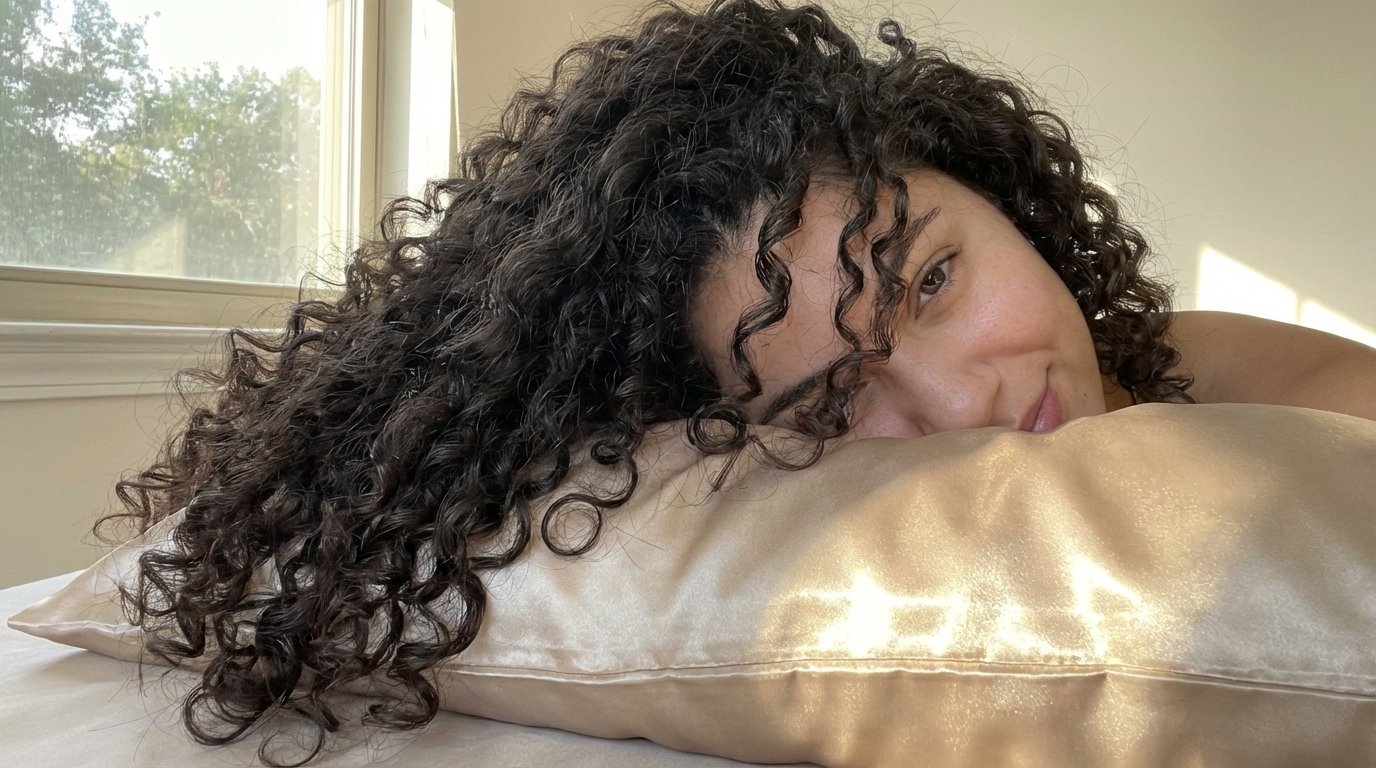
2. Acne Prevention (The Bacteria Battle)
- Silk: It is naturally antimicrobial. It does not hold onto bacteria as much as cotton. It breathes, preventing the “sauna effect” that breeds acne bacteria.
- Satin: Being synthetic, it can trap sweat and oil on the surface. If you sweat at night, satin can actually trigger breakouts.
- Winner: Silk. When analyzing Silk vs Satin pillowcase for acne-prone skin, the breathability of natural silk makes it superior.
3. Anti-Aging and Wrinkles
- The Theory: Sleep creases (lines on your face when you wake up) can turn into permanent wrinkles over time.
- Silk & Satin: Both prevent these creases because your skin glides over the fabric instead of scrunching up.
- Winner: Tie. Both surfaces prevent the mechanical formation of wrinkles. Combine this with Face Taping for the ultimate anti-aging defense.
4. Temperature Regulation (Hot Sleepers)
- Silk: A natural thermoregulator. It wicks moisture away and stays cool to the touch.
- Satin: Traps body heat. If you are a hot sleeper or going through menopause, satin might make you wake up sweaty.
- Winner: Silk. In the Silk vs Satin pillowcase debate, silk is the clear choice for comfort and cooling.
5. Skincare Absorption
- The Benefit: Both materials are less absorbent than cotton. This means your expensive night creams stay on your face.
- Winner: Tie. Whether you choose a Silk vs Satin pillowcase, your skin hydration will improve compared to cotton.
6. Hypoallergenic Properties
- Silk: Naturally repels dust mites and mold. It is the best choice for asthmatics.
- Satin: Synthetic fabrics can sometimes irritate sensitive skin or cause contact dermatitis in people allergic to plastics/dyes.
- Winner: Silk. It is the safest bet for sensitive skin.
7. Durability and Care
- Silk: High maintenance. Requires hand washing or delicate cycle with special pH-neutral detergent. It degrades in sunlight.
- Satin: Low maintenance. Throw it in the wash with your jeans (though not recommended), and it will survive.
- Winner: Satin. If you hate doing laundry, satin is your friend in the Silk vs Satin pillowcase comparison.
Part 5: The Price Difference (Is Silk Worth It?)
This is usually the deciding factor when choosing a Silk vs Satin pillowcase.
- Satin Pillowcase: $8 – $15 USD.
- Silk Pillowcase: $40 – $90 USD.
Is Silk worth 5x the price?
If you have acne, allergies, or sleep hot, YES. The natural properties justify the cost.
If you just want to protect your hair and don’t care about natural fibers, NO. Satin does 90% of the job for 10% of the price. The Sleep Foundation suggests that while silk is premium, satin is a viable budget alternative.
Part 6: How to Wash Your Pillowcase (Don’t Ruin It!)
Investing in a pillowcase is useless if you destroy it in the wash.
Washing Silk
- Detergent: Use a silk-specific detergent (enzyme-free). Regular Tide will eat the proteins.
- Temperature: Cold water only (max 30°C).
- Method: Hand wash is best. If using a machine, use a mesh laundry bag on the “Delicate” setting.
- Drying: Never tumble dry. Lay flat to air dry out of direct sunlight.
Washing Satin
- Detergent: Regular detergent is fine.
- Temperature: Warm or Cold.
- Drying: Low heat tumble dry or air dry.
Part 7: Frequently Asked Questions (FAQs)
Does satin cause breakouts?
It can. Because polyester satin is not breathable, it traps sweat, oil, and dead skin cells against your face. If you don’t wash it every 2-3 days, it can become a breeding ground for acne bacteria compared to silk.
What is “Vegan Silk”?
“Vegan Silk” is usually just a marketing term for high-quality polyester Satin or Lyocell (Bamboo). It is not real silk, but it is a cruelty-free alternative in the Silk vs Satin pillowcase market.
How often should I change my pillowcase?
Regardless of Silk vs Satin pillowcase, you should change it every 3 to 4 days. Oils from your hair and face build up quickly.
Can it fix split ends?
No fabric can repair a split end (only a haircut can do that). However, using a Silk vs Satin pillowcase prevents new split ends from forming by reducing friction while you sleep.
Conclusion: The Final Verdict
In the battle of Silk vs Satin Pillowcase, the winner depends on your budget and your skin type.
- Buy Mulberry Silk (22mm) if: You have acne, sensitive skin, allergies, or you sleep hot. It is the ultimate luxury investment for your face.
- Buy Polyester Satin if: You are on a budget, you are vegan, or you primarily care about hair protection (frizz) rather than skin benefits.
Whichever you choose, making the switch from cotton is the single easiest beauty upgrade you can make in 2026.
Pro Tip: Pair your new Silk vs Satin pillowcase with Mouth Taping to ensure you are not only protecting your skin but also sculpting your jawline while you sleep.
Disclaimer: This content on Mediglamhub includes affiliate reviews. Always check care labels before washing fabrics.