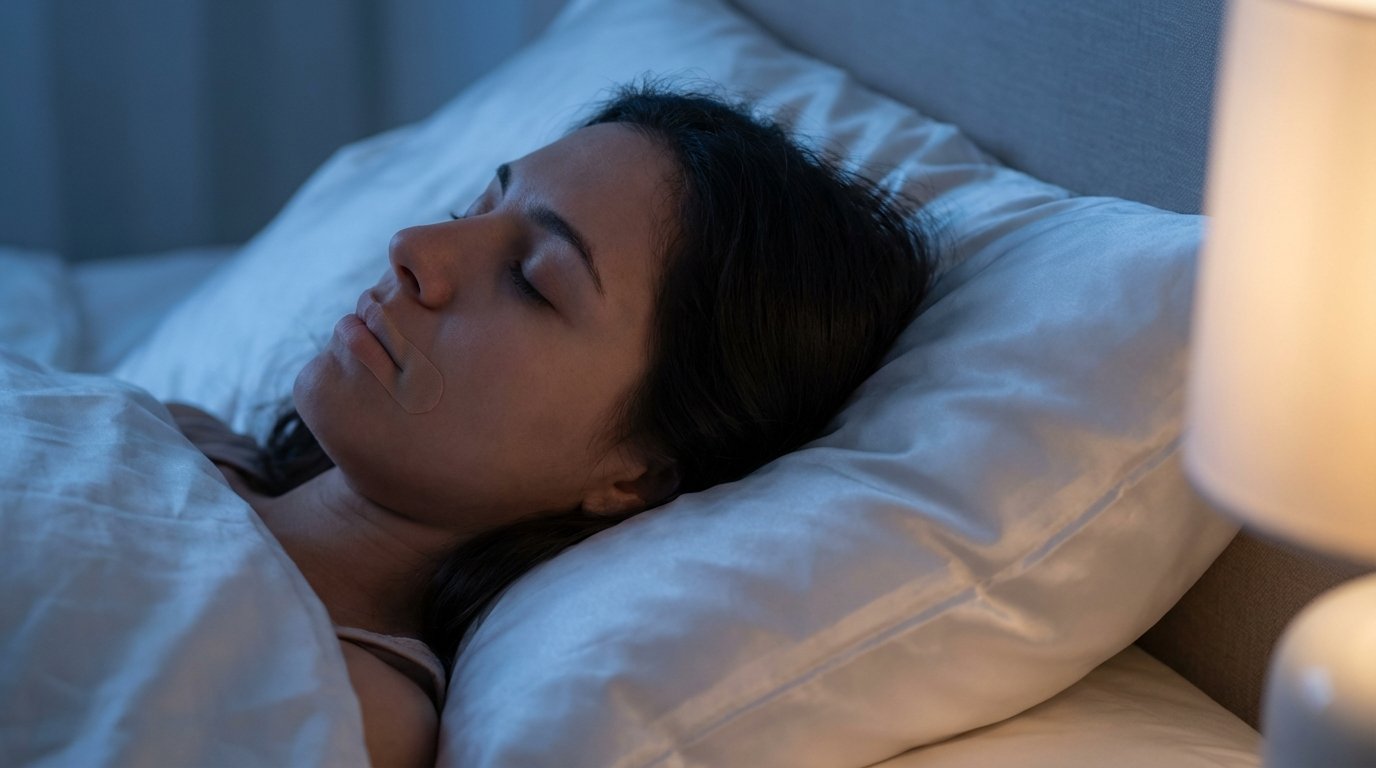
Are you waking up with a dry mouth, a puffy face, and zero energy? Or perhaps you have seen the viral TikTok trend where influencers claim that taping their mouths shut at night gave them a razor-sharp jawline and the best sleep of their lives.
It sounds terrifying—like a scene from a hostage movie. But mouth taping for sleep is actually a legitimate biohack supported by dentists and sleep experts in 2026. According to the Sleep Foundation, this practice can significantly improve sleep hygiene by encouraging nasal breathing.
Why would anyone do this? Because Mouth Breathing is silently destroying your health and your face structure.
In this massive 2500-word guide, we dive deep into the science of nasal breathing, the “Mewing” connection, and how to start mouth taping for sleep safely without suffocating.
Part 1: The Epidemic of Mouth Breathing
Before we talk about the tape, we have to talk about the problem. Nearly 50% of adults breathe through their mouths while sleeping. The primary goal of mouth taping for sleep is to correct this habit.
Why is Mouth Breathing Bad?
Evolution designed your nose for breathing and your mouth for eating. When you switch roles, things go wrong. As noted by the Cleveland Clinic, chronic mouth breathing can lead to:
- The “Long Face” Syndrome: Chronic mouth breathing changes your facial structure. It causes the jaw to recede, the face to lengthen, and the chin to weaken.
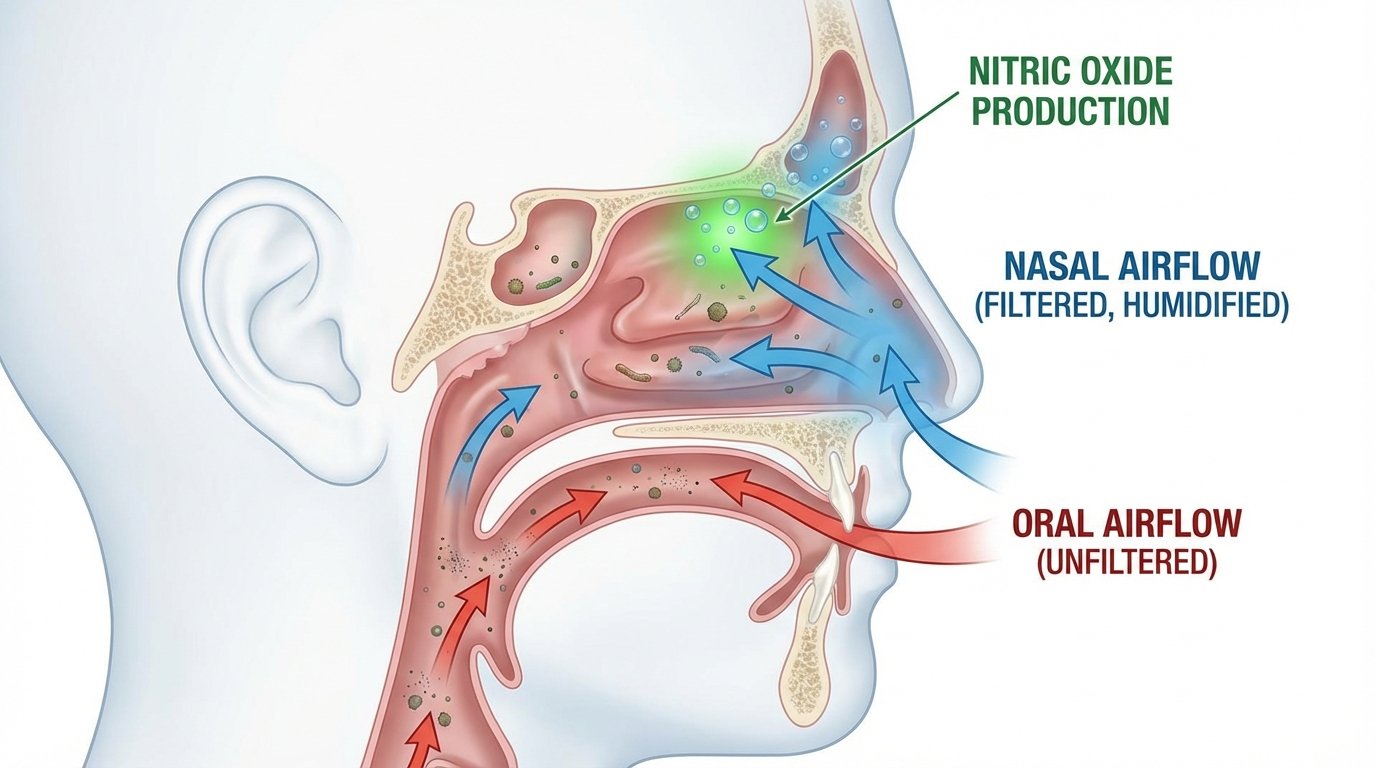
- No Filtration: Your nose has hairs and mucus that filter out dust, allergens, and bacteria. Your mouth does not. This leads to sore throats and bad breath.
- Low Oxygen: Mouth breathing triggers a stress response (Fight or Flight), leading to shallow, anxious sleep.
Part 2: The Science of Nasal Breathing
Why is the nose superior? And why is mouth taping for sleep the solution? It all comes down to one molecule: Nitric Oxide.
The Magic Molecule
Your sinuses produce Nitric Oxide (NO). When you breathe through your nose, you carry this gas into your lungs.
- Vasodilation: NO widens your blood vessels, increasing oxygen absorption by 18%.
- Sterilization: It kills airborne bacteria and viruses before they hit your lungs.
- Deep Sleep: Nasal breathing activates the Parasympathetic Nervous System (Rest and Digest). This is why mouth taping for sleep allows you to enter REM sleep faster.
Part 3: Top 7 Mouth Taping Benefits
Why are people obsessed with this trend? Here are the proven benefits of mouth taping for sleep in 2026.
1. Instant Jawline Definition (The “Mewing” Effect)
This is the main reason it went viral. When you use mouth taping for sleep, your tongue naturally rests on the roof of your mouth. This posture is called “Mewing.”
- Result: Over time, this lifts the cheekbones and tightens the jawline, acting as a natural facelift.
2. No More Snoring
Snoring often happens when the tongue falls back into the throat during mouth breathing. Mouth taping for sleep keeps the jaw lifted and the airway open. (Note: This helps mild snoring, not severe Sleep Apnea).
3. Eliminates Bad Breath and Dry Mouth
Morning breath is caused by dry saliva bacteria. By practicing mouth taping for sleep, you keep the oral microbiome moist and healthy. No more waking up reaching for water instantly.
4. Reduced Cavities and Gum Disease
Saliva is your teeth’s best defense against acid. Mouth breathing dries up saliva, leading to tooth decay. Taping protects your dental health while you sleep.
5. Deeper, Restorative Sleep
Because nasal breathing increases oxygen uptake, you wake up feeling truly rested. You might find you don’t even need your morning coffee (or your L-Theanine supplement) to feel alert.
6. Lower Blood Pressure
Nasal breathing slows the heart rate and reduces hypertension by engaging the diaphragm.
7. Immune System Boost
By filtering the air through your nose via mouth taping for sleep, you reduce the load on your immune system, getting sick less often.
Part 4: How to Start Mouth Taping (Safety First)
Do NOT just grab a roll of duct tape from the garage. The skin on your lips is delicate. Here is the safe protocol for mouth taping for sleep in 2026.
Step 1: Choose the Right Tape
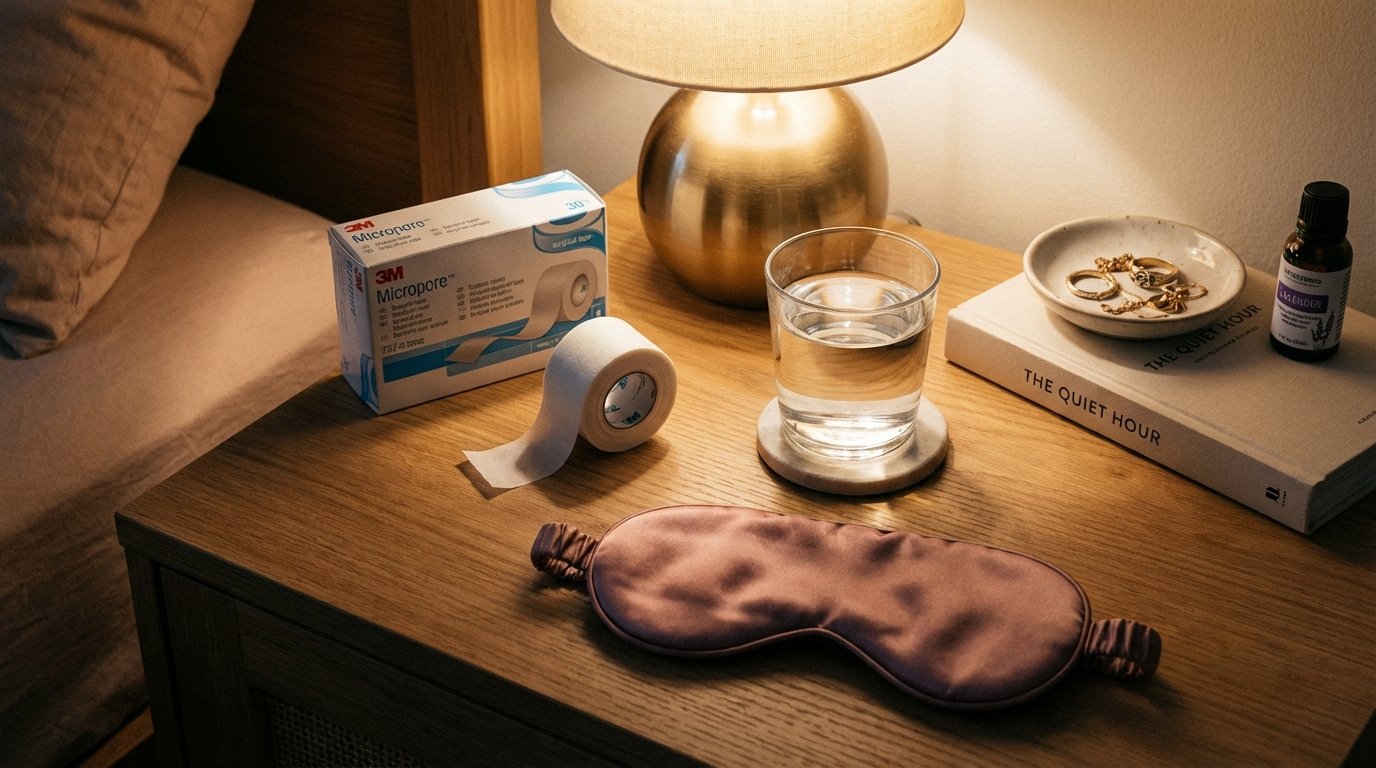
You need a porous, medical-grade tape that allows for emergency airflow if you need to cough.
- 3M Micropore Tape (Paper Tape): The gold standard. Cheap, gentle, and breathable.
- Hostage Tape: A popular brand designed specifically for beards and sleep.
- Somnifix: Strips with a small vent in the middle for beginners.
Step 2: The Skin Prep
Apply your skincare routine, but avoid putting heavy oils or heavy creams directly around your lips, or the tape won’t stick. Apply lip balm before applying the mouth taping for sleep strips so it doesn’t rip your skin in the morning.
Step 3: Application Techniques
- The Vertical Strip (Beginner): Place a small vertical piece of tape across the center of your lips. The sides of your mouth remain open. This trains your brain to keep the lips closed but feels less claustrophobic.
- The Full Seal (Advanced): Place a horizontal strip covering the entire mouth. This ensures zero mouth breathing.
Step 4: Removal
In the morning, do not rip it off! Wet the tape with your tongue or a little warm water and gently peel it downwards to protect your skin elasticity.
Part 5: Is It Safe? (The Risks)
Mouth taping for sleep is generally safe for healthy adults, as confirmed by CNN Health, but there are exceptions.
Do NOT Tape If:
- You have a blocked nose: If you have a cold, allergies, or a deviated septum and literally cannot breathe through your nose, do not try mouth taping for sleep. You will suffocate.
- You have consumed alcohol: Alcohol depresses the nervous system. You want your body to be able to wake you up if you need to vomit or cough.
- You have severe Sleep Apnea: If you stop breathing at night, consult a doctor first. You might need a CPAP machine, not tape.
Part 6: Combining Taping with Other Sleep Hacks
To supercharge your beauty sleep, stack mouth taping for sleep with these habits:
- Face Taping: While you tape your mouth, apply Face Tape for Wrinkles on your forehead to wake up wrinkle-free.
- Smart Alarm: Use a Sunrise Alarm Clock to wake up gently, keeping your cortisol low.
- Magnesium: Spray some Magnesium Oil on your feet (we will cover this next!) to relax your body before taping up.
Part 7: Frequently Asked Questions (FAQs)
What if I sneeze or cough?
Your body’s survival instinct is stronger than the tape. If you need to cough while practicing mouth taping for sleep, you will naturally wake up or force your mouth open. The tape is not superglue; it pops open easily under pressure.
Does it hurt taking it off?
If you use Micropore tape, no. It is very gentle. However, if you have a beard, mouth taping for sleep can be tricky. Beard owners should look for tapes specifically designed not to pull hair.
Can children do this?
Some pediatric dentists recommend it to fix facial development, but NEVER try mouth taping for sleep on a child without strict supervision and doctor approval.
Will I panic?
Try wearing the tape for 10 minutes during the day while watching TV to get used to the sensation. Most people find mouth taping for sleep calming, not scary.
Conclusion: The Cheapest Beauty Hack Exists
It costs less than $5 a roll, but the impact of mouth taping for sleep on your face shape, energy levels, and dental health is priceless.
In 2026, we are moving away from complicated 10-step routines and going back to biological basics. Breathing correctly is the foundation of health.
- Buy 3M Micropore tape.
- Start with a vertical strip.
- Give it 7 nights.
You will wake up looking like you slept for 12 hours, with a jawline that could cut glass.
Disclaimer: This content on Mediglamhub is for informational purposes only. Consult a sleep specialist if you suspect you have Sleep Apnea.