Are you looking for the proven red raspberry leaf tea benefits to ease your period cramps or prepare for a smoother childbirth? You have come to the right place. Known for centuries as “The Women’s Herb,” this tea is a staple in the cabinets of midwives and herbalists worldwide.
In 2026, it has gone viral on social media as the “Labor Tea,” with mothers claiming it helped them push for only 10 minutes. But is it just a myth? And can you drink it if you aren’t pregnant?
In this comprehensive 1300-word guide, we explore the science behind red raspberry leaf tea benefits, how it acts as a “gym for your uterus,” and the correct way to brew it for maximum potency.
What is Red Raspberry Leaf Tea?
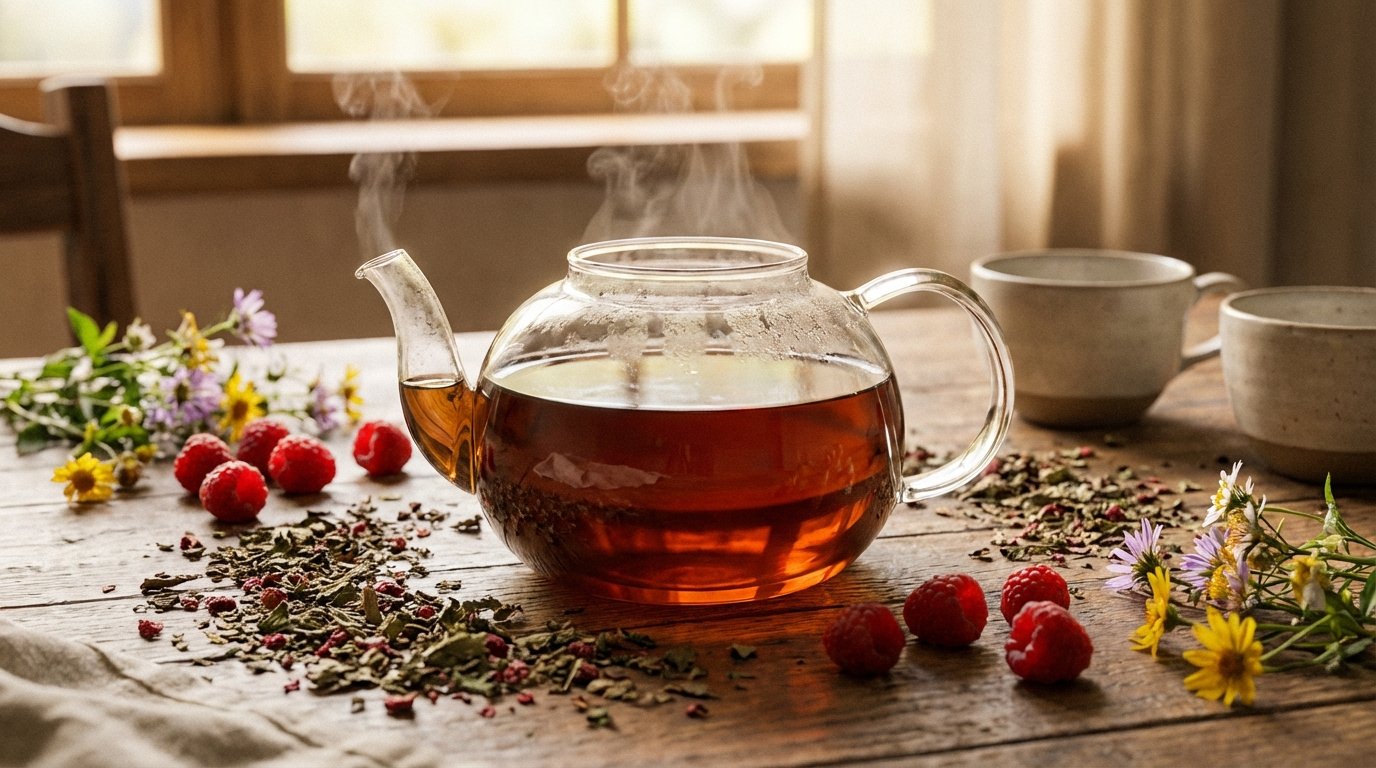
First, let’s clear up a misconception. This tea does not taste like raspberries. It is made from the dried leaves of the red raspberry plant (Rubus idaeus), not the fruit. The taste is more like a robust black tea, earthy and slightly bitter.
It is caffeine-free and packed with nutrients including Magnesium, Potassium, Iron, and B-Vitamins. However, its true power lies in a compound called Fragarine. According to Healthline, this compound helps tone the muscles in the pelvic region.

Top 6 Red Raspberry Leaf Tea Benefits
Why is this specific leaf so special for female biology? Here is what the science says.
1. Shortens Labor & Birth
This is the most famous benefit. A study published in the Journal of Midwifery & Women’s Health found that women who drank the tea in their third trimester had a shorter second stage of labor (the pushing phase). You can read more about these findings on PubMed.
- How: It tones the uterine muscles, making contractions more efficient.

2. The “Uterus Tonic” (Menstrual Cramps)
You don’t have to be pregnant to enjoy red raspberry leaf tea benefits. Fragarine helps to both tighten and relax the pelvic muscles.
- The Result: It reduces the severity of menstrual cramps caused by spasms. It essentially calms an angry uterus.
3. Hormonal Balance & Fertility
The high mineral content (especially Magnesium and Calcium) supports hormonal health. By strengthening the uterine lining, it is often recommended by fertility experts to help women trying to conceive. (Pair this with Seed Cycling for a complete fertility protocol).
4. Postpartum Recovery
After birth, the uterus needs to shrink back to its original size (involution). Drinking this tea postpartum helps speed up this process and reduces bleeding. Plus, the nutrients help replenish what was lost during birth.
5. Boosts Milk Supply
While not a galactagogue like Fenugreek, many moms report a boost in breast milk production due to the rich nutritional profile of the leaves supporting the body’s energy levels.
6. Reduces PMS Bloating
Because it is a mild diuretic, it helps flush out excess water retention that happens before your period.
The “Uterine Toning” Effect Explained
Think of your uterus as a muscle (because it is).
- Weak Muscle: Contractions are weak and ineffective, making labor long and painful.
- Toned Muscle: Contractions are strong and productive, making labor faster.
Red raspberry leaf tea benefits the uterus by acting like a workout. It doesn’t start labor (like castor oil might); it makes the labor better.
When to Start Drinking It? (Safety Guide)
Timing is everything. Because it stimulates the uterus, you need to be careful. The American Pregnancy Association recommends caution with herbal teas during the first trimester.
If You Are Pregnant:
- 1st Trimester: Avoid. It is considered too stimulating for early pregnancy and could theoretically cause spotting.
- 2nd Trimester: Start slow (1 cup a day) around 24 weeks.
- 3rd Trimester: Increase to 2-3 cups a day from 32 weeks onwards to build maximum tone for birth.
If You Are Not Pregnant:
You can drink it all month long! Many women drink it specifically during the luteal phase (the week before their period) to prevent cramps.
How to Brew the Perfect Cup (Infusion Method)
Tea bags are okay, but loose leaf is better for medicinal strength.
The Recipe:
- Measure: Use 1 tablespoon of dried loose leaves (or 1 tea bag) per cup of water.
- Boil: Pour boiling water over the leaves.
- Steep: Cover and let it steep for at least 10 to 15 minutes. (Longer than regular tea).
- Enhance: It can be bitter. Add honey, lemon, or mix it with peppermint tea for flavor.
Iced Version: Brew a large batch, let it cool, and keep it in the fridge as a refreshing “Labor Prep Lemonade.”
Raspberry Leaf vs. Spearmint Tea
We previously discussed Spearmint Tea for Hormonal Acne. Can you drink both?
- Spearmint: Targets Androgens (Acne, Facial Hair).
- Raspberry Leaf: Targets the Uterus (Cramps, Labor).
- Verdict: Yes! They work on different systems. You can even mix the dried leaves together for a “Super Woman Blend.”
Frequently Asked Questions (FAQs)
Will it induce labor?
No. It creates “Braxton Hicks” (practice contractions) to tone the muscle, but it will not force a baby out before they are ready. It is a toner, not an inducer.
Can I drink it while breastfeeding?
Yes, it is generally considered safe and beneficial for nursing mothers due to its high mineral content.
Does it help with heavy periods?
Yes. The tannins in the tea have astringent properties, which can help tighten tissues and potentially reduce very heavy menstrual bleeding (Menorrhagia).
Conclusion: A Must-Have for Women
Whether you are preparing to bring life into the world or just trying to survive “that time of the month” without painkillers, the red raspberry leaf tea benefits are undeniable. It is affordable, safe, and backed by centuries of use.
Swap your afternoon coffee for a cup of this herbal powerhouse. Your uterus will thank you.
While you are optimizing your health, don’t forget to take care of your skin too. Check out our Best LED Face Masks to get that pregnancy glow even if you aren’t pregnant!
Disclaimer: This content on Mediglamhub is for informational purposes only. Always consult your midwife or OB-GYN before drinking herbal teas during pregnancy.